Commentary - (2025) Volume 16, Issue 4
Received: 01-Jul-2025, Manuscript No. bej-26-182455;
Editor assigned: 03-Jul-2025, Pre QC No. P-182455;
Reviewed: 17-Jul-2025, QC No. Q-182455;
Revised: 22-Jul-2025, Manuscript No. R-182455;
Published:
29-Jul-2025
, DOI: 10.37421/2161-6219.2025.16.565
Citation: Zhou, Lina. ”Business Operations: Driving Economic
Resilience And Growth.” Bus Econ J 16 (2025):565.
Copyright: © 2025 Zhou L. This is an open-access article distributed under the terms of the Creative Commons Attribution License, which permits unrestricted use, distribution
and reproduction in any medium, provided the original author and source are credited.
The intricate interplay between a company's internal operations and the broader economic system significantly shapes its performance and strategy. This dynamic relationship highlights that efficient business processes, ranging from supply chain management to innovation, are not isolated functions but are deeply embedded within and profoundly influenced by macroeconomic factors such as evolving market dynamics, the prevailing regulatory environments, and rapid technological advancements [1].
The impact of global economic shocks on business operations is a critical area of study, emphasizing the urgent need for agile operational frameworks. Research reveals that companies possessing diversified supply chains and flexible production capabilities are demonstrably better equipped to withstand disruptions, such as unexpected trade policy changes or sudden shifts in demand, thereby maintaining operational continuity and their market share [2].
Furthermore, a symbiotic relationship exists between national economic policies and the innovation strategies of businesses. Supportive economic policies, including R&D tax incentives and robust intellectual property protection, directly fuel corporate innovation efforts. Conversely, businesses that prioritize innovation by creating novel products and services stimulate economic growth and job creation, thus establishing a positive feedback loop essential for sustained development [3].
Shifts in global economic structures, particularly the rise of emerging markets and the pervasive influence of digitalization, necessitate a re-evaluation of traditional business operational models. Companies that successfully integrate digital technologies into their operations, while simultaneously understanding the evolving economic landscape of different regions, gain a significant competitive advantage by demonstrating adaptability and strategic foresight in responding to systemic economic transformations [4].
There is a direct correlation between efficient operational management within businesses and broader economic stability. Streamlined production processes, effective resource allocation, and minimized waste contribute to lower business costs, which can translate into more competitive pricing, increased consumer spending, and ultimately, a more robust national economy. Operational excellence at the firm level yields tangible macroeconomic benefits [5].
The role of labor market dynamics, an integral component of economic systems, significantly influences business operations and employee productivity. Factors such as wage levels, the availability of skilled labor, and labor regulations impact a company's ability to recruit, retain, and develop its workforce. Businesses must align their HR operations with prevailing labor market conditions to optimize human capital and maintain operational efficiency [6].
Monetary and fiscal policies, as key components of economic systems, exert a substantial influence on business investment and operational financing. Changes in interest rates and government spending can significantly affect a company's cost of capital, its expansion plans, and its overall financial health. Businesses must strategically respond to these macroeconomic policy shifts to ensure stable operations [7].
Technological advancements, often driven by economic incentives and dedicated research, play a transformative role in business operations. The adoption of new technologies, from artificial intelligence to automation, leads to significant improvements in efficiency, productivity, and product quality. Continuous integration of technological innovation into operational strategies is crucial for remaining competitive in a rapidly evolving economic landscape [8].
The interconnectedness of international trade patterns and domestic business operations is a critical consideration. Global trade agreements, tariffs, and currency fluctuations directly impact a company's sourcing, production, and market access strategies. Navigating the complexities of the global economic system is essential for optimizing international operations and competitiveness [9].
Evolving consumer behavior, influenced by economic conditions and societal trends, has a direct impact on business operations. Companies must adapt their product development, marketing, and service delivery to meet changing consumer demands. Understanding and responding to shifts in consumer preferences, which are often tied to economic factors, is crucial for sustained operational success [10].
This article delves into how the intricate interplay between a company's internal operations and the broader economic system significantly shapes performance and strategy. It highlights that efficient business processes, from supply chain management to innovation, are not isolated functions but are deeply embedded within and influenced by macroeconomic factors such as market dynamics, regulatory environments, and technological advancements. The core insight is that businesses that align their operational strategies with prevailing economic conditions and proactively adapt to systemic shifts are more resilient and poised for sustainable growth [1].
The impact of global economic shocks on business operations is dissected, emphasizing the need for agile operational frameworks. This research reveals that companies with diversified supply chains and flexible production capabilities are better equipped to withstand disruptions, such as trade policy changes or unexpected demand shifts, thus maintaining operational continuity and market share. It underscores the strategic advantage of anticipating and mitigating external economic volatilities through well-designed operational resilience [2].
This study investigates the symbiotic relationship between national economic policies and the innovation strategies of businesses. It argues that supportive economic policies, such as R&D tax incentives and intellectual property protection, directly fuel corporate innovation efforts. Conversely, businesses that prioritize innovation create new products and services, which in turn stimulate economic growth and job creation, demonstrating a positive feedback loop essential for sustained development [3].
The paper examines how shifts in global economic structures, particularly the rise of emerging markets and digitalization, necessitate a re-evaluation of business operational models. It reveals that companies successfully integrating digital technologies into their operations, while also understanding the evolving economic landscape of different regions, gain a significant competitive advantage. The focus is on adaptability and strategic foresight in responding to systemic economic transformations [4].
This research delves into the direct correlation between efficient operational management within businesses and broader economic stability. It illustrates how streamlined production processes, effective resource allocation, and minimized waste contribute to lower business costs, which can translate into more competitive pricing, increased consumer spending, and ultimately, a more robust national economy. The key takeaway is that operational excellence at the firm level has tangible macroeconomic benefits [5].
The paper analyzes the role of labor market dynamics, an integral part of economic systems, on business operations and employee productivity. It examines how factors like wage levels, skill availability, and labor regulations influence a company's ability to recruit, retain, and develop its workforce. The findings suggest that businesses must align their HR operations with prevailing labor market conditions to optimize human capital and maintain operational efficiency [6].
This study investigates the impact of monetary and fiscal policies, key components of economic systems, on business investment and operational financing. It demonstrates how interest rate changes and government spending can significantly affect a company's cost of capital, expansion plans, and overall financial health. The research emphasizes the necessity for businesses to understand and strategically respond to macroeconomic policy shifts to ensure stable operations [7].
The article explores the influence of technological advancements, driven by economic incentives and research, on transforming business operations. It highlights how the adoption of new technologies, from AI to automation, can lead to significant improvements in efficiency, productivity, and product quality. The core argument is that businesses must continuously integrate technological innovation into their operational strategies to remain competitive in a rapidly evolving economic landscape [8].
This research examines the interconnectedness of international trade patterns and domestic business operations. It explains how global trade agreements, tariffs, and currency fluctuations directly impact a company's sourcing, production, and market access strategies. The study emphasizes the critical need for businesses to understand and navigate the complexities of the global economic system to optimize their international operations and competitiveness [9].
The article explores how evolving consumer behavior, driven by economic conditions and societal trends, influences business operations. It highlights that companies must adapt their product development, marketing, and service delivery to meet changing consumer demands. The key insight is that understanding and responding to shifts in consumer preferences, which are often tied to economic factors, is crucial for sustained operational success [10].
This collection of research highlights the profound interconnectedness between business operations and the broader economic system. It demonstrates that operational efficiency, agility, and strategic alignment with economic conditions are critical for business resilience and growth. Macroeconomic factors such as government policies, technological advancements, global trade dynamics, labor market conditions, and consumer behavior significantly influence how businesses operate and strategize. Companies that proactively adapt to these external economic shifts, embrace innovation, and optimize their internal processes are better positioned to thrive in a volatile and evolving global landscape. Ultimately, operational excellence at the firm level contributes to broader economic stability and competitiveness.
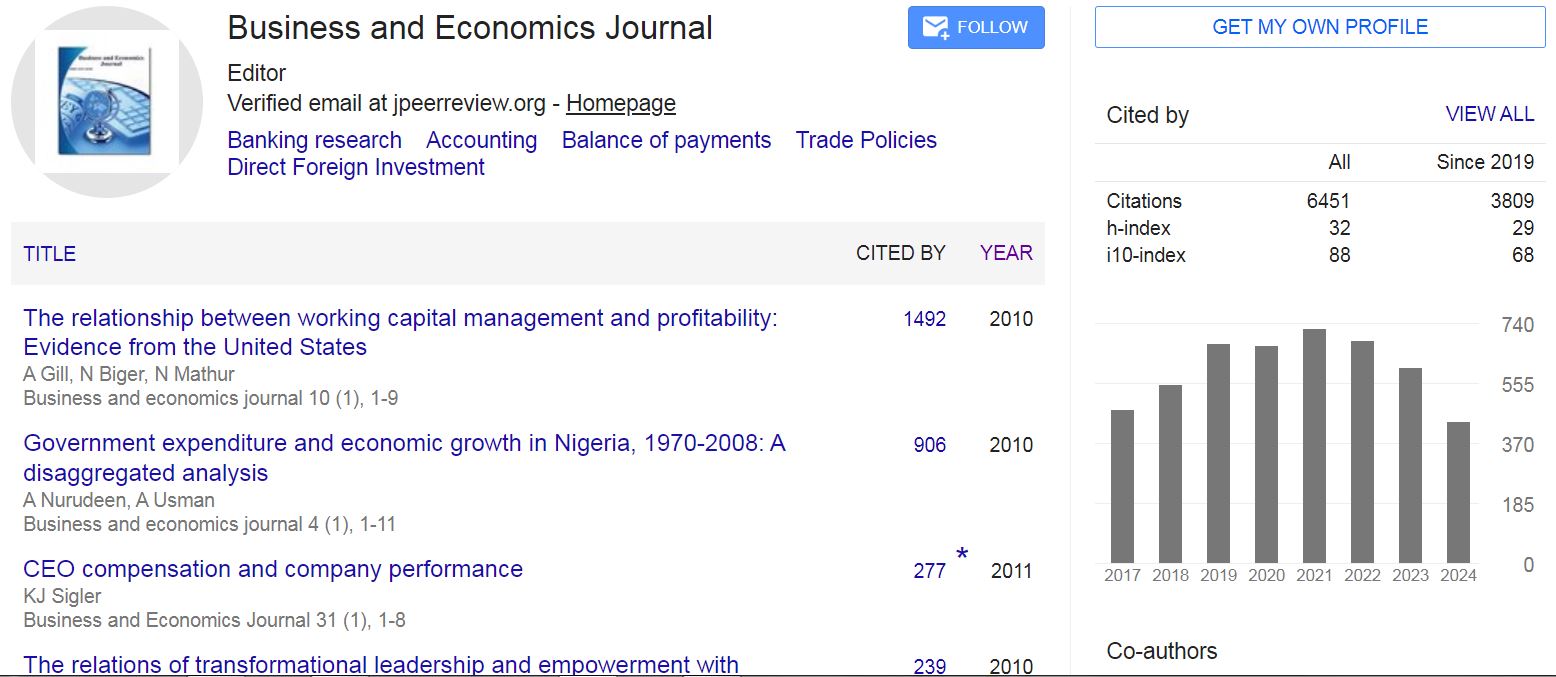
Business and Economics Journal received 6451 citations as per Google Scholar report