Opinion - (2025) Volume 9, Issue 6
Received: 01-Dec-2025, Manuscript No. cmcr-25-178331;
Editor assigned: 03-Dec-2025, Pre QC No. P-178331;
Reviewed: 17-Dec-2025, QC No. Q-178331;
Revised: 22-Dec-2025, Manuscript No. R-178331;
Published:
29-Dec-2025
, DOI: 10.37421/2684-4915.2025.9.406
Citation: Hughes, Ella. ”Breakthroughs Reshaping Medicine: Genes, AI, Therapies.” Clin Med Case Rep 09 (2025):406.
Copyright: © 2025 Hughes E. This is an open-access article distributed under the terms of the Creative Commons Attribution License, which permits unrestricted use, distribution and reproduction in any medium, provided the original author and source are credited.
This discusses significant advancements and ongoing challenges in using CRISPR-Cas genome editing for treating human diseases. It highlights potential for precise genetic corrections but also addresses issues like off-target effects, delivery methods, and ethical considerations. The balance between therapeutic promise and refinement for safety and efficacy is crucial [1].
Here, we examine the rapid evolution of mRNA technology, moving from foundational research to its impactful use in vaccines, especially during the recent pandemic. This piece also explores its broader potential beyond infectious diseases, considering applications in cancer immunotherapy and genetic disorders, charting a path for future drug development [2].
This delves into how Artificial Intelligence (AI) transforms the drug discovery pipeline. It covers AI's role in target identification, lead compound optimization, and even predicting drug efficacy, significantly accelerating development cycles and reducing costs. AI's capacity to streamline complex research opens doors to previously intractable therapeutic challenges [3].
This article focuses on the revolutionary impact of CAR T-cell therapy in oncology, especially for hematological malignancies. It outlines the mechanisms behind these living drugs, their clinical successes, and ongoing efforts to overcome limitations like solid tumor efficacy, toxicity management, and manufacturing scalability. This represents a paradigm shift toward highly personalized cellular immunotherapies [4].
We look at advancements in targeted therapy and immunotherapy for solid tumors, building on insights from major oncology conferences. The article underscores the trend toward highly specific treatments that exploit unique molecular vulnerabilities in cancer cells, often combined with immunotherapeutic agents, to improve patient outcomes and minimize collateral damage [5].
This explores the burgeoning field of microbiome-based therapies, particularly their potential in metabolic diseases. It explains how manipulating the gut microbiota through various interventions influences host metabolism, offering new strategies for managing conditions like obesity and diabetes. Recognizing the gut's profound role in systemic health and disease is essential [6].
This discusses continuous progress and future trajectory of personalized medicine. It emphasizes how genomic information, alongside other 'omics' data, allows for tailoring medical treatments to individual patients, optimizing drug selection, and predicting therapeutic responses. This means a move away from 'one-size-fits-all' medicine towards highly individualized care [7].
This article focuses on prime editing, a next-generation genome editing tool that moves beyond traditional CRISPR-Cas9 by enabling more precise edits without double-strand breaks. It highlights prime editing's capability to insert, delete, or substitute DNA sequences with high accuracy, opening new avenues for correcting a broader range of genetic mutations responsible for human diseases [8].
This explores the utility of organoid models in drug discovery and personalized medicine. It explains how these miniature, lab-grown organs derived from stem cells recapitulate human physiology and disease pathology, offering a more relevant platform than traditional cell lines or animal models for screening drugs and understanding individual patient responses. Their potential to bridge the gap between bench and bedside is key [9].
This examines recent strides in nanomedicine, particularly its application in cancer therapy. It covers how nanoparticles can be engineered for targeted drug delivery, minimizing systemic toxicity and improving therapeutic efficacy. Nanotechnology offers innovative solutions to long-standing challenges in drug delivery and disease treatment [10].
The landscape of therapeutic interventions is rapidly evolving, driven by innovations in genome editing. CRISPR-Cas genome editing offers immense promise for precise genetic corrections to treat human diseases. While its potential is undeniable, researchers are working to overcome hurdles like off-target effects, delivery methods, and ethical considerations, aiming for a balance between therapeutic benefits and ensuring safety and efficacy [1]. Building on this, prime editing has emerged as a sophisticated, next-generation tool. It facilitates highly precise genetic modificationsâ??insertions, deletions, or substitutions of DNA sequencesâ??without inducing double-strand breaks. This breakthrough expands the scope for correcting a much broader range of genetic mutations responsible for various human diseases, offering a refined approach to genetic therapy [8].
Cancer treatment is witnessing profound transformation with cutting-edge therapies. mRNA technology, impactful in vaccine development, is now aggressively explored for broader therapeutic potential in cancer immunotherapy and genetic disorders, charting a vital path for future drug development [2]. CAR T-cell therapy offers a revolutionary approach, particularly effective for hematological malignancies. This personalized cellular immunotherapy has seen significant clinical success, with ongoing research focusing on improving efficacy against solid tumors, managing toxicities, and enhancing manufacturing scalability [4]. Complementing these, advancements in targeted therapy and immunotherapy for solid tumors drive a trend towards highly specific treatments. These approaches exploit unique molecular vulnerabilities within cancer cells, often combined with immunotherapeutic agents, aiming to improve patient outcomes while minimizing collateral damage [5]. Adding to this arsenal, nanomedicine is making considerable strides in cancer therapy, utilizing engineered nanoparticles for targeted drug delivery. This method substantially minimizes systemic toxicity and significantly enhances therapeutic efficacy, presenting innovative solutions to long-standing challenges in drug delivery and disease treatment [10].
Beyond direct cellular and genetic manipulations, innovative strategies are expanding our therapeutic landscape. Microbiome-based therapies show particular promise for metabolic diseases. Manipulating gut microbiota through targeted interventions influences host metabolism, offering new strategies for managing conditions like obesity and diabetes, underscoring the gut's critical role in systemic health [6]. Organoid models are proving invaluable in accelerating drug discovery and personalized medicine. These miniature, lab-grown organs, derived from stem cells, effectively recapitulate human physiology and disease pathology. They offer a more relevant platform for screening new drugs and understanding individual patient responses, bridging the gap between research and clinical application [9]. Moreover, Artificial Intelligence (AI) is fundamentally reshaping the entire drug discovery pipeline. AI's capabilities are pivotal in enhancing target identification, optimizing lead compound development, and accurately predicting drug efficacy. This integration not only accelerates development cycles but also substantially reduces costs, opening doors to previously intractable therapeutic challenges [3].
Central to many of these groundbreaking advancements is the relentless progress in personalized medicine. This approach champions the use of an individual patient's unique genomic information, alongside other comprehensive 'omics' data, to meticulously tailor medical treatments. The objective is to optimize drug selection for each patient and accurately predict their therapeutic responses, marking a significant shift away from the outdated 'one-size-fits-all' model towards truly individualized and precision-guided patient care [7].
Recent breakthroughs are reshaping medicine, with CRISPR-Cas genome editing showing immense potential for precise genetic corrections in human diseases, despite challenges like off-target effects and delivery methods. The ongoing development seeks to balance therapeutic promise with safety and efficacy. mRNA technology, notably proven effective in vaccines during the recent pandemic, is now expanding its reach. Researchers are exploring its broader applications in cancer immunotherapy and genetic disorders, charting a significant path for future drug development. Artificial Intelligence (AI) is transforming drug discovery, streamlining processes from target identification to lead compound optimization and efficacy prediction. This innovation significantly accelerates development cycles and lowers costs, opening doors to previously complex therapeutic challenges. In oncology, CAR T-cell therapy offers a revolutionary approach, especially for hematological malignancies. These personalized cellular immunotherapies have achieved clinical successes, even as efforts continue to address limitations in solid tumor efficacy and toxicity. Advances in targeted therapy and immunotherapy for solid tumors emphasize highly specific treatments. These therapies exploit unique molecular vulnerabilities in cancer cells, often combined with immunotherapeutic agents to improve patient outcomes. Microbiome-based therapies are emerging, particularly for metabolic diseases like obesity and diabetes. Manipulating gut microbiota shows promise in influencing host metabolism, highlighting the gut's critical role in systemic health. Personalized medicine continues to advance, leveraging genomic and 'omics' data to tailor treatments to individual patients. This approach moves beyond 'one-size-fits-all' care, optimizing drug selection and predicting therapeutic responses. Prime editing represents a next-generation genome editing tool, offering more precise edits than traditional CRISPR-Cas9 without double-strand breaks. It allows for accurate insertions, deletions, or substitutions, expanding the scope for correcting genetic mutations. Organoid models are proving invaluable in drug discovery and personalized medicine. These lab-grown miniature organs mimic human physiology and disease, providing a superior platform for drug screening and understanding patient-specific responses. Finally, nanomedicine is making strides in cancer therapy, engineering nanoparticles for targeted drug delivery. This minimizes systemic toxicity and enhances efficacy, presenting innovative solutions to long-standing challenges in disease treatment.
None
None
Indexed at, Google Scholar, Crossref
Indexed at, Google Scholar, Crossref
Indexed at, Google Scholar, Crossref
Indexed at, Google Scholar, Crossref
Indexed at, Google Scholar, Crossref
Indexed at, Google Scholar, Crossref
Indexed at, Google Scholar, Crossref
Indexed at, Google Scholar, Crossref
Indexed at, Google Scholar, Crossref
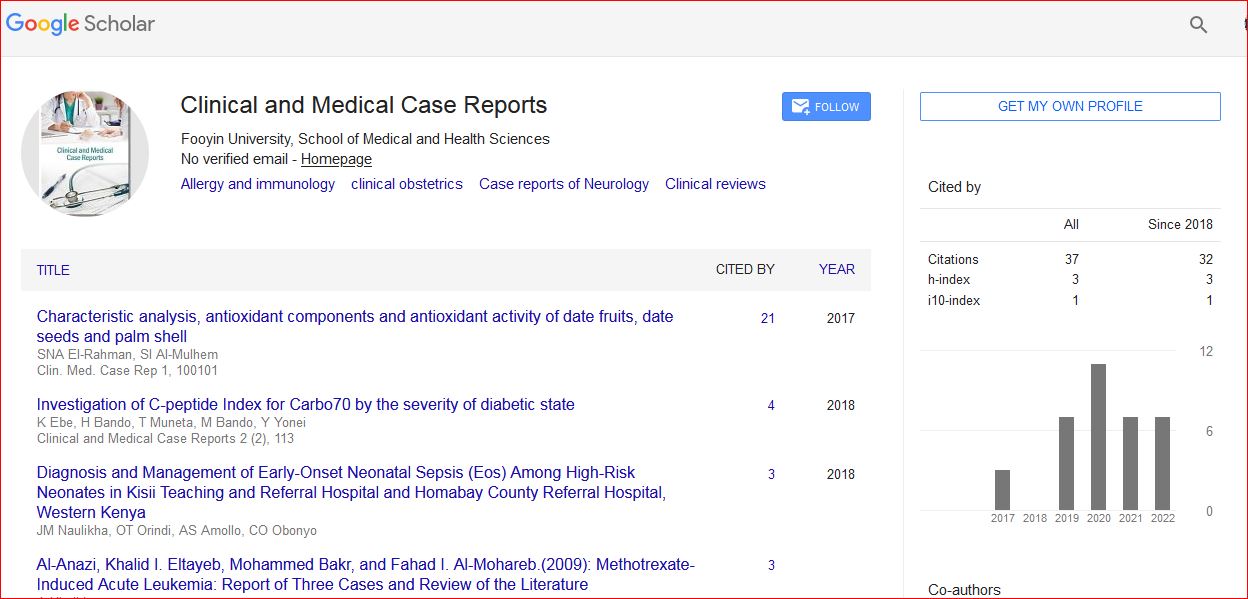
Clinical and Medical Case Reports received 53 citations as per Google Scholar report