Brief Report - (2025) Volume 16, Issue 5
Received: 01-Oct-2025, Manuscript No. jbmbs-26-183405;
Editor assigned: 03-Oct-2025, Pre QC No. P-183405;
Reviewed: 17-Oct-2025, QC No. Q-183405;
Revised: 22-Oct-2025, Manuscript No. R-183405;
Published:
29-Oct-2025
, DOI: 10.37421/2155-6180.2025.16.291
Citation: Carter, Emily. ”Biometric Data: Ethical and Legal Challenges Explored.” J Biom Biosta 16 (2025):291.
Copyright: © 2025 Carter E. This is an open-access article distributed under the terms of the Creative Commons Attribution License, which permits unrestricted use, distribution and reproduction in any medium, provided the original author and source are credited.
The analysis and application of biometric data present a complex landscape of ethical and legal considerations, demanding careful attention to privacy, security, and potential discrimination [1].
As biometric technologies become more pervasive, understanding the intricate interplay between technological advancements and societal values is paramount. This field necessitates the development of robust regulatory frameworks and ethical guidelines to ensure responsible innovation and the protection of individual rights. The potential for misuse and the sensitive nature of biometric information require a proactive and comprehensive approach to governance [1].
The intersection of privacy and security within biometric systems, particularly those employing facial recognition, highlights significant vulnerabilities and emerging threats [2].
The rapid proliferation of these technologies raises concerns about their impact on individual liberties and the potential for unauthorized access or manipulation of highly personal data. Addressing these challenges requires innovative strategies that prioritize data protection and adopt a privacy-by-design methodology throughout the development lifecycle [2].
Algorithmic bias represents a critical ethical challenge in biometric systems, with the potential to lead to discriminatory outcomes across various applications, including law enforcement and hiring processes [3].
Such biases can disproportionately affect certain demographic groups, exacerbating existing societal inequalities. Rigorous testing, the use of diverse datasets, and a commitment to transparency in algorithm development are essential steps towards mitigating these fairness concerns and ensuring equitable application of biometric technologies [3].
The legal framework governing biometric data is continuously evolving, with regulations like the General Data Protection Regulation (GDPR) in Europe classifying biometric information as sensitive personal data, subject to strict processing conditions [4].
This classification imposes significant compliance obligations on organizations handling such data, necessitating a thorough understanding of legal requirements and the implementation of appropriate safeguards to protect individuals' rights and privacy [4].
In healthcare settings, the ethical implications of employing biometric authentication are multifaceted, encompassing patient consent, the security of sensitive health information, and the potential for data misuse [5].
While biometrics offer enhanced security and efficiency, a balanced approach is crucial to leverage these benefits without compromising patient privacy or autonomy. Safeguarding patient rights must remain a central consideration in the deployment of any biometric technology within the healthcare ecosystem [5].
The societal impact of widespread biometric surveillance, particularly through technologies like facial recognition, raises profound concerns about mass surveillance, chilling effects on public behavior, and the potential erosion of civil liberties [6].
The pervasive nature of these technologies necessitates a broad public discourse and the establishment of strong legal safeguards to prevent their misuse and protect fundamental freedoms. Responsible deployment requires a careful assessment of societal implications [6].
Navigating the evolving legal landscape of biometric data in the United States involves understanding state-specific laws, such as the Illinois Biometric Information Privacy Act (BIPA), which impose significant compliance burdens on businesses [7].
The increasing prevalence of biometric technologies has led to complex legal challenges and ongoing litigation, highlighting the need for clarity and harmonization in regulatory approaches to protect individuals and guide industry practices [7].
The development and deployment of AI-powered biometric systems introduce further ethical considerations related to data privacy, algorithmic fairness, and accountability [8].
A human-centric design approach and a commitment to responsible innovation are crucial for creating ethical frameworks that govern these advanced technologies. Ensuring that AI-driven biometrics serve societal benefit without compromising individual rights is a key objective [8].
Effective consent mechanisms are fundamental to the ethical collection and processing of biometric data, with various models of consent having different legal and ethical implications [9].
Obtaining meaningful consent in diverse contexts presents challenges, underscoring the importance of clearly communicating data usage and providing individuals with genuine control over their biometric information. Best practices for informed consent are vital [9].
In the workplace, the use of biometrics presents a distinct set of legal and ethical challenges, including employee privacy, data security, and the potential for discrimination [10].
Employers must navigate a complex web of labor laws and privacy regulations to develop compliant and ethical biometric policies. Balancing operational needs with employee rights is essential for responsible implementation [10].
The complex ethical and legal considerations surrounding the analysis of biometric data are highlighted, with a focus on key challenges such as privacy concerns, data security, potential for discrimination, and the necessity of robust consent mechanisms [1].
The authors emphasize the critical importance of establishing clear regulatory frameworks and ethical guidelines to govern the collection, storage, and use of biometric information, thereby fostering responsible innovation in this rapidly evolving field [1].
The intersection of privacy and security in biometric systems, particularly concerning facial recognition technology, is explored, examining system vulnerabilities and emerging threats [2].
Strategies for enhancing data protection and mitigating risks are proposed, advocating for a privacy-by-design approach in biometric data analysis [2].
The potential for bias in biometric algorithms, especially concerning demographic factors, is investigated, underscoring how algorithmic bias can result in discriminatory outcomes in applications like law enforcement and hiring [3].
The research stresses the need for rigorous testing, diverse datasets, and transparency in algorithm development to address and mitigate these ethical concerns [3].
The legal landscape governing biometric data, particularly the General Data Protection Regulation (GDPR), and its implications for biometric analysis are examined [4].
The paper discusses the classification of biometric data as sensitive personal information and the stringent conditions for its processing, offering insights into compliance strategies for organizations [4].
Ethical implications of using biometric authentication in healthcare settings are addressed, focusing on patient consent, data security of sensitive health information, and potential misuse [5].
The authors advocate for a balanced approach that leverages biometric benefits for security while safeguarding patient rights and privacy [5].
The societal impact of widespread biometric surveillance, especially through facial recognition technology, is investigated, discussing concerns about mass surveillance, chilling effects, and the erosion of civil liberties [6].
The authors call for public discourse and strong legal safeguards to prevent the misuse of biometric surveillance technologies [6].
Evolving legal frameworks for biometric data in the United States, including state-specific biometric privacy laws like BIPA, are examined, analyzing compliance challenges for businesses and implications for the biometric industry [7].
The discussion includes ongoing legal battles and potential future directions for biometric data regulation [7].
Ethical considerations in the development and deployment of AI-powered biometric systems are addressed, highlighting issues of data privacy, algorithmic fairness, and accountability [8].
An ethical framework for AI-driven biometrics is proposed, emphasizing human-centric design and responsible innovation [8].
Consent mechanisms for the collection and processing of biometric data are explored, examining different models of consent and their legal validity [9].
The paper discusses challenges in obtaining meaningful consent and recommends best practices for ensuring informed consent in biometric data analysis [9].
Legal and ethical challenges associated with biometrics in the workplace are comprehensively reviewed, covering employee privacy, data security, discrimination, and implications of labor laws [10].
Guidance is offered for developing compliant and ethical biometric policies for employers [10].
This collection of research examines the multifaceted ethical and legal challenges surrounding the use of biometric data. Key concerns include privacy protection, data security, the prevention of algorithmic bias and discrimination, and the establishment of effective consent mechanisms. The papers explore regulatory frameworks like GDPR, the impact of biometric surveillance on civil liberties, and the specific considerations for implementing biometrics in sensitive areas such as healthcare and the workplace. Addressing these issues requires a commitment to transparency, fairness, and robust legal and ethical guidelines to ensure responsible innovation and the protection of individual rights in the age of pervasive biometric technologies.
None
None
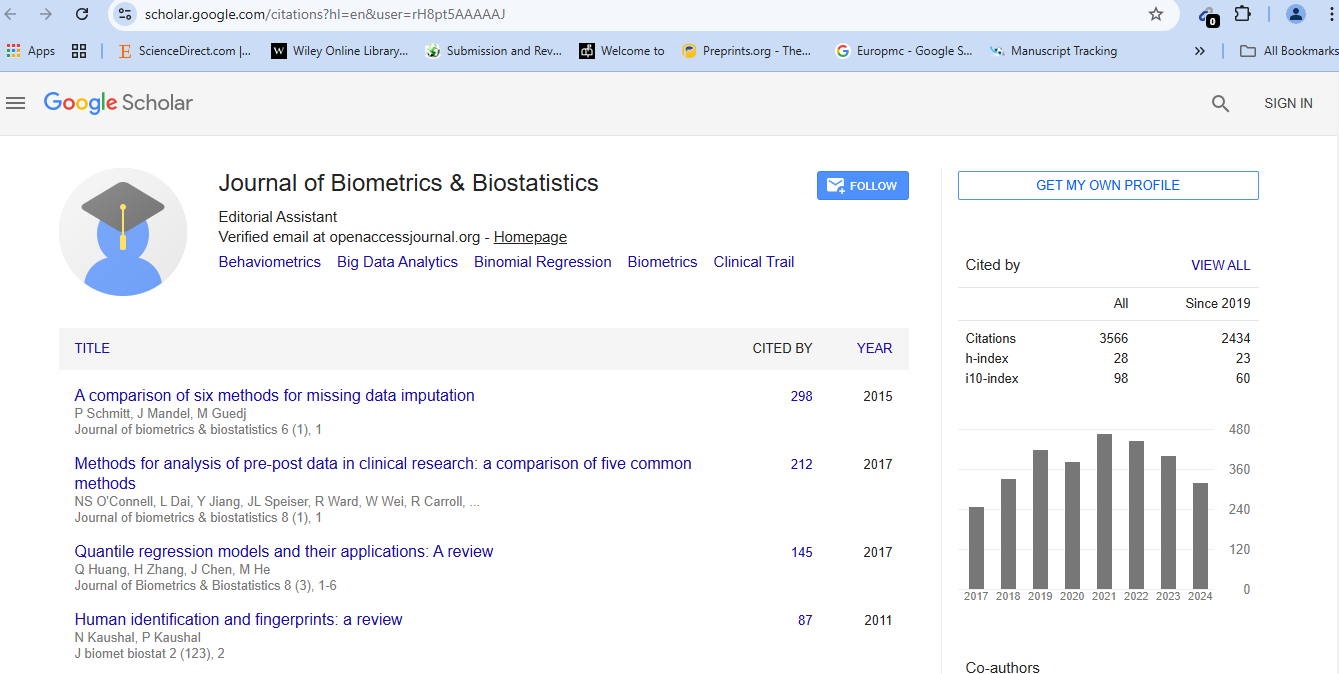
Journal of Biometrics & Biostatistics received 3496 citations as per Google Scholar report