Brief Report - (2025) Volume 17, Issue 4
Received: 01-Aug-2025, Manuscript No. jbabm-26-182346;
Editor assigned: 03-Aug-2025, Pre QC No. P-182346;
Reviewed: 17-Aug-2025, QC No. Q-182346;
Revised: 24-Aug-2025, Manuscript No. R-182346;
Published:
31-Aug-2025
, DOI: 10.37421/1948-593X.2025.17.504
Citation: Ferreira, Lucas J.. ”Bioanalysis of Biologics: Methods, Challenges, and Safety.” J Bioanal Biomed 17 (2025):504.
Copyright: © 2025 Ferreira J. Lucas This is an open-access article distributed under the terms of the Creative Commons Attribution License, which permits unrestricted use, distribution and reproduction in any medium, provided the original author and source are credited.
The landscape of biopharmaceutical development is characterized by an ever-increasing complexity of therapeutic modalities, necessitating sophisticated and rigorously validated bioanalytical methods for their characterization, development, and monitoring. This field is crucial for ensuring the safety and efficacy of these life-saving treatments, guiding critical decisions throughout the drug development lifecycle. The need for robust bioanalytical strategies has grown in parallel with the advent of novel biological drugs, requiring specialized approaches beyond those used for small molecules. One of the fundamental aspects of bioanalytical work for biologics is method validation. This process ensures that an assay is suitable for its intended purpose, providing accurate and reliable data. Key parameters such as accuracy, precision, selectivity, and stability must be thoroughly assessed according to current regulatory guidelines. Ligand-binding assays (LBAs) and mass spectrometry (MS)-based methods are primary tools, each with its strengths and applications for different biologics like monoclonal antibodies, recombinant proteins, and vaccines [1].
The development of biosimilars presents unique bioanalytical challenges. Demonstrating similarity to a reference product requires comprehensive analytical characterization and comparative clinical studies. Regulatory bodies expect bioanalytical methods for biosimilars to possess high sensitivity, specificity, and robustness to detect even subtle differences. Immunogenicity assessment, including the validation of anti-drug antibody (ADA) assays, is also a critical component. Well-validated bioanalytical methods are essential for the approval and safe use of biosimilars, ultimately broadening patient access to advanced biotherapeutics [2].
Beyond traditional biologics and biosimilars, the bioanalysis of complex novel modalities like antibody-drug conjugates (ADCs) and cell and gene therapies is rapidly evolving. ADCs, for instance, require methods capable of measuring both the antibody and the cytotoxic payload. Cell and gene therapies necessitate assays to assess cell viability, potency, and transgene expression. Various techniques, including LC-MS/MS, immunoassays, and flow cytometry, are employed, each with specific validation requirements tailored to these intricate treatments [3].
Mass spectrometry (MS) has become an indispensable technique in the bioanalysis of biopharmaceuticals. Its inherent selectivity and ability to provide detailed structural information make it highly valuable for quantifying intact proteins, peptides, and small molecule payloads within complex biological matrices. MS-based assays are crucial for characterizing post-translational modifications and identifying impurities, contributing significantly to the comprehensive characterization of biopharmaceuticals [4].
Immunogenicity is a critical consideration for all biologic drugs, as the development of anti-drug antibodies (ADAs) can profoundly impact therapeutic efficacy and safety. The development and validation of sensitive and specific assays for ADA detection are paramount. Various immunoassay formats, such as ELISA and electrochemiluminescence (ECL), are used, with careful attention paid to validation parameters like cut-point determination and bridging assays. Understanding the immunogenicity profile is vital for successful drug development and patient management [5].
Cell and gene therapies represent a frontier in medicine, and their bioanalysis poses distinct challenges. Assays are needed to monitor cell viability, potency, and transgene expression. Techniques like flow cytometry, qPCR, and digital PCR are commonly utilized. Robust assays are essential for ensuring product quality, predicting efficacy, and identifying potential adverse events. Specialized validation approaches are required due to the inherent complexity of these therapies [6].
Regulatory guidelines from bodies like the FDA and EMA provide a framework for bioanalytical method validation. These guidelines emphasize critical parameters such as selectivity, sensitivity, accuracy, precision, stability, and matrix effects. Thorough documentation of validation activities and the maintenance of a robust quality system are non-negotiable. Adherence to these standards facilitates the efficient and successful development of new biotherapeutics by ensuring that the data generated is reliable and meets regulatory expectations [7].
Ligand-binding assays (LBAs) remain a cornerstone for the bioanalysis of large molecule biopharmaceuticals. Assays like ELISA and fluorescence-based methods are widely used for quantifying therapeutic proteins. The development and validation of LBAs require careful consideration of assay design, reagent selection, optimization, and the mitigation of matrix effects, which can significantly influence assay performance. These assays are indispensable for supporting preclinical and clinical studies across a broad spectrum of biologic drugs [8].
Vaccine immunogenicity assessment is a crucial area of bioanalysis. Validated assays are required to measure antibody responses to vaccine antigens, which are essential for establishing correlates of protection and evaluating vaccine efficacy. Different vaccine platforms, including protein-based, viral vector, and mRNA vaccines, may require tailored bioanalytical strategies. The complexity of immune responses elicited by vaccines necessitates robust assays to provide reliable data for regulatory decision-making and public health [9].
The bioanalytical evaluation of biologics is a multifaceted discipline, essential for ensuring the quality, safety, and efficacy of these complex therapeutic agents. It encompasses a wide array of techniques and stringent validation processes to support their development from early research to post-market surveillance. The increasing complexity of biologic drugs, including monoclonal antibodies, recombinant proteins, and vaccines, demands sophisticated bioanalytical methods that can accurately quantify these molecules in biological matrices [1].
Method validation is a cornerstone of bioanalysis for biologics. This process ensures that an assay is fit for its intended purpose by rigorously evaluating parameters such as accuracy, precision, selectivity, and stability. Current regulatory guidelines provide a framework for this validation. Ligand-binding assays (LBAs) and mass spectrometry (MS)-based methods are two prominent approaches, each suited to different types of biologics and analytical questions, allowing for comprehensive characterization and quantification [1].
Biosimilars, which are highly similar versions of already approved biologic medicines, present distinct bioanalytical challenges. Demonstrating similarity to the reference product requires extensive analytical characterization and comparative clinical studies. Bioanalytical methods for biosimilars must exhibit high sensitivity, specificity, and robustness to detect any subtle differences between the biosimilar and its reference. Immunogenicity assessment, including the development and validation of anti-drug antibody (ADA) assays, is also a critical component for ensuring the safe use of biosimilars [2].
The realm of complex biologics continues to expand, with antibody-drug conjugates (ADCs) and cell and gene therapies representing significant advancements. The bioanalysis of ADCs requires methods that can quantify both the antibody component and the cytotoxic drug payload. For cell and gene therapies, bioanalytical assays are needed to assess cell viability, potency, and transgene expression. Various techniques, such as LC-MS/MS, immunoassays, and flow cytometry, are adapted and validated for these novel modalities [3].
Mass spectrometry (MS) has emerged as a powerful tool in the bioanalysis of biopharmaceuticals due to its inherent selectivity and capacity for detailed structural elucidation. Techniques like LC-MS/MS are widely used for quantifying intact proteins, peptides, and small molecule payloads in complex biological samples. MS also plays a vital role in characterizing post-translational modifications and identifying impurities, contributing to a comprehensive understanding of biopharmaceutical products [4].
Immunogenicity assessment is a critical aspect of biologic drug development. The potential for patients to develop anti-drug antibodies (ADAs) can significantly affect a drug's efficacy and safety. Assays for detecting and characterizing ADAs, often using ELISA or electrochemiluminescence (ECL) formats, must be meticulously developed and validated. Key validation parameters include sensitivity, specificity, and appropriate cut-point determination to ensure reliable detection of clinically relevant immune responses [5].
Cell and gene therapies, while offering revolutionary treatment possibilities, introduce unique bioanalytical hurdles. Developing robust assays to monitor essential parameters such as cell viability, potency, and transgene expression is paramount. Techniques like quantitative PCR (qPCR), digital PCR, and flow cytometry are integral to this process. The inherent complexity and heterogeneity of these therapies necessitate specialized validation approaches to ensure the generation of reliable data [6].
Regulatory bodies such as the FDA and EMA provide critical guidance on bioanalytical method validation for biologics. These guidelines detail essential validation parameters like selectivity, sensitivity, accuracy, precision, stability, and the assessment of matrix effects. Adherence to these regulatory expectations is crucial for the successful development and approval of biotherapeutics, ensuring that the bioanalytical data submitted is scientifically sound and meets established standards [7].
Ligand-binding assays (LBAs) continue to be a fundamental methodology for the bioanalysis of large molecule biopharmaceuticals. Various LBA formats, including ELISA and fluorescence-based assays, are employed to quantify therapeutic proteins in biological fluids. The development and validation of these assays demand careful attention to assay design, reagent quality, optimization of experimental conditions, and strategies to mitigate potential interferences from the sample matrix [8].
The bioanalytical strategies for vaccine immunogenicity assessment are vital for understanding a vaccine's effectiveness. Assays are developed to measure antibody responses, which are critical for establishing correlates of protection and evaluating overall vaccine efficacy. Different vaccine platforms, such as protein-based, viral vector, and mRNA vaccines, may require distinct bioanalytical approaches. The complexity of the immune responses induced by vaccines underscores the need for robust and reliable bioanalytical methods [9].
The bioanalysis of biologics is a critical and evolving field, essential for the development and monitoring of complex therapeutic agents. It involves rigorous method validation, with key parameters like accuracy, precision, selectivity, and stability being paramount. Ligand-binding assays (LBAs) and mass spectrometry (MS) are primary techniques used for a wide range of biologics, including monoclonal antibodies, recombinant proteins, and vaccines. Special attention is given to biosimilars, requiring comprehensive characterization to demonstrate similarity to reference products, and to novel modalities like antibody-drug conjugates (ADCs) and cell and gene therapies, which present unique bioanalytical challenges. Immunogenicity assessment, particularly the detection of anti-drug antibodies (ADAs), is a crucial aspect of biologics safety. Regulatory guidelines from agencies like the FDA and EMA provide a framework for method validation, ensuring the reliability of bioanalytical data. The development of specialized assays for vaccines is also vital for assessing immunogenicity and efficacy. Overall, robust bioanalytical strategies are indispensable for guiding drug development, ensuring patient safety, and facilitating regulatory approval.
None
None
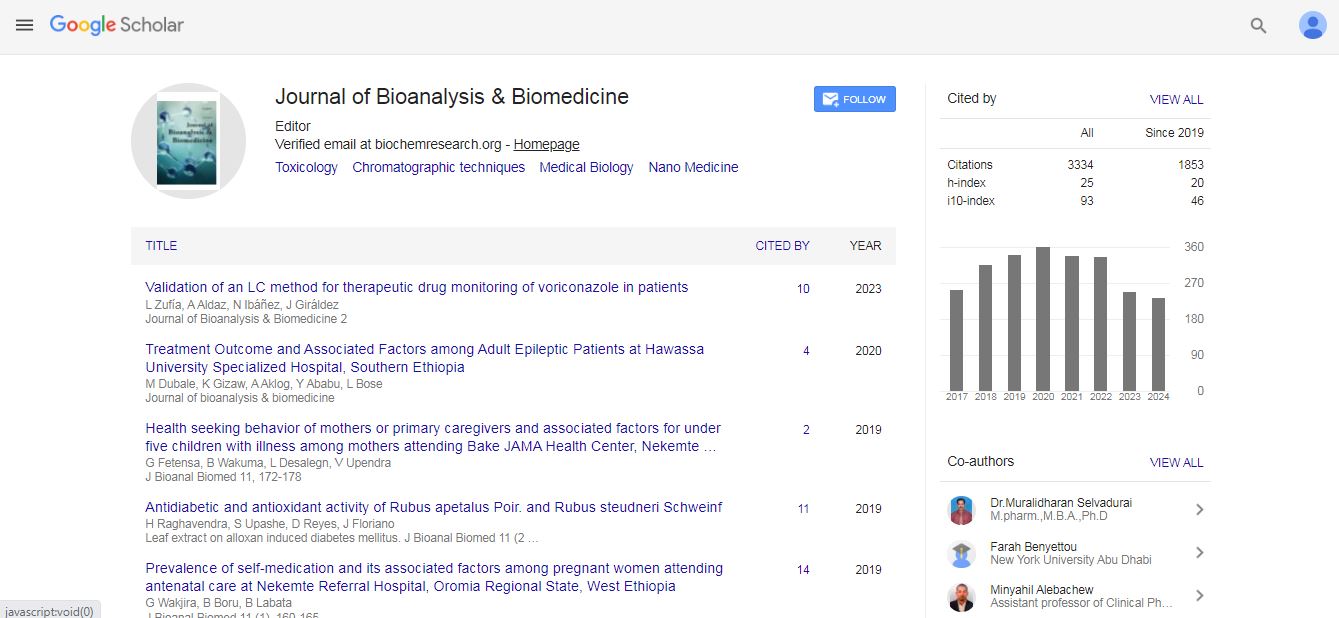
Journal of Bioanalysis & Biomedicine received 3099 citations as per Google Scholar report