Short Communication - (2025) Volume 9, Issue 5
Received: 01-Sep-2025, Manuscript No. hps-26-184480;
Editor assigned: 03-Sep-2025, Pre QC No. P-184480;
Reviewed: 17-Sep-2025, QC No. Q-184480;
Revised: 22-Sep-2025, Manuscript No. R-184480;
Published:
29-Sep-2025
, DOI: 10.37421/2573-4563.2025.9.362
Citation: Smirnov, Pavel I.. ”Bile Acids: A Key Regulator of Liver Health.” J Hepatol Pancreat Sci 09 (2025):362.
Copyright: © 2025 Smirnov I. Pavel This is an open-access article distributed under the terms of the Creative Commons Attribution License, which permits unrestricted use, distribution and reproduction in any medium, provided the original author and source are credited.
Bile acids, once primarily understood for their role in lipid digestion, are now recognized as critical signaling molecules with a profound impact on a wide range of metabolic pathways within the liver. These signaling roles are mediated through the activation of nuclear receptors such as the farnesoid X receptor (FXR) and G-protein coupled receptor TGR5. By engaging these receptors, bile acids orchestrate the expression of genes that are fundamental to maintaining glucose, lipid, and overall energy homeostasis within the body. Consequently, disruptions in bile acid signaling are intrinsically linked to the pathogenesis of numerous liver diseases, including non-alcoholic fatty liver disease (NAFLD), cholestasis, and hepatocellular carcinoma (HCC), positioning this signaling axis as a highly significant target for novel therapeutic interventions [1].
The farnesoid X receptor (FXR) stands out as a pivotal bile acid sensor, predominantly located within the liver. Its primary functions involve the intricate regulation of bile acid synthesis, the transport of these crucial molecules, and their overall metabolic processing. The activation of FXR by endogenous bile acids confers a protective effect against various forms of liver injury and fibrosis. This protection is achieved through the suppression of inflammatory cascades and the promotion of cellular regenerative processes. However, the sustained or aberrant activation of FXR signaling can precipitate adverse outcomes, underscoring the inherent complexity of its multifaceted role in the normal and pathological states of liver physiology [2].
The G-protein coupled receptor TGR5, also identified by its gene name GPBAR1, represents another key bile acid receptor. This receptor is situated on the cell surface of hepatocytes and also plays a role in other metabolically active tissues. Upon activation by bile acids, TGR5 exerts influence over critical physiological processes including energy expenditure, the regulation of glucose metabolism, and the modulation of inflammatory responses. Its demonstrated capacity to mitigate liver inflammation and fibrosis suggests a promising therapeutic potential for the management of various liver diseases [3].
The pathogenesis of non-alcoholic fatty liver disease (NAFLD) is intimately connected with alterations observed in bile acid profiles and their downstream signaling. Within the context of NAFLD, bile acids significantly influence hepatic lipid metabolism, insulin sensitivity, and the inflammatory milieu of the liver. Therefore, strategies aimed at modulating bile acid signaling pathways emerge as a particularly promising approach for the effective management of NAFLD and for preventing its progression to more severe manifestations, such as non-alcoholic steatohepatitis (NASH) [4].
Cholestasis, a clinical condition defined by the impaired flow of bile from the liver, inevitably leads to the deleterious accumulation of toxic bile acids within hepatic tissues. This buildup of bile acids causes substantial cellular damage. A thorough understanding of how bile acid transporters and their associated signaling pathways become dysregulated during cholestatic conditions is therefore absolutely crucial for the successful development of effective therapeutic strategies. The ultimate goal is to restore normal bile acid homeostasis and robustly protect the liver from further injury [5].
The influence of bile acid signaling on the development and progression of hepatocellular carcinoma (HCC) is a complex phenomenon, with scientific evidence pointing towards both pro-tumorigenic and anti-tumorigenic roles, contingent upon the specific biological context. Bile acids possess the capacity to promote inflammation and cellular proliferation through the activation of their cognate receptors, thereby potentially contributing to the initiation and advancement of HCC. Concurrently, bile acids also exhibit protective effects against specific types of liver injury that are known to predispose individuals to the development of cancer [6].
The intricate metabolic processing of bile acids is subject to rigorous regulation by a suite of specific enzymes. Among these, CYP7A1 holds a position of paramount importance as it acts as the rate-limiting enzyme in the primary synthesis of bile acids. Any dysregulation affecting CYP7A1 or other critical metabolic enzymes can precipitate significant alterations in the composition of the bile acid pool. Such alterations can, in turn, exacerbate the progression of liver diseases, highlighting the vital necessity of comprehending these enzymatic control mechanisms for effective therapeutic targeting [7].
A substantial and integral role in shaping the composition of the bile acid pool is played by the gut microbiota. Through processes such as deconjugation and dehydroxylation, gut bacteria modify primary bile acids into secondary bile acids. These secondary bile acids possess distinct signaling properties and exert significant influence on host metabolism and immune responses. This creates a complex enterohepatic circulation of bile acids that critically impacts overall liver health [8].
Emerging therapeutic strategies that specifically target bile acid signaling pathways are gaining considerable traction for the management of a diverse spectrum of liver conditions. Investigational approaches include the development of modulators for both FXR and TGR5, as well as agents designed to precisely alter bile acid synthesis or transport mechanisms. These novel therapeutic avenues are currently being explored for their potential in managing metabolic liver diseases, cholestatic disorders, and even in the context of liver cancer. The precise targeting of these vital pathways holds considerable promise for substantially improving patient outcomes [9].
The intricate interplay between bile acid signaling and other crucial metabolic pathways, including those governed by hormones such as FGF19, GLP-1, and insulin, is absolutely essential for the maintenance of metabolic homeostasis. Any disruption within these interconnected signaling networks can significantly contribute to the pathogenesis of metabolic syndrome and its associated liver diseases. This underscores the profound necessity for adopting a holistic and integrated approach when seeking to understand and effectively treat these complex multifactorial conditions [10].
Bile acids, traditionally recognized for their essential function in facilitating lipid digestion and absorption, have more recently been understood to act as potent signaling molecules with far-reaching effects on a multitude of metabolic pathways, particularly within the liver. Their signaling capacity is primarily exerted through the activation of specific nuclear receptors, notably the farnesoid X receptor (FXR), and cell surface receptors like TGR5. Through these interactions, bile acids effectively modulate gene expression patterns that are fundamental to maintaining the delicate balance of glucose, lipid, and overall energy metabolism. The critical importance of this signaling network is further emphasized by its strong implication in the development and progression of various liver diseases, including non-alcoholic fatty liver disease (NAFLD), cholestasis, and hepatocellular carcinoma (HCC), thereby establishing the bile acid signaling pathway as a prime target for innovative therapeutic strategies [1].
The farnesoid X receptor (FXR) serves as a central bile acid sensor within the liver, playing a pivotal role in the coordinated regulation of bile acid synthesis, bile acid transport mechanisms, and bile acid metabolism. Activation of FXR by bile acids confers significant protective benefits against liver injury and the development of fibrosis, primarily by attenuating inflammatory responses and promoting cellular regeneration. Nevertheless, the prolonged or inappropriate signaling through FXR can lead to undesirable adverse effects, thereby highlighting the nuanced and complex nature of its function in liver pathophysiology [2].
The TGR5 receptor, a member of the G-protein coupled receptor family and also known as GPBAR1, is another critical bile acid receptor. It is ubiquitously expressed on the surface of hepatocytes and other tissues involved in metabolism. Engagement of TGR5 by bile acids influences key physiological processes such as energy expenditure, glucose homeostasis, and inflammatory modulation. The capacity of TGR5 activation to ameliorate liver inflammation and fibrosis points towards its potential as a therapeutic target for various liver-related conditions [3].
Alterations in the composition and signaling capacity of bile acids are strongly associated with the underlying mechanisms driving non-alcoholic fatty liver disease (NAFLD). Bile acids exert a significant influence on hepatic lipid metabolism, modulate insulin sensitivity, and impact the inflammatory state of the liver in NAFLD patients. Consequently, therapeutic interventions aimed at modulating bile acid signaling represent a highly promising strategy for the effective management of NAFLD and for halting its progression to more severe forms, such as non-alcoholic steatohepatitis (NASH) [4].
Cholestasis, a pathological condition characterized by the impaired secretion and flow of bile from the liver, results in the accumulation of bile acids to toxic levels within the liver tissue. This accumulation leads to significant cellular damage and dysfunction. A comprehensive understanding of the molecular mechanisms governing bile acid transporters and the dysregulation of their signaling pathways in cholestatic liver diseases is absolutely indispensable for the development of effective treatments. The objective is to restore bile acid homeostasis and provide robust protection against liver injury [5].
The impact of bile acid signaling on the complex process of hepatocellular carcinoma (HCC) development is multifaceted. Research indicates that bile acids can exert both pro-tumorigenic and anti-tumorigenic effects, depending on the specific cellular and molecular context. Bile acids have the ability to stimulate inflammation and promote cell proliferation through their receptor pathways, potentially contributing to HCC initiation and progression. Conversely, they also demonstrate protective effects against certain types of liver damage that create a predisposition for cancer development [6].
The synthesis and metabolism of bile acids are tightly controlled by a set of specific enzymes, with CYP7A1 playing a crucial role as the rate-limiting enzyme in primary bile acid synthesis. Aberrant regulation of CYP7A1 and other enzymes involved in bile acid metabolism can lead to significant shifts in the pool composition of bile acids, thereby contributing to the worsening of liver disease. Therefore, a deep understanding of these enzymatic regulatory mechanisms is paramount for the successful development of targeted therapeutic interventions [7].
The gut microbiota plays a profoundly significant role in shaping the composition of the host's bile acid pool. Through microbial enzymatic activities, primarily deconjugation and dehydroxylation, primary bile acids are transformed into secondary bile acids. These secondary bile acids possess distinct signaling properties and exert considerable influence on host metabolism and immune system functions. This intricate interplay forms a complex enterohepatic circulation of bile acids that critically impacts liver health [8].
Therapeutic strategies specifically designed to modulate bile acid signaling are increasingly being developed and investigated for a wide array of liver-related conditions. These strategies encompass the use of agonists and antagonists for FXR and TGR5, as well as pharmacological agents that can precisely control bile acid synthesis and transport. Such interventions are under active investigation for their efficacy in managing metabolic liver diseases, cholestatic disorders, and even in the context of liver cancer. The precise and targeted modulation of these pathways offers considerable promise for enhancing therapeutic outcomes in patients [9].
The intricate cross-talk between bile acid signaling and other vital metabolic pathways, including those mediated by hormones such as FGF19, GLP-1, and insulin, is fundamental for maintaining overall metabolic homeostasis. Disruptions occurring within these interconnected signaling networks can significantly contribute to the development of metabolic syndrome and its associated liver diseases. This highlights the critical importance of adopting a comprehensive and integrated perspective when attempting to understand and treat these complex, multifactorial conditions [10].
Bile acids are essential signaling molecules that regulate liver metabolism, impacting glucose and lipid homeostasis through receptors like FXR and TGR5. Dysregulation of bile acid signaling is implicated in liver diseases such as NAFLD, cholestasis, and HCC. FXR plays a protective role against liver injury but can have adverse effects with prolonged activation. TGR5 influences energy expenditure and inflammation, offering therapeutic potential. Bile acid profiles are altered in NAFLD, and modulating their signaling is a promising treatment strategy. Cholestasis involves toxic bile acid accumulation, making understanding transporter function crucial. Bile acids have complex roles in HCC, potentially promoting or inhibiting tumor growth. Enzyme regulation, particularly by CYP7A1, is vital for bile acid synthesis. The gut microbiota modifies bile acids, impacting host metabolism and immunity. Therapeutic interventions targeting bile acid signaling, including FXR and TGR5 modulators, are being developed for liver diseases. The interplay between bile acids and other metabolic hormones is key for homeostasis, and disruptions can lead to metabolic syndrome and liver disease.
None
None
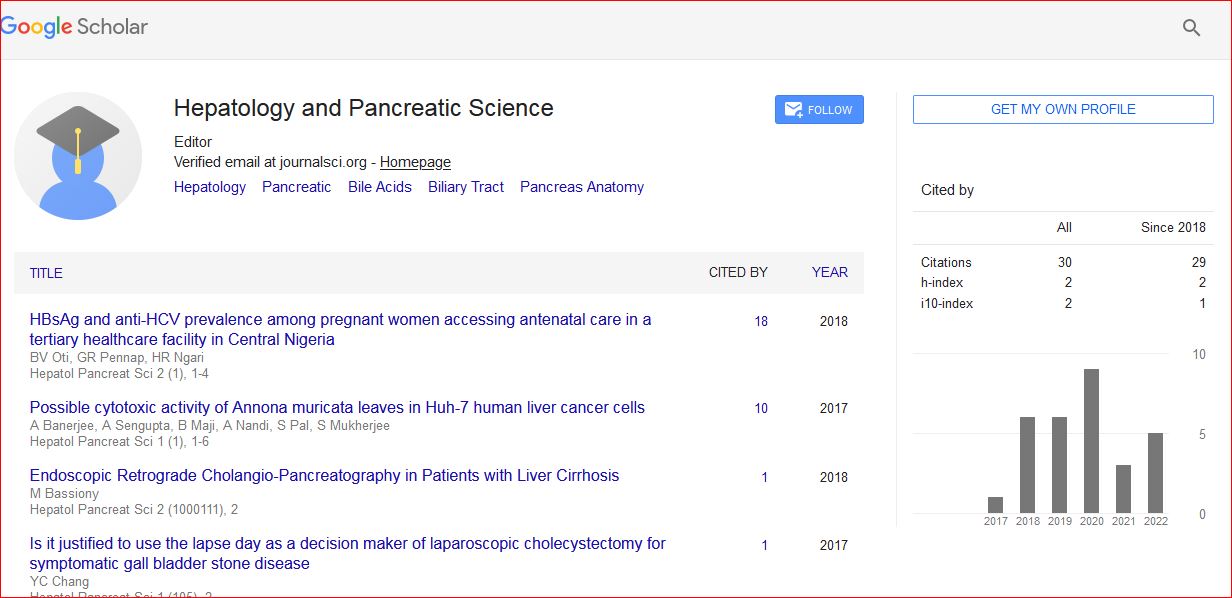
Hepatology and Pancreatic Science received 34 citations as per Google Scholar report