Commentary - (2025) Volume 9, Issue 4
Received: 01-Jul-2025, Manuscript No. jchd-26-185697;
Editor assigned: 03-Jul-2025, Pre QC No. P-185697;
Reviewed: 17-Jul-2025, QC No. Q-185697;
Revised: 22-Jul-2025, Manuscript No. R-185697;
Published:
29-Jul-2025
, DOI: 10.37421/2684-6020.2024.9.253
Citation: Khan, Nadia. ”Beyond Traditional Risks: Multifaceted
CHD Causes Identified.” J Coron Heart Dis 09 (2025):253.
Copyright: © 2025 Khan N. This is an open-access article distributed under the terms of the Creative Commons Attribution License, which permits unrestricted use, distribution
and reproduction in any medium, provided the original author and source are credited.
The landscape of coronary heart disease (CHD) is continually evolving, with recent research unearthing a multitude of previously underestimated risk factors and challenging long-held assumptions about its prevention and treatment. This evolving understanding necessitates a comprehensive review of the latest evidence that reshapes our perception of this complex condition. The emphasis is on newer evidence that reshapes our understanding of CHD's multifaceted nature, moving beyond common knowledge to delve into surprising findings about coronary heart disease (CHD) [1].
Recent investigations have illuminated the significant role of chronic inflammation, identifying it as a previously underestimated driver in the progression of coronary heart disease. This body of work explores how sustained inflammatory responses contribute to the development and instability of atherosclerotic plaques, offering novel perspectives on potential therapeutic targets for intervention and management [2].
The intricate connection between the gut microbiome and cardiovascular health is rapidly emerging as a critical area of focus. Current research discusses how dysbiosis, or an imbalance in gut bacteria, can significantly influence the development and overall severity of coronary heart disease through various intricate metabolic pathways, thereby presenting a novel frontier for therapeutic strategies and interventions [3].
Emerging scientific evidence points towards air pollution, specifically particulate matter, as a substantial yet frequently overlooked contributor to the incidence and exacerbation of coronary heart disease. This area of study meticulously details how exposure to these pollutants can trigger acute cardiovascular events and accelerate the pathological process of atherosclerosis, underscoring the urgent need for robust public health initiatives aimed at mitigating environmental exposures [4].
A thorough review of the existing literature examines the complex and often underappreciated relationship between sleep disorders and the development and progression of coronary heart disease. This research reveals how specific conditions, such as obstructive sleep apnea, function not merely as symptomatic manifestations but as independent risk factors that significantly elevate the probability of developing adverse cardiovascular outcomes [5].
The detrimental impact of prolonged sedentary behavior on cardiovascular health is proving to be more profound and widespread than initially understood. This research highlights how sustained periods of inactivity, irrespective of an individual's overall physical activity levels, contribute to an elevated risk of coronary heart disease by negatively impacting crucial aspects of metabolic health and vascular function [6].
The influence of psychological stress on the onset and worsening of coronary heart disease is demonstrably more direct and potent than commonly acknowledged. This exploration delves into the intricate biological mechanisms through which both acute and chronic stress exert their effects on cardiac function and actively promote the process of atherogenesis, strongly advocating for the integration of comprehensive stress management strategies into cardiovascular care [7].
Recent research has begun to shed light on the unexpected and significant impact of specific dietary patterns, extending far beyond the traditional focus on fat and cholesterol, on the overall risk profile for coronary heart disease. This work meticulously examines how deficiencies in certain micronutrients and the widespread consumption of ultra-processed foods can actively contribute to systemic inflammation and endothelial dysfunction, thereby shaping a more nuanced and comprehensive understanding of heart-healthy dietary practices [8].
The contribution of genetic predispositions to the development of coronary heart disease is an aspect that is frequently underestimated in standard risk assessments. This article critically discusses the emerging utility and potential of polygenic risk scores in accurately identifying individuals who possess a higher inherent susceptibility to the disease, thereby complementing traditional risk factor evaluations and paving the way for highly personalized and effective prevention strategies [9].
This focused study illuminates the often-missed but significant impact that suboptimal thyroid function can have on overall cardiovascular health. The research meticulously details how even mild, subclinical thyroid abnormalities can contribute to adverse lipid profiles and a demonstrably increased risk of coronary events, strongly suggesting that broader screening protocols for thyroid function may be warranted in cardiovascular risk assessment [10].
The evolving understanding of coronary heart disease (CHD) has been significantly advanced by research exploring novel and often underestimated risk factors, moving beyond traditional notions of prevention and treatment. A cornerstone of this progress lies in the identification of emerging risk factors that challenge established paradigms. The emphasis is on newer evidence that reshapes our understanding of CHD's multifaceted nature, moving beyond common knowledge to delve into surprising findings about coronary heart disease (CHD) [1].
Recent scientific endeavors have uncovered a significant and previously underestimated link between chronic inflammatory processes and the progressive nature of coronary heart disease. This line of inquiry critically examines the intricate mechanisms by which persistent inflammatory responses actively contribute to the development and subsequent instability of atherosclerotic plaques, thereby presenting a novel perspective on viable therapeutic targets for effective intervention [2].
The profound influence of the gut microbiome on the maintenance of cardiovascular health is increasingly recognized as a critical area of scientific investigation. This research area thoroughly discusses how disruptions and imbalances within the gut bacterial ecosystem can profoundly affect the initiation and severity of coronary heart disease through a complex interplay of various metabolic pathways, thereby highlighting a novel and promising avenue for targeted interventions [3].
An accumulating body of emerging evidence strongly suggests that exposure to ambient air pollution, particularly particulate matter, represents a significant yet frequently neglected contributor to the pathogenesis of coronary heart disease. This field of study meticulously delineates the physiological pathways through which fine particulate matter and other environmental pollutants can precipitate acute cardiovascular events and accelerate the insidious process of atherosclerosis, emphasizing the imperative for proactive public health strategies [4].
This comprehensive review critically evaluates the intricate and often subtle relationship between various sleep disorders and their impact on the development and progression of coronary heart disease. The findings reveal that conditions such as obstructive sleep apnea are not merely secondary symptoms but are, in fact, independent risk factors that substantially elevate the likelihood of experiencing adverse cardiovascular outcomes [5].
The detrimental consequences associated with prolonged periods of sedentary behavior on an individual's cardiovascular health are now understood to be far more significant than previously appreciated. This research underscores how a predominantly sedentary lifestyle, independent of established physical activity guidelines, contributes to an increased risk of coronary heart disease by adversely affecting key aspects of metabolic regulation and vascular functionality [6].
The intricate connection between psychological stress and the precipitation and exacerbation of coronary heart disease is demonstrably more direct and impactful than commonly perceived. This exploration delves into the underlying biological mechanisms by which acute and chronic stress impact cardiac function and promote the pathological process of atherogenesis, strongly advocating for the integration of comprehensive stress management techniques into clinical practice [7].
This research work highlights the often-surprising influence of specific dietary patterns, extending beyond the traditional focus on macronutrients like fats and cholesterol, on the risk profile for coronary heart disease. The study meticulously investigates how deficiencies in essential micronutrients and the frequent consumption of ultra-processed foods can contribute to systemic inflammation and endothelial dysfunction, thereby contributing to a more nuanced understanding of dietary recommendations for cardiovascular health [8].
The role of underlying genetic predispositions in the development of coronary heart disease is frequently underestimated in clinical practice and general understanding. This article provides an in-depth discussion on the emerging utility of polygenic risk scores as a valuable tool for identifying individuals at a demonstrably higher inherent risk, thereby complementing conventional risk factor assessments and facilitating the development of highly personalized prevention strategies [9].
This scientific investigation brings to light the often-overlooked impact that subclinical thyroid dysfunction can have on an individual's cardiovascular health. The research meticulously details how even mild abnormalities in thyroid hormone levels can contribute to unfavorable lipid profiles and an increased susceptibility to coronary events, suggesting that a broader screening approach for thyroid function may be beneficial in cardiovascular risk assessment protocols [10].
Recent research has expanded our understanding of coronary heart disease (CHD) by identifying numerous factors beyond traditional risks. Chronic inflammation, gut microbiome imbalances, air pollution, sleep disorders, prolonged sedentary behavior, and psychological stress are all implicated as significant contributors to CHD development and progression. Dietary patterns, particularly the impact of micronutrient deficiencies and ultra-processed foods, also play a crucial role. Furthermore, genetic predispositions, assessed through polygenic risk scores, offer insights into individual susceptibility. Even subclinical thyroid dysfunction is recognized as a potential contributor to cardiovascular risk. These findings highlight the complexity of CHD etiology and underscore the need for multifaceted prevention and treatment strategies.
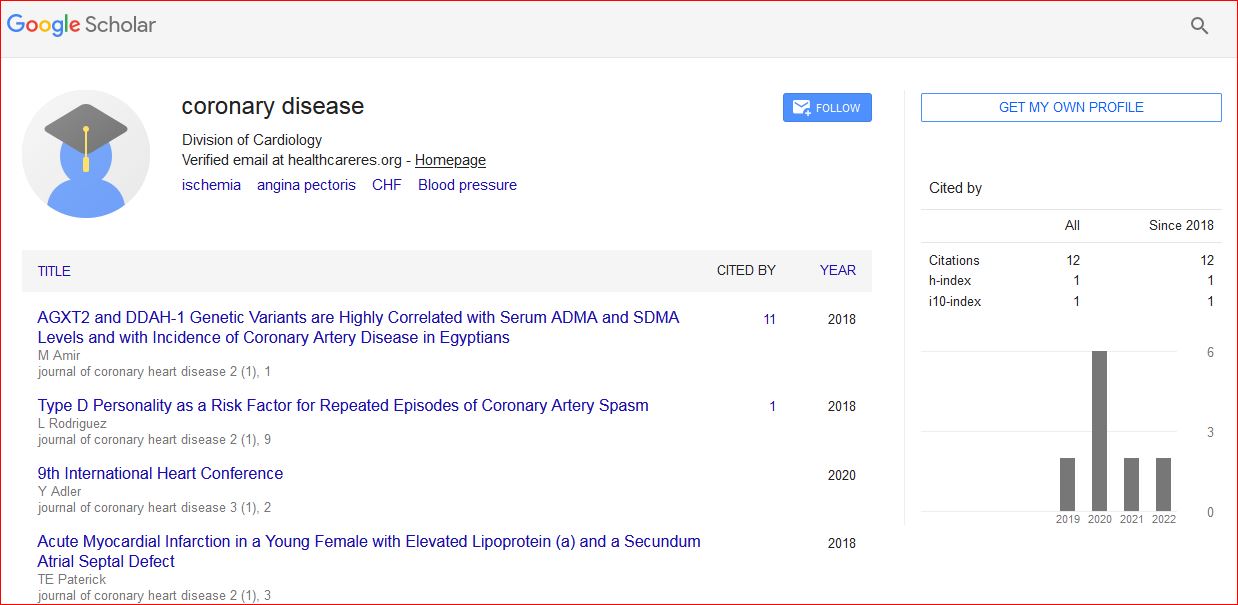
Journal of Coronary Heart Diseases received 15 citations as per Google Scholar report