Brief Report - (2025) Volume 9, Issue 4
Received: 01-Jul-2025, Manuscript No. jigc-26-185916;
Editor assigned: 03-Jul-2025, Pre QC No. P-185916;
Reviewed: 17-Jul-2025, QC No. Q-185916;
Revised: 22-Jul-2025, Manuscript No. R-185916;
Published:
29-Jul-2025
, DOI: 10.37421/2684-4591.2025.9.325
Citation: Svensson, Anna. ”Balloon Angioplasty: Plaque Fracture,
Stent Outcomes, and Imaging.” J Interv Gen Cardiol 09 (2025):325.
Copyright: © 2025 Svensson A. This is an open-access article distributed under the terms of the Creative Commons Attribution License, which permits unrestricted use,
distribution and reproduction in any medium, provided the original author and source are credited.
The intricate mechanics of balloon angioplasty, particularly in the context of high-risk coronary lesions, are a subject of ongoing investigation and refinement. A crucial aspect of this procedure involves the interaction between the angioplasty balloon and the atherosclerotic plaque, leading to its modification and preparation for stent deployment. Understanding the precise ways in which balloons deform and fracture plaques is paramount for achieving optimal interventional outcomes and minimizing the risk of complications. Recent research has illuminated the significant role of balloon compliance drift, a phenomenon where the balloon's diameter changes under applied pressure, in dictating the resultant plaque fracture geometry in complex lesions. This dynamic behavior directly influences the success of stent placement and can have long-term implications for patient health [1].
Further exploration into the mechanics of plaque modification during balloon angioplasty reveals a complex interplay between inflation dynamics and the resulting fracture patterns. Variations in how the balloon expands and exerts force can profoundly affect the extent and nature of plaque fractures, which in turn impacts how a stent performs once deployed. This nuanced understanding is vital for predicting and managing procedural outcomes, ultimately aiming for improved clinical results in patients with challenging coronary anatomies [2].
Predicting the effectiveness of balloon angioplasty and subsequent stenting in vulnerable atherosclerotic plaques necessitates robust pre-procedural assessment. Advanced imaging techniques play a critical role in characterizing plaque morphology, providing insights that can anticipate fracture patterns and guide intervention strategies. The ability to accurately assess plaque vulnerability before the procedure is instrumental in tailoring the angioplasty approach to the specific characteristics of the lesion [3].
The biomechanical forces generated during balloon angioplasty are a key determinant of plaque fracturing. Investigating these forces offers crucial insights into how the balloon's compliance properties influence the stress distribution within the lesion. This understanding is fundamental to appreciating the factors that govern the depth, complexity, and overall characteristics of the fractures created, thereby informing procedural decisions [4].
The long-term consequences of the plaque fracture patterns generated by balloon angioplasty are of significant clinical interest. Studies have begun to evaluate the association between these fracture patterns and critical stent-related outcomes, such as stent thrombosis and in-stent restenosis, particularly in patients with complex coronary artery disease. This research underscores the importance of achieving not just plaque modification, but optimal modification that minimizes late adverse events [5].
Intravascular imaging has emerged as an indispensable tool for risk stratification and guiding interventional strategies in atherosclerotic disease. Its application extends to assessing plaque vulnerability and predicting fracture morphology, enabling physicians to make more informed decisions regarding balloon selection and inflation. The real-time visualization provided by these imaging modalities enhances procedural precision and safety [6].
Computational modeling offers a powerful avenue for simulating the complex interactions between angioplasty balloons and atherosclerotic plaques. By creating virtual representations of these events, researchers can gain a deeper understanding of the biomechanical parameters that govern plaque fracturing. This approach allows for systematic investigation of various scenarios and balloon characteristics, paving the way for predictive insights [7].
The efficacy of different balloon designs and inflation techniques in achieving optimal plaque fracture and enhancing procedural success is a critical area of clinical research. Randomized trials are essential for rigorously evaluating these variations, particularly in patients with challenging coronary lesions where achieving adequate lesion preparation is paramount for successful stenting and improved long-term outcomes [8].
Plaque composition and morphology exert a significant influence on the fracturing process during balloon angioplasty. Exploring how different tissue characteristics affect the extent and predictability of plaque fractures provides valuable information for intervention planning. A thorough understanding of these plaque-specific factors can lead to more personalized and effective angioplasty strategies [9].
Advanced computational methods, including computational fluid dynamics and finite element analysis, are being employed to simulate the intricate interactions occurring during balloon angioplasty. These multiphysics models aim to elucidate how balloon compliance affects lesion fracturing, which in turn influences stent apposition and ultimately impacts long-term clinical outcomes. Such simulations offer a powerful means to study complex biomechanical phenomena [10].
Balloon compliance drift, a phenomenon characterized by the change in balloon diameter under pressure during angioplasty, is a critical factor that can significantly alter the geometry of plaque fractures in high-risk lesions. Understanding this dynamic behavior is essential for accurately predicting and optimizing stent deployment outcomes, potentially leading to a reduction in restenosis and an improvement in long-term results in complex coronary interventions [1].
The intricate relationship between balloon angioplasty mechanics and the resultant plaque modification in complex coronary arteries is a subject of ongoing study. Variations in balloon inflation dynamics can substantially influence the extent and pattern of plaque fractures, which consequently affects subsequent stent performance and clinical outcomes. This highlights the importance of precise control over balloon mechanics for optimal results [2].
Pre-procedural imaging holds predictive value in anticipating the effectiveness of balloon angioplasty and subsequent stenting in vulnerable atherosclerotic plaques. Emphasizing the necessity for advanced imaging techniques allows for a more thorough characterization of plaque morphology, thereby improving the prediction of fracture patterns and guiding intervention strategies effectively [3].
The biomechanical forces at play during balloon angioplasty are instrumental in the fracturing of atherosclerotic plaques. Insights into these forces reveal how balloon compliance characteristics influence the stress distribution within the lesion, which in turn affects the depth and complexity of the fractures. This understanding is fundamental to the procedural success [4].
Evaluating the long-term consequences of different plaque fracture patterns generated by balloon angioplasty is crucial for managing outcomes such as stent thrombosis and in-stent restenosis in patients with complex coronary artery disease. This research underscores the imperative of achieving optimal plaque modification through careful procedural planning and execution [5].
Intravascular imaging serves a vital role in assessing plaque vulnerability and guiding interventional strategies in high-risk lesions. This technology aids in predicting fracture morphology and informs the critical decision-making process regarding balloon selection, thereby enhancing procedural safety and efficacy [6].
Experimental studies employing computational modeling are instrumental in simulating balloon-plaque interaction and its impact on fracture characteristics. The objective is to foster a deeper comprehension of the biomechanical parameters that govern plaque fracturing during angioplasty, offering a predictive framework for procedural outcomes [7].
Clinical trials investigating the efficacy of different balloon designs and inflation techniques are essential for optimizing plaque fracture and improving procedural success in patients undergoing angioplasty for challenging coronary lesions. Such trials provide robust evidence for refining best practices in interventional cardiology [8].
The impact of plaque composition and morphology on the fracturing process during balloon angioplasty is a key area of investigation. Understanding how diverse tissue characteristics influence the extent and predictability of plaque fractures offers critical implications for intervention planning, leading to more tailored and effective treatments [9].
Advanced computational fluid dynamics and finite element analysis are employed to simulate the complex interactions between angioplasty balloons and atherosclerotic plaques. The goal is to enhance the understanding of how balloon compliance affects lesion fracturing, ultimately influencing stent apposition and long-term clinical outcomes, thereby providing a powerful tool for predictive analysis [10].
This collection of research explores the complex interactions during balloon angioplasty, focusing on how balloon mechanics, plaque characteristics, and imaging influence plaque fracture and subsequent stent outcomes. Key areas of investigation include the impact of balloon compliance drift on fracture geometry, the biomechanical forces involved in plaque fracturing, and the predictive value of pre-procedural imaging. Studies utilize in vitro analysis, computational modeling, and clinical trials to understand these phenomena. The research highlights the importance of optimizing plaque modification for reducing restenosis and stent thrombosis, particularly in high-risk coronary lesions. Ultimately, the goal is to improve procedural success and long-term patient health through a deeper understanding of balloon-plaque interaction.
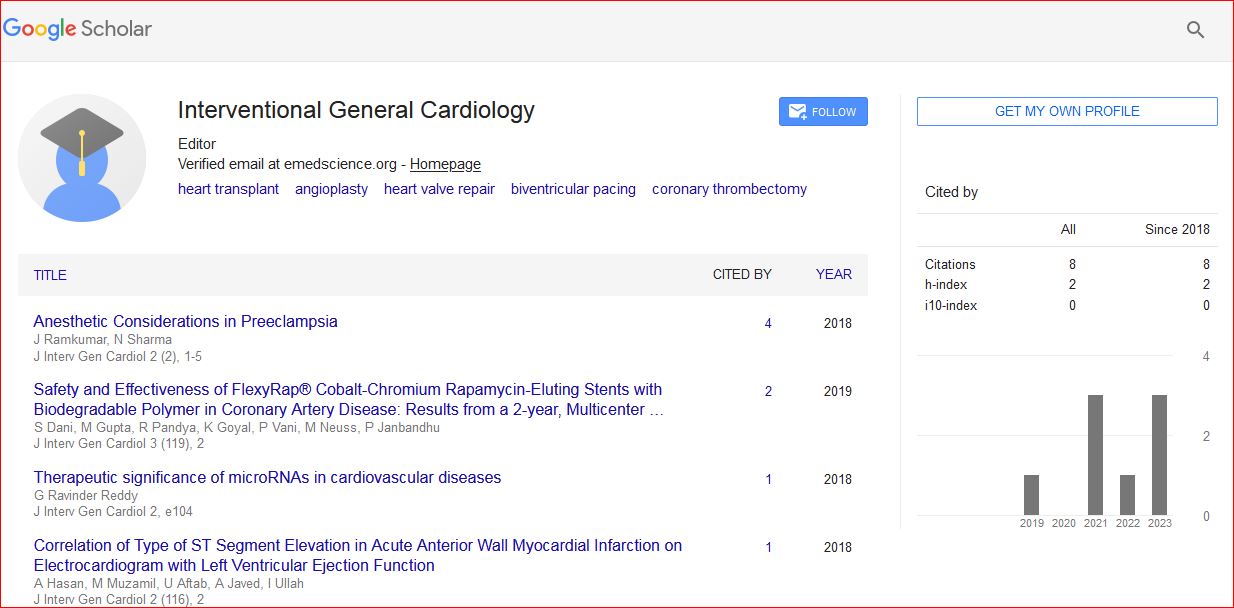
Journal of Interventional and General Cardiology received 11 citations as per Google Scholar report