Perspective - (2025) Volume 11, Issue 3
Received: 02-Jun-2025, Manuscript No. jpnp-25-175496;
Editor assigned: 04-Jun-2025, Pre QC No. P-175496;
Reviewed: 18-Jun-2025, QC No. Q-175496;
Revised: 23-Jun-2025, Manuscript No. R-175496;
Published:
30-Jun-2025
, DOI: 10.37421/2472-0992.2025.11.368
Citation: Takimoto, Hanae. ”Asteraceae: A Treasure Trove of Diverse Applications.” J Pharmacogn Nat Prod 11 (2025):368.
Copyright: © 2025 Takimoto H. This is an open-access article distributed under the terms of the Creative Commons Attribution License, which permits unrestricted use, distribution and reproduction in any medium, provided the original author and source are credited.
The Asteraceae family, also known as the daisy or sunflower family, represents one of the largest and most diverse groups of flowering plants, boasting significant ecological and economic importance. A deep dive into this family reveals an extraordinary chemical diversity, encompassing a wide array of secondary metabolites. These compounds, including terpenoids, flavonoids, coumarins, and polyacetylenes, are not merely structural components; they possess significant biological activities. Research has documented their potent anti-inflammatory, antimicrobial, anticancer, and antioxidant properties. This inherent biochemical richness positions Asteraceae species as prime candidates for developing novel natural products, particularly for pharmaceutical and cosmeceutical applications [1].
Understanding the evolutionary journey of such a diverse family is crucial. Studies on the Astereae tribe, a major lineage within Asteraceae, employ comprehensive nuclear and plastid Deoxyribonucleic Acid (DNA) sequence data to delineate evolutionary relationships. These investigations provide a robust phylogenetic framework, which in turn resolves previously ambiguous relationships. They also clarify character evolution, examining traits like floral morphology and geographical distribution patterns. What this really means is that these findings significantly contribute to our understanding of how this economically and ecologically vital group diversified over time [2].
Further genetic explorations have yielded groundbreaking insights. A prime example is the chromosome-level genome assembly for the common sunflower (Helianthus annuus L.), a key member of the Asteraceae family. This high-quality genome sequence offers an unprecedented window into the genetic underpinnings of adaptation to diverse environments. It also illuminates the evolutionary processes involved in its domestication. Such resources are invaluable, serving as foundational tools for future crop improvement initiatives and broadening our understanding of plant genome evolution at large [4].
Beyond broad family-level analyses, specific genera within Asteraceae have received focused attention for their unique attributes. For instance, a comprehensive review of Lactuca species synthesizes their ethnobotanical uses, phytochemical profiles, and pharmacological activities. Traditionally applied for various ailments, these species contain key bioactive compounds like sesquiterpene lactones and flavonoids. Scientific validation confirms their antioxidant, anti-inflammatory, and sedative properties, affirming their potential as therapeutic agents [3].
Similarly, Taraxacum officinale, commonly known as Dandelion, has been extensively reviewed for its ethnomedicinal uses, diverse phytochemistry, and validated pharmacological properties. Its historical applications for treating ailments, coupled with the identification of bioactive compounds such as sesquiterpenes and flavonoids, are supported by scientific evidence demonstrating antioxidant, anti-inflammatory, and hepatoprotective effects, confirming its therapeutic value [10].
The ecological interactions of Asteraceae plants reveal another layer of complexity and importance. Diverse fungal endophytes inhabit plants within this family, playing crucial ecological roles and demonstrating significant biotechnological potential. These endophytes produce a range of bioactive compounds that promote plant growth, enhance stress tolerance, and offer defense against pathogens. This highlights their promise for innovation in agriculture and pharmaceuticals [5].
Furthermore, various Asteraceae species exhibit remarkable phytoremediation capabilities for soils contaminated with heavy metals. Research synthesizes current knowledge on their mechanisms for metal uptake, translocation, and accumulation, identifying specific genera and species highly efficient at extracting or stabilizing pollutants. This work underscores the ecological and economic advantages of utilizing Asteraceae plants for environmental restoration [6].
In terms of ecosystem services, Asteraceae communities are vital. Research into pollinator visitation patterns and floral resource utilization by native bees within diverse Asteraceae communities sheds light on the intricate interactions between these plants and their essential pollinators. These studies show how different Asteraceae species contribute to supporting bee diversity and vital ecosystem services. Understanding these dynamics is essential for effective conservation efforts, benefiting both plant and pollinator communities [8].
Conservation is particularly critical for vulnerable species. A study assessing the genetic diversity and population structure of Artemisia gmelinii, an endangered Asteraceae species, utilized ISSR markers to reveal patterns of genetic variation and gene flow among populations. This provides critical information for developing effective conservation strategies, aiming to preserve the long-term viability of this vulnerable plant species [7].
Lastly, the allelopathic potential of phenolic compounds derived from various Asteraceae species offers a promising avenue for sustainable weed control. These compounds can inhibit the growth of surrounding plants, particularly weeds, providing an eco-friendly alternative to synthetic herbicides and contributing to sustainable agricultural practices [9].
Together, these studies paint a picture of Asteraceae as a family with immense scientific interest and practical applications.
The Asteraceae family stands out for its profound chemical diversity, which includes a wide range of secondary metabolites. These compounds, such as terpenoids, flavonoids, coumarins, and polyacetylenes, are not just chemically intriguing; they exhibit significant biological activities. For example, research demonstrates their potential as anti-inflammatory, antimicrobial, anticancer, and antioxidant agents. This makes the Asteraceae family a crucial source for discovering novel natural products, particularly for pharmaceutical and cosmeceutical uses. This rich chemical profile offers exciting possibilities for developing new medicines and personal care items [1].
Insights into the evolutionary relationships within Asteraceae are continuously advancing. Comprehensive studies on the Astereae tribe, a significant lineage, use nuclear and plastid DNA sequences to construct robust phylogenetic frameworks. These frameworks are pivotal for resolving ambiguities in evolutionary relationships and for understanding how characters like floral morphology and geographical distribution have evolved. This work helps clarify the diversification processes of this economically and ecologically important plant group [2]. Parallel to this, a significant achievement is the chromosome-level genome assembly for the common sunflower (Helianthus annuus L.). This high-quality genomic data provides unparalleled insights into the genetic basis of adaptation to diverse environments and the evolutionary history of its domestication. Such resources are truly invaluable for future crop improvement programs and for advancing our overall understanding of plant genome evolution [4].
Many Asteraceae species hold historical and ongoing significance in traditional medicine. For instance, a detailed review of Lactuca species synthesizes their traditional applications, phytochemical content, and validated pharmacological activities. These species are traditionally used for various ailments, and modern science confirms their efficacy, identifying key bioactive compounds like sesquiterpene lactones and flavonoids with antioxidant, anti-inflammatory, and sedative properties [3]. Similarly, Taraxacum officinale, or Dandelion, has a well-documented history of medicinal uses. Its rich phytochemistry, featuring sesquiterpenes and flavonoids, underpins its scientifically validated antioxidant, anti-inflammatory, and hepatoprotective effects. This evidence strongly supports its therapeutic value in traditional practices [10]. These examples underscore the potential for discovering and validating new therapeutic agents from within the family.
The ecological importance of Asteraceae extends to various interactions and environmental applications. Fungal endophytes residing within Asteraceae plants are being studied for their biotechnological potential and critical ecological roles. These endophytes produce numerous bioactive compounds that promote plant growth, increase stress tolerance, and defend against pathogens, presenting opportunities for agricultural and pharmaceutical innovation [5]. Furthermore, various Asteraceae species show considerable potential for phytoremediation, specifically for soils contaminated with heavy metals. Research synthesizes their mechanisms for metal uptake and accumulation, identifying species highly efficient at extracting or stabilizing pollutants. This highlights the ecological and economic benefits of using these plants for environmental restoration efforts [6].
Asteraceae plants are also integral to maintaining healthy ecosystems through their interactions with pollinators. Studies on pollinator visitation patterns and floral resource utilization by native bees within Asteraceae communities reveal complex interdependencies. Different species contribute uniquely to supporting bee diversity and essential ecosystem services, making an understanding of these dynamics vital for conservation efforts involving both plant and pollinator communities [8]. On the conservation front, genetic diversity and population structure analyses are critical for endangered species. Research on Artemisia gmelinii, an endangered Asteraceae species, using ISSR markers, provides crucial data on genetic variation and gene flow. This information is indispensable for developing effective conservation strategies aimed at preserving the long-term viability of vulnerable plant populations [7]. Finally, the allelopathic potential of phenolic compounds from Asteraceae species presents an eco-friendly solution for sustainable weed control, offering natural alternatives to synthetic herbicides [9]. Together, these facets showcase the broad impact and immense value of the Asteraceae family.
The Asteraceae family is a treasure trove of biological and ecological significance. Research highlights its vast chemical diversity, revealing secondary metabolites like terpenoids, flavonoids, coumarins, and polyacetylenes with anti-inflammatory, antimicrobial, anticancer, and antioxidant properties, suggesting pharmaceutical and cosmeceutical applications. Evolutionary studies within tribes like Astereae provide a robust phylogenetic framework using DNA sequences, clarifying relationships and character evolution. Genomic insights from species like the common sunflower, Helianthus annuus L., offer unprecedented understanding into adaptation and domestication, valuable for crop improvement. Beyond internal mechanisms, the family's ecological interactions are crucial. Fungal endophytes associated with Asteraceae plants exhibit biotechnological potential, contributing to plant growth, stress tolerance, and pathogen defense. Furthermore, various Asteraceae species demonstrate significant phytoremediation capabilities for heavy metal-contaminated soils, showcasing their utility in environmental restoration. The family also plays a vital role in supporting pollinator communities, with studies detailing complex interactions between plants and native bees. Species-specific investigations, such as those on Lactuca and Taraxacum officinale (Dandelion), delve into ethnobotanical uses, phytochemical profiles, and validated pharmacological effects, affirming their traditional medicinal value. Conservation efforts are informed by genetic diversity studies, for example, on endangered species like Artemisia gmelinii. Lastly, the allelopathic potential of phenolic compounds from Asteraceae species points towards sustainable weed control solutions, reducing reliance on synthetic chemicals. This collective body of research underscores the multifaceted importance of the Asteraceae family in natural product discovery, ecological balance, agriculture, and environmental management.
None
None
Indexed at, Google Scholar, Crossref
Indexed at, Google Scholar, Crossref
Indexed at, Google Scholar, Crossref
Indexed at, Google Scholar, Crossref
Indexed at, Google Scholar, Crossref
Indexed at, Google Scholar, Crossref
Indexed at, Google Scholar, Crossref
Indexed at, Google Scholar, Crossref
Indexed at, Google Scholar, Crossref
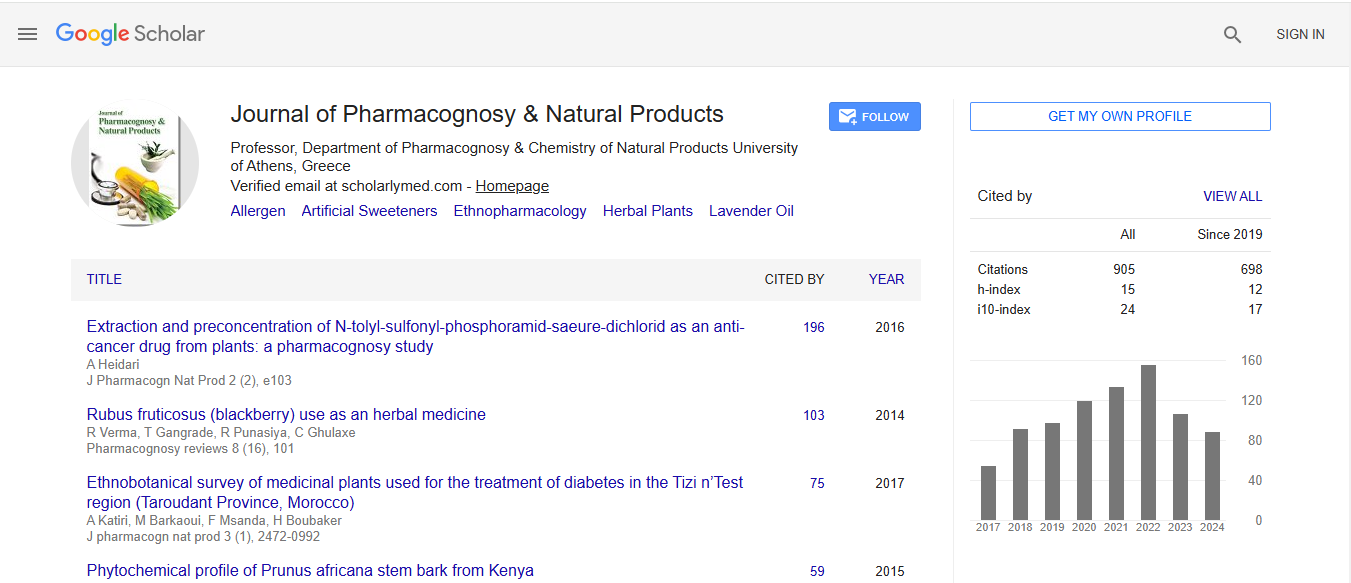
Journal of Pharmacognosy & Natural Products received 606 citations as per Google Scholar report