Opinion - (2025) Volume 16, Issue 3
Received: 02-Jun-2025, Manuscript No. jar-25-176620;
Editor assigned: 04-Jun-2025, Pre QC No. P-176620;
Reviewed: 18-Jun-2025, QC No. Q-176620;
Revised: 23-Jun-2025, Manuscript No. R-176620;
Published:
30-Jun-2025
, DOI: 10.37421/2155-6113.2025.16.1066
Citation: Ricci, Emanuele. ”ART Transforms HIV: Challenges,
Progress, Future.” J AIDS Clin Res 16 (2025):1066.
Copyright: © 2025 Ricci E. This is an open-access article distributed under the terms of the Creative Commons Attribution License, which permits unrestricted use, distribution
and reproduction in any medium, provided the original author and source are credited.
Antiretroviral treatment (ART) has fundamentally changed the landscape of HIV, serving as a powerful tool for preventing its transmission. When people living with HIV consistently achieve and maintain an undetectable viral load through ART, they effectively cannot sexually transmit the virus, a concept known as "Undetectable = Untransmittable" (U=U)[1].
Despite ART's success, HIV-1 drug resistance poses a significant ongoing challenge, especially in regions with limited diagnostic capabilities. Understanding global drug resistance is vital for new strategies and surveillance, emphasizing genotypic resistance testing to guide treatment selections and prevent failures and resistant strain spread[2].
Beyond viral suppression, researchers aim for HIV remission, exploring groundbreaking strategies like therapeutic vaccines, broadly neutralizing antibodies, and gene therapies. These advances seek to move beyond lifelong daily medication, offering hope for long-term control without daily drug intake[3].
While ART has made HIV manageable, its long-term use can cause adverse drug reactions, including metabolic complications and bone density issues. Mitigating these effects is crucial for patient quality of life and informing treatment guidelines, all while maintaining viral suppression[4].
Managing HIV during pregnancy requires balancing maternal health, viral suppression, and fetal safety. Research on ART safety profiles for pregnant individuals provides clinicians with vital data to select effective and safe regimens. The goal is to prevent mother-to-child transmission while minimizing potential adverse effects for mothers and infants[5].
The complexity of ART is amplified by drug-drug interactions, as many individuals with HIV manage comorbidities with multiple medications. Healthcare providers must understand these significant interactionsâ??involving ART drugs, other prescriptions, and supplementsâ??to prevent adverse events, ensure optimal efficacy, and personalize plans for patient safety and success[6].
Equitable access to ART in low- and middle-income countries remains a pressing global health priority. Analysis reveals successes and challenges, including policy, supply chain, and economic barriers. Addressing these hurdles through innovative strategies and partnerships is essential to expand treatment coverage towards universal access[7].
Treating children and adolescents with HIV requires specialized approaches, including tailored drug formulations. Research on newer ART for these populations explores pharmacokinetics, efficacy, safety, and practical considerations like dose adjustments and palatability. These insights guide clinicians in selecting optimal regimens that support healthy growth and viral suppression in this vulnerable group[8].
Consistent ART adherence is paramount for successful long-term HIV management, preventing drug resistance and improving outcomes. Adherence challenges include pill burden, side effects, psychosocial issues, and stigma. Interventions like simplified regimens, long-acting formulations, and behavioral support are vital for patient-centered approaches that empower individuals to maintain treatment and achieve lasting viral suppression[9].
Bone health is a significant concern for individuals with HIV, as both the infection and certain ART medications can reduce bone mineral density and increase fracture risk. Understanding the complex mechanisms of HIV-related bone loss, including inflammation, hormonal changes, and drug-specific effects, is essential. Current strategies emphasize regular monitoring, lifestyle modifications, and pharmacological treatments to preserve bone health and prevent skeletal complications[10].
Antiretroviral treatment (ART) is a pivotal advancement in HIV management, not only for controlling the virus but also as a powerful tool in preventing its transmission. Studies show individuals living with HIV who achieve and maintain an undetectable viral load through consistent ART effectively cannot sexually transmit the virus, a concept known as "Undetectable = Untransmittable" (U=U)[1]. This understanding has reshaped public health strategies, establishing treatment as a primary prevention method and highlighting ART's vital role in global HIV eradication efforts.
However, ART efficacy faces significant hurdles. HIV-1 drug resistance remains a critical challenge, especially in areas lacking advanced diagnostics. Global analysis helps pinpoint where new surveillance and strategies are needed, stressing genotypic resistance testing to guide effective treatment and prevent failures and spread of resistant strains[2]. ART also has long-term consequences. Different regimens can cause adverse drug reactions over time, including metabolic complications and bone density issues. Understanding these side effects is crucial for enhancing patient quality of life and informing treatment guidelines, focusing on mitigation while sustaining viral suppression[4]. Drug-drug interactions further complicate ART, especially for people with comorbidities. Healthcare providers must recognize common interactions between ART drugs and other prescriptions, including over-the-counter remedies and herbal supplements, to prevent adverse events, ensure optimal efficacy, and tailor plans for patient safety and success[6].
Addressing HIV across diverse populations presents unique considerations. Managing HIV during pregnancy demands a careful balance between maternal health, viral suppression, and fetal safety. Recent data on ART safety profiles in pregnancy are vital, enabling clinicians to make informed decisions about the most effective and safest regimens for both mother and child, aiming to prevent mother-to-child transmission while minimizing potential adverse effects[5]. Similarly, treating children and adolescents with HIV requires tailored approaches and specific formulations. This involves reviewing newer ART developed or adapted for younger populations, delving into pharmacokinetics, efficacy, safety, and practical aspects like dose adjustments and palatability. These insights are essential for guiding clinicians in selecting optimal regimens that support healthy growth and viral suppression in this vulnerable group[8].
Consistent adherence to ART is paramount for successful HIV management, preventing drug resistance and improving patient outcomes. Adherence challenges are multifaceted, encompassing factors from pill burden and side effects to psychosocial issues and stigma. This highlights opportunities for interventions such as simplified regimens, long-acting formulations, and behavioral support strategies, all geared towards patient-centered approaches that empower individuals to maintain treatment and achieve lasting viral suppression[9]. Bone health is another significant concern for people living with HIV, as both the virus and certain ART medications can reduce bone mineral density and increase fracture risk. Understanding the complex mechanisms of bone loss, including inflammation, hormonal changes, and drug-specific effects, is essential. Current management strategies emphasize regular monitoring, lifestyle interventions, and pharmacological treatments to preserve bone health and prevent skeletal complications[10].
Looking forward, achieving HIV remissionâ??controlling the virus without lifelong medicationâ??represents a significant aspiration. This study area explores groundbreaking strategies beyond daily ART, including therapeutic vaccines, broadly neutralizing antibodies, and gene therapies. This research outlines scientific advances and hurdles in moving from chronic management to potential cures, offering hope for a future where HIV might no longer necessitate daily drug intake[3]. Moreover, ensuring equitable access to ART in low- and middle-income countries remains a critical global health priority. Current analyses examine ART access, identifying successes and challenges related to policy frameworks, supply chain issues, and economic barriers. The discussion underscores the need for innovative strategies and partnerships to overcome these hurdles and expand treatment coverage, bringing us closer to universal access for all who need it[7].
Antiretroviral therapy (ART) has revolutionized HIV management, transforming it into a manageable chronic condition while also serving as a potent tool for prevention. A key concept, "Undetectable = Untransmittable" (U=U), highlights that consistent ART can effectively prevent sexual transmission of the virus when an undetectable viral load is maintained. Despite these advancements, significant challenges persist. HIV drug resistance remains a global concern, especially in areas with limited diagnostic capabilities, underscoring the need for genotypic resistance testing to guide treatment. Long-term ART use can also lead to adverse drug reactions, including metabolic complications and bone density issues, requiring careful management to improve patient quality of life. Bone health, in particular, is a concern due to both the virus and certain medications, necessitating monitoring and interventions. Achieving HIV remission beyond just viral suppression is an aspirational goal, with research exploring therapeutic vaccines, broadly neutralizing antibodies, and gene therapies to potentially eliminate the need for lifelong medication. Meanwhile, effective treatment requires addressing specific populations, such as ensuring drug safety in pregnancy to prevent mother-to-child transmission and developing tailored formulations for children and adolescents. Adherence to ART is critical for successful outcomes and preventing resistance, often challenged by pill burden, side effects, and psychosocial factors. Complex drug-drug interactions with other medications also require careful consideration for patient safety. Finally, equitable access to ART, particularly in low- and middle-income countries, remains a global health priority, facing hurdles related to policy, supply chains, and economics that demand innovative solutions.
Indexed at, Google Scholar, Crossref
Indexed at, Google Scholar, Crossref
Indexed at, Google Scholar, Crossref
Indexed at, Google Scholar, Crossref
Indexed at, Google Scholar, Crossref
Indexed at, Google Scholar, Crossref
Indexed at, Google Scholar, Crossref
Indexed at, Google Scholar, Crossref
Indexed at, Google Scholar, Crossref
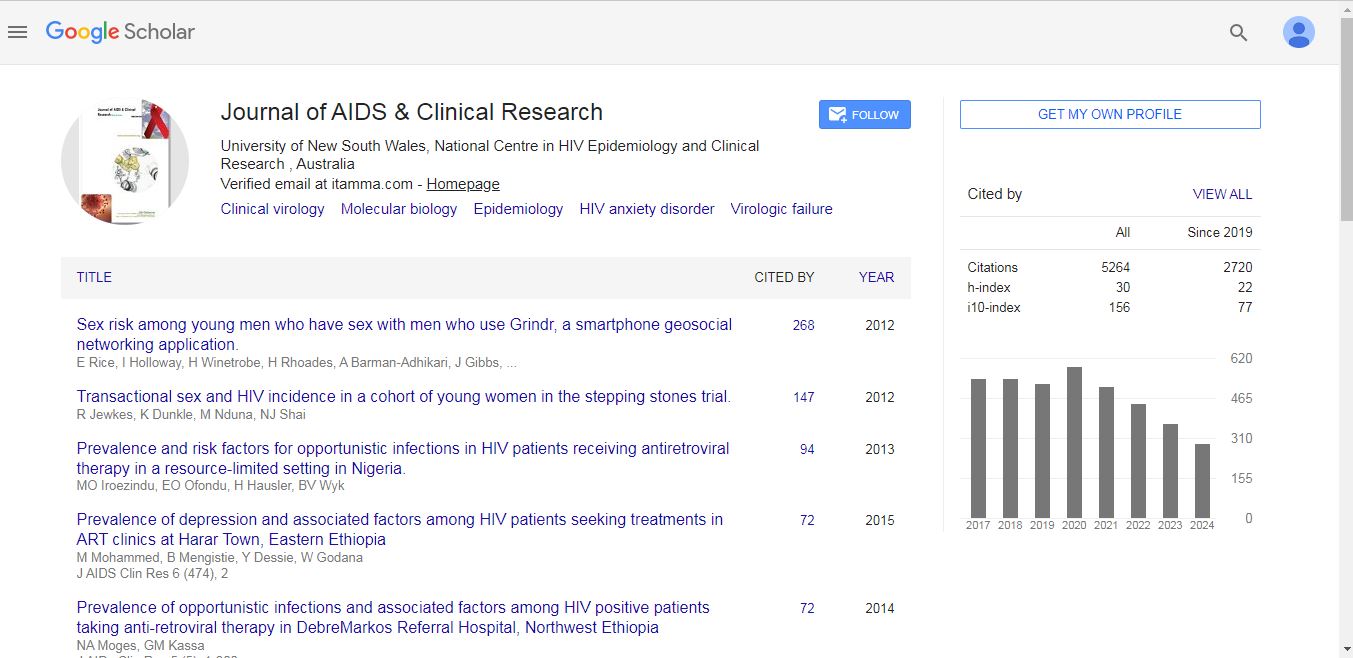
Journal of AIDS & Clinical Research received 5264 citations as per Google Scholar report