Perspective - (2025) Volume 10, Issue 2
Received: 01-Apr-2025, Manuscript No. jidm-26-188053;
Editor assigned: 03-Apr-2025, Pre QC No. P-188053;
Reviewed: 17-Apr-2025, QC No. Q-188053;
Revised: 22-Apr-2025, Manuscript No. R-188053;
Published:
29-Apr-2025
, DOI: 10.37421/2576-1420.2025.10.393
Citation: Müller, Lukas. ”Antibiotic Resistance: A Global Threat,
Urgent Solutions Needed.” J Infect Dis Med 10 (2025):393.
Copyright: © 2025 Müller L. This is an open-access article distributed under the terms of the Creative Commons Attribution License, which permits unrestricted use, distribution
and reproduction in any medium, provided the original author and source are credited.
Antibiotic resistance presents a critical and escalating threat to contemporary healthcare, undermining the effectiveness of treatments for infectious diseases. This complex phenomenon, fueled by evolutionary pressures and the pervasive misuse of antibiotics, demands immediate and coordinated global action to preserve the efficacy of existing drugs and foster the development of innovative therapeutic strategies. The ramifications of unchecked antibiotic resistance are far-reaching, impacting healthcare expenditures, patient mortality rates, and the very feasibility of essential medical procedures, from routine surgeries to complex organ transplants. The ability to combat bacterial infections effectively is foundational to modern medicine, and its erosion poses a significant risk to public health worldwide. Without concerted efforts to address this crisis, we risk returning to an era where common infections are once again untreatable, with devastating consequences for individuals and societies.
The urgency of the situation necessitates a comprehensive understanding of the drivers and a commitment to implementing robust solutions across multiple sectors. The scientific community has been increasingly vocal about the need for a paradigm shift in how we approach antibiotic use and the development of new antimicrobials. This growing concern highlights the interconnectedness of various factors contributing to the problem and the need for a multidisciplinary approach to find sustainable solutions. The economic, social, and public health implications are profound, demanding immediate attention and investment in research, surveillance, and stewardship initiatives. Addressing this challenge is not merely a medical imperative but a global security issue that requires unprecedented collaboration and political will. The future of medicine and global health security hinges on our collective ability to effectively combat the rising tide of antibiotic resistance. The slow pace of new antibiotic development, compounded by significant economic and regulatory hurdles, presents a major obstacle in the fight against resistant pathogens. This situation underscores the critical importance of delving deeper into the molecular mechanisms by which bacteria acquire and develop resistance, thereby identifying novel drug targets for future therapeutic interventions. Concurrently, exploration into alternative strategies such as phage therapy, the use of antimicrobial peptides, and advancements in immunotherapy are gaining considerable momentum. These novel approaches hold promise not only as potential complements to our existing antibiotic arsenal but also as viable replacements for treating infections caused by highly resistant bacteria. The scientific community is actively engaged in exploring these new avenues, recognizing that a diversified approach is essential to stay ahead of evolving resistance mechanisms. The economic landscape for antibiotic research and development has historically been challenging, often disincentivizing investment compared to treatments for chronic conditions. This economic reality necessitates innovative funding models and policy incentives to encourage the pharmaceutical industry to prioritize the development of new antimicrobials. Understanding the intricate genetic and biochemical pathways that confer resistance is paramount to designing drugs that can overcome these defenses. Furthermore, the exploration of non-traditional antimicrobial agents reflects a broader recognition that the future of infectious disease treatment may lie beyond conventional antibiotics. Robust global surveillance systems are indispensable for accurately tracking the emergence and geographical spread of antibiotic-resistant bacteria, providing critical data for informed decision-making. Effective containment and response strategies are contingent upon enhanced international collaboration and the adoption of standardized data reporting mechanisms, enabling a unified global understanding of the resistance landscape. Public health initiatives designed to educate both healthcare professionals and the general public about the principles and practices of responsible antibiotic use are of paramount importance in mitigating the drivers of resistance. This includes emphasizing the need for appropriate prescribing practices, completion of prescribed courses, and avoiding the use of antibiotics for viral infections. The interconnectedness of human, animal, and environmental health in the context of antimicrobial resistance necessitates a holistic perspective, often referred to as the 'One Health' approach. Collaborative efforts across diverse disciplines and sectors are fundamental to developing comprehensive and effective strategies that address the multifaceted nature of this global health threat. The success of these initiatives hinges on the commitment of governments, international organizations, healthcare providers, and the public to work together towards a common goal of preserving the efficacy of antibiotics for future generations. The constant monitoring of resistance patterns allows for early detection of emerging threats and facilitates the rapid deployment of targeted interventions, thereby minimizing the impact of outbreaks and reducing the overall burden of resistant infections. The economic repercussions of antibiotic resistance are substantial and multifaceted, encompassing a significant escalation in healthcare expenditures due to the need for more expensive and prolonged treatments. This financial burden also extends to increased hospital stays, leading to greater demands on healthcare resources, and substantial losses in economic productivity resulting from prolonged illness and disability. Policy interventions that provide robust financial incentives for antibiotic research and development are critically important to revitalizing the pipeline of new antimicrobial agents. In parallel, the implementation and strengthening of comprehensive antibiotic stewardship programs within healthcare settings are essential for optimizing the use of existing antibiotics, thereby slowing the development of resistance. Addressing the economic strains imposed by antibiotic resistance requires a dual approach: stimulating innovation in drug development and ensuring the judicious use of current therapies. The financial implications extend beyond direct healthcare costs, impacting families through lost wages and reduced economic output at a societal level. Therefore, investing in strategies to combat antibiotic resistance is not only a public health imperative but also a sound economic investment that can yield significant long-term benefits. The economic burden highlights the critical need for sustainable funding mechanisms to support research, surveillance, and stewardship efforts. Treating infections caused by multidrug-resistant (MDR) pathogens presents specific and formidable challenges for clinicians, particularly in cases involving organisms such as carbapenem-resistant Enterobacteriaceae (CRE) and methicillin-resistant Staphylococcus aureus (MRSA). These infections frequently necessitate the utilization of last-resort antibiotics, which are often associated with significant toxicity profiles and a limited spectrum of efficacy, consequently leading to poorer patient outcomes and increased morbidity and mortality. The clinical management of MDR infections requires a high degree of expertise, careful patient monitoring, and often involves a multidisciplinary approach involving infectious disease specialists, pharmacists, and microbiologists. The limited therapeutic options available for these infections underscore the critical need for continued research into novel antimicrobial agents and alternative treatment modalities. Furthermore, infection prevention and control measures play a pivotal role in preventing the transmission of MDR organisms within healthcare settings and the community. The emergence of such resistant pathogens highlights the adaptive capabilities of bacteria and the continuous need for vigilance and innovation in the field of infectious diseases. The treatment failures associated with these infections can have profound psychological and economic impacts on patients and their families, emphasizing the societal burden of antibiotic resistance. The development of effective strategies to combat MDR infections requires a concerted effort from researchers, clinicians, policymakers, and public health officials. The significant role of the environment in the dissemination and amplification of antibiotic resistance is increasingly being recognized and understood. Agricultural practices, including the widespread use of antibiotics in livestock, coupled with the discharge of inadequately treated wastewater and the presence of antibiotic residues in various natural ecosystems, all contribute significantly to the selection pressure that favors the proliferation and spread of resistant genes among microbial communities. This environmental reservoir of resistance genes can then serve as a source for the emergence of novel resistant pathogens that can impact human and animal health. Understanding these environmental pathways is crucial for developing comprehensive strategies to mitigate the spread of antibiotic resistance. Efforts to reduce antibiotic use in agriculture, improve wastewater treatment technologies, and monitor antibiotic residues in the environment are therefore essential components of a global strategy to combat this threat. The interconnectedness of environmental health and public health in the context of antibiotic resistance highlights the importance of the 'One Health' approach, which emphasizes the need for collaboration across different sectors and disciplines. The continuous exposure of environmental bacteria to sub-inhibitory concentrations of antibiotics can drive the development of resistance mechanisms that may eventually be transferable to human pathogens. Therefore, addressing the environmental dimensions of antibiotic resistance is as critical as tackling its clinical and agricultural aspects. Antimicrobial stewardship programs are recognized as an essential cornerstone for optimizing the appropriate and judicious use of antibiotics within healthcare settings worldwide. The fundamental principles of these programs involve ensuring that the right antibiotic is prescribed, administered at the correct dose, for the appropriate duration, and crucially, supported by timely and accurate diagnostic testing to confirm bacterial infection and guide treatment. By meticulously adhering to these principles, effective antimicrobial stewardship initiatives can significantly contribute to reducing the emergence and subsequent spread of antibiotic-resistant bacteria, thereby preserving the effectiveness of our antimicrobial armamentarium. The implementation of robust stewardship programs requires a commitment from healthcare institutions to provide education, resources, and oversight to clinicians. These programs often involve multidisciplinary teams, including infectious disease physicians, pharmacists, and microbiologists, who work collaboratively to develop guidelines, monitor prescribing patterns, and provide feedback to prescribers. The impact of effective stewardship extends beyond resistance reduction, encompassing improved patient outcomes, decreased adverse drug events, and cost savings for healthcare systems. Therefore, investing in and supporting antimicrobial stewardship programs is a critical strategy in the global fight against antibiotic resistance, ensuring that these life-saving medications remain effective for generations to come. The development and widespread implementation of rapid diagnostic tools for the timely and accurate identification of infectious pathogens and their specific resistance profiles are of paramount importance for enabling prompt and appropriate therapeutic interventions. These advanced diagnostic technologies empower clinicians to make more informed treatment decisions, thereby reducing the indiscriminate reliance on broad-spectrum antibiotics, which can accelerate the development of resistance. Instead, these tools facilitate the judicious selection of targeted therapies, leading to improved patient outcomes and a more efficient use of antimicrobial resources. The ability to rapidly differentiate between bacterial and viral infections is also a critical function of these diagnostics, preventing the unnecessary prescription of antibiotics for viral illnesses. Furthermore, identifying specific resistance mechanisms allows for the selection of antibiotics that are likely to be effective, avoiding empirical treatment with drugs that may be ineffective or contribute to further resistance. The integration of rapid diagnostics into clinical practice represents a significant advancement in the management of infectious diseases, offering a powerful means to combat the growing challenge of antibiotic resistance. This innovation supports the principles of antimicrobial stewardship by providing the necessary information for precise and effective treatment decisions, ultimately leading to better patient care and conservation of our antibiotic resources. The profound impact of antibiotic resistance on surgical outcomes is a growing concern, significantly altering the risk profile of procedures that were once considered relatively low-risk due to the availability of effective antibiotic prophylaxis. Consequently, surgical site infections (SSIs) and other postoperative complications are now occurring at higher rates, necessitating a more rigorous approach to patient selection, enhanced intraoperative infection control measures, and the judicious use of antimicrobial agents. The increased incidence of SSIs due to resistant pathogens can lead to prolonged hospital stays, additional healthcare costs, and increased patient morbidity and mortality. This has driven the need for more stringent adherence to surgical safety checklists and enhanced perioperative antibiotic stewardship. Furthermore, the emergence of resistance in common surgical pathogens complicates the management of post-operative infections, often requiring the use of more toxic or less effective antibiotics. The implications for surgical specialties are far-reaching, potentially limiting the scope of procedures that can be safely performed in the future if resistance continues to escalate. Therefore, proactive strategies to prevent infections and combat resistance are crucial for maintaining the safety and efficacy of surgical care. This includes optimizing patient health prior to surgery, meticulous surgical technique, and ongoing surveillance for resistant organisms in surgical environments. Addressing the complex and pervasive issue of antibiotic resistance necessitates the adoption of a comprehensive 'One Health' approach, which fundamentally recognizes the intricate and inseparable interconnectedness between the health of humans, animals, and the environment. This holistic perspective underscores the fact that factors influencing resistance in one domain invariably impact the others, creating a dynamic and interconnected system. Consequently, effective strategies to combat antibiotic resistance must involve robust collaboration and coordinated efforts across diverse sectors, disciplines, and stakeholders, including public health officials, veterinarians, agricultural professionals, environmental scientists, and policymakers. By fostering synergy and shared responsibility, we can develop and implement more integrated and sustainable solutions that tackle the multifaceted nature of this global health threat from all angles. The 'One Health' framework promotes a paradigm shift from siloed approaches to one that embraces a shared understanding of the problem and a collective commitment to finding comprehensive solutions. This collaborative spirit is essential for developing effective policies, implementing innovative interventions, and ensuring the long-term success of our efforts to preserve the efficacy of antibiotics for future generations. The interconnectedness of these domains means that interventions in one area can have unintended consequences in another, making a unified approach paramount for success.Antibiotic resistance represents a critical threat to modern medicine, compromising the effectiveness of treatments for infectious diseases and necessitating urgent global strategies. This phenomenon, driven by evolutionary pressures and the misuse of antibiotics, has profound implications for healthcare costs, patient mortality, and the viability of routine medical procedures. The ability to treat bacterial infections is a cornerstone of healthcare, and its erosion poses a significant risk to public health worldwide. Without concerted efforts, there is a risk of returning to an era where common infections are untreatable, leading to devastating consequences.
The urgency of the situation demands a comprehensive understanding of its drivers and a commitment to implementing robust solutions across multiple sectors. The scientific community's growing concern highlights the interconnectedness of factors contributing to the problem and the need for a multidisciplinary approach. The economic, social, and public health implications are profound, requiring immediate attention and investment in research, surveillance, and stewardship initiatives. Addressing this challenge is not only a medical imperative but a global security issue requiring unprecedented collaboration. The future of medicine hinges on our collective ability to combat rising antibiotic resistance. The development of new antibiotics is hampered by economic and regulatory challenges, making it crucial to understand the molecular mechanisms of resistance and identify new drug targets. Alternative strategies like phage therapy, antimicrobial peptides, and immunotherapy are gaining traction as potential complements or replacements for traditional antibiotics. This underscores the need for innovation in antimicrobial research and development. The economic landscape for antibiotic research has historically been challenging, often discouraging investment. This reality necessitates innovative funding models and policy incentives to encourage pharmaceutical companies to prioritize the development of new antimicrobials. Understanding the intricate genetic and biochemical pathways that confer resistance is paramount to designing drugs that can overcome these defenses. The exploration of non-traditional antimicrobial agents reflects a broader recognition that the future of infectious disease treatment may lie beyond conventional antibiotics. The continued scientific endeavor in these areas offers hope for new therapeutic avenues. Global surveillance systems are vital for tracking the emergence and spread of antibiotic-resistant bacteria, providing critical data for informed decision-making. International collaboration and standardized data reporting are essential for effective containment and response strategies. Public health initiatives aimed at educating healthcare professionals and the public about responsible antibiotic use are paramount in mitigating the drivers of resistance. This includes promoting appropriate prescribing, completing prescribed courses, and avoiding unnecessary antibiotic use for viral infections. The interconnectedness of human, animal, and environmental health in the context of antimicrobial resistance requires a holistic perspective, often termed the 'One Health' approach. Collaborative efforts across diverse disciplines are fundamental to developing comprehensive and effective strategies that address the multifaceted nature of this global health threat. The success of these initiatives hinges on the commitment of governments, international organizations, healthcare providers, and the public to work together. Continuous monitoring of resistance patterns allows for early detection of emerging threats and facilitates rapid interventions. The economic burden of antibiotic resistance is substantial, manifesting as increased healthcare expenditures due to the need for more expensive and prolonged treatments. This financial strain also includes extended hospital stays, placing greater demands on healthcare resources, and significant losses in economic productivity from prolonged illness. Policy interventions that provide financial incentives for antibiotic research and development are critical to revitalizing the pipeline of new antimicrobial agents. Concurrently, the strengthening of antibiotic stewardship programs within healthcare settings is essential for optimizing the use of existing antibiotics, thereby slowing resistance development. Addressing the economic strains imposed by antibiotic resistance requires a dual approach: stimulating innovation in drug development and ensuring the judicious use of current therapies. The financial implications extend beyond direct healthcare costs, impacting families through lost wages and reduced economic output. Investing in strategies to combat antibiotic resistance is therefore not only a public health imperative but also a sound economic investment with significant long-term benefits. Treating infections caused by multidrug-resistant (MDR) pathogens poses specific and formidable challenges, particularly with organisms like carbapenem-resistant Enterobacteriaceae (CRE) and methicillin-resistant Staphylococcus aureus (MRSA). These infections often require the use of last-resort antibiotics, which are associated with significant toxicity and limited efficacy, leading to poorer patient outcomes and increased morbidity and mortality. The clinical management of MDR infections demands high expertise, careful patient monitoring, and often a multidisciplinary approach involving infectious disease specialists, pharmacists, and microbiologists. The limited therapeutic options available underscore the critical need for continued research into novel antimicrobial agents and alternative treatment modalities. Furthermore, infection prevention and control measures play a pivotal role in preventing the transmission of MDR organisms within healthcare settings and the community. The emergence of such resistant pathogens highlights the adaptive capabilities of bacteria and the continuous need for vigilance and innovation in infectious diseases. Treatment failures associated with these infections can have profound impacts, emphasizing the societal burden of antibiotic resistance. Strategies to combat MDR infections require concerted effort from researchers, clinicians, policymakers, and public health officials. The role of the environment in the dissemination and amplification of antibiotic resistance is increasingly recognized. Agricultural practices, including antibiotic use in livestock, wastewater discharge, and the presence of antibiotic residues in ecosystems, contribute significantly to the selection pressure favoring the proliferation and spread of resistant genes. This environmental reservoir can serve as a source for novel resistant pathogens impacting human and animal health. Understanding these environmental pathways is crucial for developing comprehensive strategies to mitigate resistance spread. Efforts to reduce antibiotic use in agriculture, improve wastewater treatment, and monitor environmental residues are essential components of a global strategy. The interconnectedness of environmental and public health in the context of antibiotic resistance highlights the importance of the 'One Health' approach, emphasizing collaboration across sectors. Continuous exposure of environmental bacteria to sub-inhibitory antibiotic concentrations can drive resistance mechanisms transferable to human pathogens. Addressing the environmental dimensions of antibiotic resistance is as critical as tackling clinical and agricultural aspects. Antimicrobial stewardship programs are essential for optimizing the appropriate and judicious use of antibiotics in healthcare settings. These programs focus on prescribing the right drug, at the right dose, for the right duration, and ensuring appropriate diagnostic testing to confirm bacterial infection and guide treatment. By adhering to these principles, effective stewardship initiatives can significantly reduce the emergence and spread of antibiotic-resistant bacteria, preserving the effectiveness of our antimicrobial arsenal. Implementation requires commitment from healthcare institutions to provide education, resources, and oversight. These programs often involve multidisciplinary teams, including infectious disease physicians, pharmacists, and microbiologists, who develop guidelines, monitor prescribing, and provide feedback. The impact of stewardship extends beyond resistance reduction to improved patient outcomes, decreased adverse drug events, and cost savings. Investing in and supporting these programs is a critical strategy in the global fight against antibiotic resistance. The development and implementation of rapid diagnostic tools for the timely and accurate identification of infectious pathogens and their resistance profiles are paramount for enabling prompt and appropriate therapeutic interventions. These technologies empower clinicians to make more informed treatment decisions, reducing reliance on broad-spectrum antibiotics and accelerating resistance. Instead, these tools facilitate the selection of targeted therapies, leading to improved patient outcomes and efficient antimicrobial use. The ability to rapidly differentiate between bacterial and viral infections is also critical, preventing unnecessary antibiotic prescriptions for viral illnesses. Identifying specific resistance mechanisms allows for the selection of effective antibiotics, avoiding empirical treatment that may be ineffective or contribute to further resistance. The integration of rapid diagnostics into clinical practice represents a significant advancement in managing infectious diseases, offering a powerful means to combat the growing challenge of antibiotic resistance. This innovation supports antimicrobial stewardship by providing information for precise treatment decisions, leading to better patient care and conservation of antibiotic resources. The profound impact of antibiotic resistance on surgical outcomes is a growing concern, significantly altering the risk profile of procedures once considered low-risk due to effective antibiotic prophylaxis. Consequently, surgical site infections (SSIs) and other postoperative complications occur at higher rates, necessitating rigorous patient selection, enhanced infection control measures, and judicious antimicrobial use. The increased incidence of SSIs due to resistant pathogens can lead to prolonged hospital stays, additional healthcare costs, and increased patient morbidity and mortality. This has driven the need for stricter adherence to surgical safety checklists and enhanced perioperative antibiotic stewardship. The emergence of resistance in common surgical pathogens complicates the management of post-operative infections, often requiring more toxic or less effective antibiotics. The implications for surgical specialties are far-reaching, potentially limiting the scope of safely performed procedures if resistance continues to escalate. Proactive strategies to prevent infections and combat resistance are crucial for maintaining surgical safety and efficacy. Addressing antibiotic resistance requires a 'One Health' approach, recognizing the intricate and inseparable interconnectedness between human, animal, and environmental health. This holistic perspective underscores that factors influencing resistance in one domain invariably impact the others. Effective strategies must involve robust collaboration and coordinated efforts across diverse sectors, including public health, veterinary medicine, agriculture, environmental science, and policymaking. Fostering synergy and shared responsibility allows for the development and implementation of integrated and sustainable solutions that tackle the multifaceted nature of this global threat from all angles. The 'One Health' framework promotes a paradigm shift from siloed approaches to one that embraces a shared understanding of the problem and a collective commitment to finding comprehensive solutions. This collaborative spirit is essential for developing effective policies, implementing innovative interventions, and ensuring the long-term success of efforts to preserve antibiotic efficacy for future generations. The interconnectedness of these domains means interventions in one area can have unintended consequences in another, making a unified approach paramount.Antibiotic resistance is a critical global threat undermining modern medicine and demanding urgent action. Driven by evolutionary pressures and misuse, it increases healthcare costs, mortality, and complicates medical procedures. Innovation in antibiotic development is slow due to economic and regulatory barriers, prompting research into alternative therapies like phage therapy and immunotherapy. Global surveillance, international collaboration, and public education on responsible antibiotic use are vital. The economic impact is substantial, requiring policy interventions and stewardship programs. Multidrug-resistant pathogens pose significant treatment challenges, often necessitating last-resort antibiotics with limited efficacy and toxicity. The environment plays a role in resistance spread through agricultural practices and wastewater. Antimicrobial stewardship programs are essential for optimizing antibiotic use. Rapid diagnostics are crucial for timely and appropriate treatment, guiding targeted therapies. Surgical outcomes are profoundly affected by resistance, leading to increased infections and complications. A 'One Health' approach, recognizing the interconnectedness of human, animal, and environmental health, is essential for comprehensive strategies.
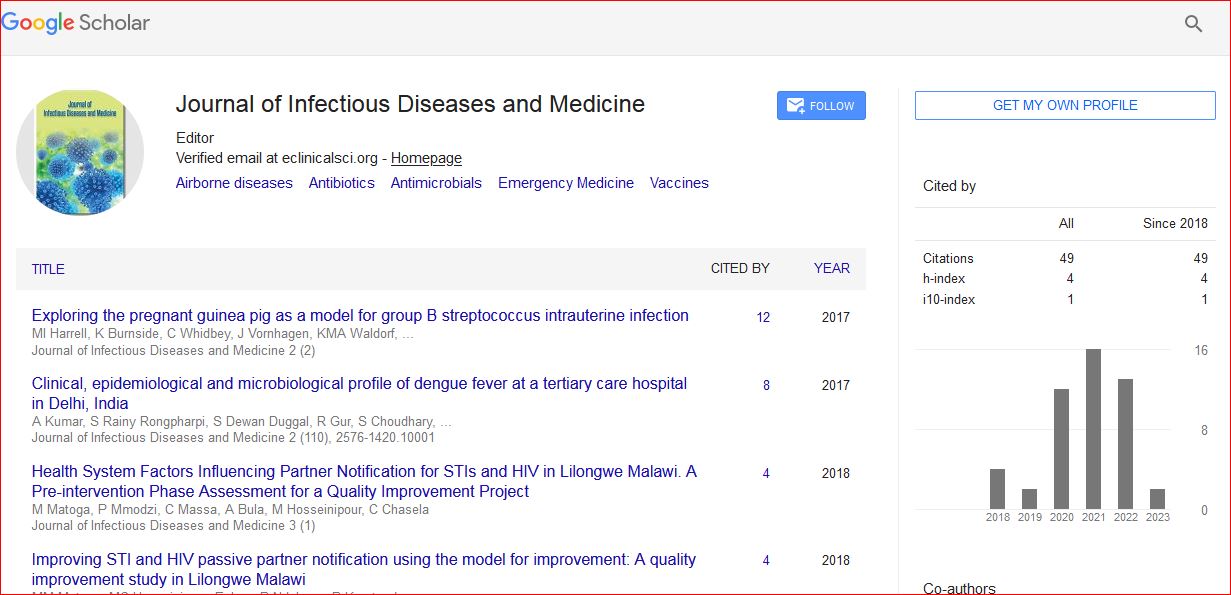
Journal of Infectious Diseases and Medicine received 1059 citations as per Google Scholar report