Commentary - (2025) Volume 15, Issue 6
Received: 01-Dec-2025, Manuscript No. jbbs-25-178297;
Editor assigned: 03-Dec-2025, Pre QC No. P-178297;
Reviewed: 17-Dec-2025, QC No. Q-178297;
Revised: 22-Dec-2025, Manuscript No. R-178297;
Published:
29-Dec-2025
, DOI: 10.37421/2155-9538.2025.15.509
Citation: Turner, Michael O.. ”AI revolutionizes biomedical diagnostics: accuracy, speed, detection.” J Bioengineer & Biomedical Sci 15 (2025):509.
Copyright: © 2025 Turner O. Michael This is an open-access article distributed under the terms of the Creative Commons Attribution License, which permits unrestricted use, distribution and reproduction in any medium, provided the original author and source are credited.
Artificial intelligence (AI) and machine learning (ML) are fundamentally transforming the landscape of biomedical diagnostics, offering unprecedented accuracy, speed, and the ability to detect diseases at earlier stages. These advanced computational technologies possess a remarkable capacity for analyzing vast and intricate datasets, encompassing medical imagery, complex genomic sequences, and comprehensive electronic health records. By discerning subtle patterns that often elude human observation, AI and ML are paving the way for more effective diagnostic strategies. Their widespread adoption is evident across numerous medical specialties, including radiology, pathology, cardiology, and oncology, consistently leading to enhanced patient outcomes and the advancement of personalized medicine. [1] Deep learning models, a sophisticated subset of machine learning, have demonstrated exceptional prowess in the realm of image-based diagnostics. Specifically, their performance has been outstanding in identifying cancerous lesions within mammograms and detecting diabetic retinopathy in retinal scans, showcasing their ability to interpret visual medical data with high precision. These models can autonomously learn intricate features directly from raw image data, often achieving or even surpassing the diagnostic accuracy of human experts in well-defined tasks. This capability directly translates to earlier disease detection and more accurate characterization of pathological conditions. [2] The integration of AI into genomic analysis is significantly accelerating the pace of discovering genetic variants associated with various diseases. This technological advancement is also crucial in improving the diagnosis of rare genetic disorders, which have historically posed significant diagnostic challenges. ML algorithms are adept at processing enormous volumes of genomic data, enabling the identification of complex gene interactions and the prediction of an individual's susceptibility to certain diseases. This empowers a move towards precision medicine, where treatments are tailored to a patient's unique genetic makeup. [3] Within the field of cardiology, AI is proving invaluable for the analysis of electrocardiograms (ECGs). Its application is centered on the early detection of arrhythmias and the prediction of an individual's risk for experiencing cardiovascular events. ML models are capable of identifying subtle abnormalities within ECG signals that might otherwise be overlooked during routine human interpretation. This early identification facilitates proactive interventions and leads to more effective patient management strategies. [4] Pathology represents another significant area where AI is making substantial advancements. AI algorithms are being employed to meticulously analyze digital pathology slides, facilitating the identification of cancerous cells, the precise grading of tumors, and the prediction of an individual's response to various treatments. This technology serves as a valuable aid to pathologists, automating time-consuming tasks and providing an objective second opinion, thereby contributing to faster and more consistent diagnostic processes. [5] The application of AI in oncology is primarily focused on enhancing the accuracy of cancer diagnosis, improving prognostication, and optimizing treatment selection. ML models are capable of integrating a diverse array of data sources, including medical imaging, genomic profiles, and detailed clinical histories. This comprehensive data integration allows for more accurate predictions of patient survival rates and the identification of the most effective therapeutic strategies tailored to individual patients. [6] Natural Language Processing (NLP), a specialized branch of AI, is increasingly being utilized to extract valuable diagnostic information from unstructured clinical text. This includes a wide range of documents such as physician notes, radiology reports, and discharge summaries. NLP automates the identification of key clinical elements like symptoms, confirmed diagnoses, and patient outcomes, thereby improving data accessibility and enabling more robust large-scale clinical research. [7] Despite the immense potential, the development and clinical deployment of AI in biomedical diagnostics are not without their hurdles. Significant challenges persist, including ensuring data privacy and security, establishing appropriate regulatory frameworks, and obtaining access to high-quality, diverse training datasets. Furthermore, ensuring the fairness, transparency, and explainability of AI models is paramount for fostering clinical adoption and building essential trust among healthcare professionals and patients. [8] AI-powered diagnostic tools hold the profound potential to democratize healthcare by extending advanced diagnostic capabilities to underserved and resource-limited settings. Mobile health applications that leverage AI for analyzing medical images or assessing patient symptoms can significantly broaden the reach of diagnostic services to remote populations. This expansion of access is critical in efforts to reduce existing health disparities. [9] Looking forward, the future trajectory of AI in biomedical diagnostics points towards its seamless integration into existing clinical workflows. AI is envisioned not as a replacement but as a collaborative tool that augments the capabilities of healthcare professionals. Continued dedicated research and development are indispensable for refining algorithms, effectively addressing ethical considerations, and ultimately realizing the full transformative potential of AI in improving global patient care. [10]
Artificial intelligence (AI) and machine learning (ML) are ushering in a new era of biomedical diagnostics, characterized by enhanced accuracy, accelerated processing times, and the crucial ability to detect diseases at their earliest stages. These sophisticated technologies excel at dissecting complex datasets, including detailed medical images, intricate genomic sequences, and comprehensive electronic health records, to uncover subtle indicators of disease. The impact of AI and ML spans a broad spectrum of medical disciplines, such as radiology, pathology, cardiology, and oncology, collectively contributing to improved patient health outcomes and the advancement of highly personalized medical treatments. [1] Deep learning, a powerful subset of ML, has distinguished itself with outstanding performance in diagnostic applications centered on medical imaging. Notably, these models have demonstrated exceptional skill in identifying cancerous lesions in mammograms and diagnosing diabetic retinopathy from retinal scans. Their ability to learn complex features directly from raw visual data often allows them to surpass the diagnostic capabilities of human experts in specific, well-defined tasks. This advanced analytical capacity leads to earlier disease identification and a more precise characterization of pathological conditions. [2] The integration of AI into the analysis of genomic data is significantly accelerating the discovery of genetic variants linked to diseases. This innovation is also crucial for improving the diagnosis of rare genetic disorders, which often present complex diagnostic puzzles. ML algorithms are designed to efficiently process massive quantities of genomic information, enabling the identification of intricate gene-environment interactions and the prediction of an individual's propensity for developing certain diseases. This capability is fundamental to the realization of precision medicine, allowing for treatments tailored to an individual's unique genetic makeup. [3] In the domain of cardiology, AI is being actively employed for the interpretation of electrocardiograms (ECGs). The primary applications involve the early detection of cardiac arrhythmias and the prediction of an individual's risk for experiencing significant cardiovascular events. ML models possess the capacity to discern subtle anomalies within ECG signals that might otherwise escape detection during manual review. This early detection capability supports proactive medical interventions and enhances the overall management of cardiac patients. [4] Pathology stands out as another medical specialty experiencing substantial advancements due to AI. AI algorithms are increasingly utilized to scrutinize digital pathology slides, aiding in the precise identification of cancerous cells, the accurate grading of tumors, and the prediction of a patient's likely response to different therapeutic interventions. This technology serves as a valuable support system for pathologists, automating laborious tasks and providing an objective, consistent second opinion, thereby streamlining the diagnostic process. [5] The application of AI in oncology is predominantly concentrated on refining cancer diagnosis, improving prognostic accuracy, and optimizing the selection of appropriate treatments. ML models are engineered to synthesize a wide array of data sources, including radiological images, genomic data, and patient clinical histories. This comprehensive data integration enables more accurate prognostication of patient survival and the identification of personalized therapeutic strategies. [6] Natural Language Processing (NLP), a key area within AI, is seeing growing use in extracting vital diagnostic insights from unstructured clinical narratives. These include physician progress notes, detailed radiology reports, and discharge summaries. NLP automates the identification of critical clinical information such as patient symptoms, confirmed diagnoses, and recorded patient outcomes, significantly enhancing data accessibility and facilitating large-scale clinical investigations. [7] While the promise of AI in biomedical diagnostics is immense, its practical implementation encounters notable challenges. Issues such as safeguarding data privacy and security, establishing clear regulatory guidelines, and ensuring the availability of high-quality, representative training data remain critical concerns. Moreover, fostering trust and enabling widespread clinical adoption hinges on ensuring the fairness, transparency, and explainability of these AI models. [8] AI-driven diagnostic tools possess the potential to significantly broaden healthcare accessibility, particularly in regions with limited resources. Mobile health solutions that integrate AI for image analysis or symptom assessment can extend diagnostic services to geographically isolated populations. This expansion of healthcare reach is a critical step towards mitigating existing health inequities. [9] The anticipated future of AI in biomedical diagnostics involves its seamless incorporation into routine clinical workflows, functioning as an indispensable collaborative tool for healthcare professionals. Ongoing research and development efforts are vital for the continuous refinement of AI algorithms, the proactive resolution of ethical dilemmas, and the ultimate realization of AI's extensive potential to elevate patient care on a global scale. [10]
Artificial intelligence (AI) and machine learning (ML) are revolutionizing biomedical diagnostics by enhancing accuracy, speed, and early disease detection through the analysis of complex medical data like images and genomics. Deep learning excels in image analysis for conditions like cancer and diabetic retinopathy. AI is also transforming genomic analysis for disease association and rare disorders, and improving cardiac diagnostics via ECG interpretation. In pathology, AI aids in cancer cell identification and tumor grading. Oncology benefits from AI in diagnosis, prognosis, and treatment selection, while NLP extracts information from clinical text. Challenges include data privacy, regulation, and model explainability. AI-powered tools can democratize healthcare in underserved areas. The future involves seamless integration into clinical workflows, acting as a collaborative tool for professionals.
None
None
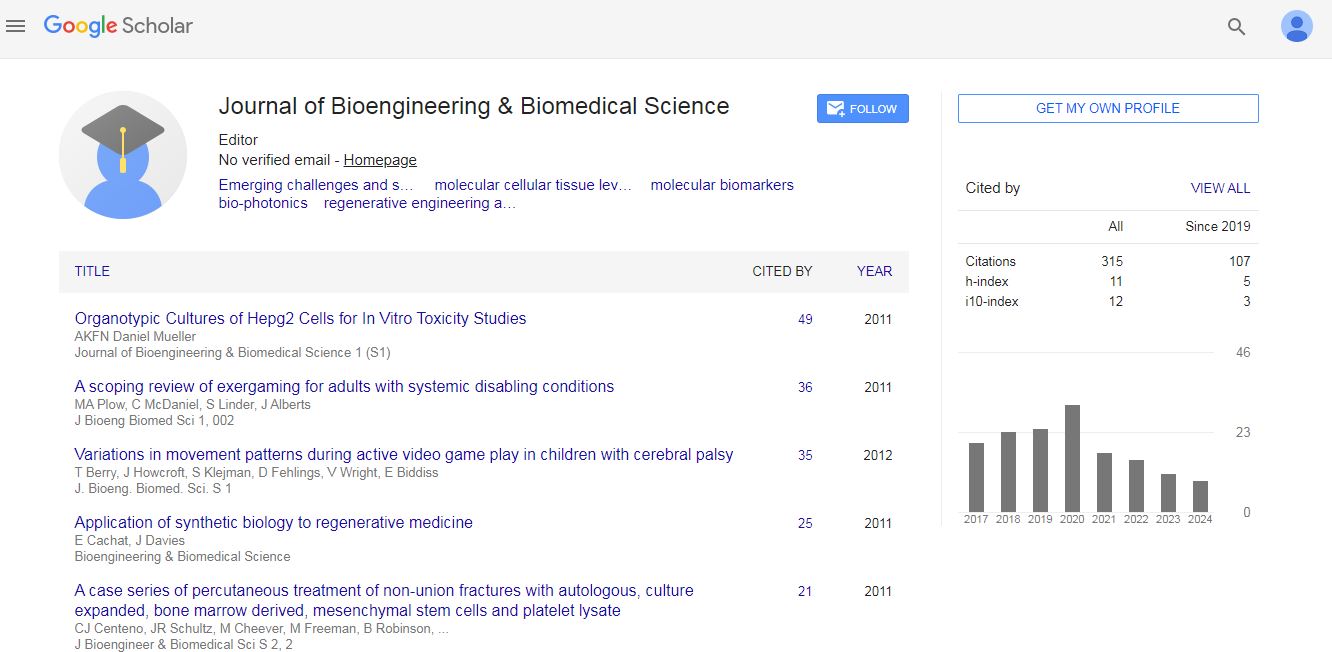
Journal of Bioengineering & Biomedical Science received 307 citations as per Google Scholar report