Perspective - (2025) Volume 10, Issue 4
Received: 01-Aug-2025, Manuscript No. jidm-26-188077;
Editor assigned: 04-Aug-2025, Pre QC No. P-188077;
Reviewed: 18-Aug-2025, QC No. Q-188077;
Revised: 22-Aug-2025, Manuscript No. R-188077;
Published:
29-Aug-2025
, DOI: 10.37421/2576-1420.2025.10.414
Citation: Adams, Jonathan. ”Advancing Infectious Disease
Treatments: Combating Resistance and Optimizing Care.” J Infect Dis Med 10
(2025):414.
Copyright: © 2025 Adams J. This is an open-access article distributed under the terms of the Creative Commons Attribution License, which permits unrestricted use, distribution
and reproduction in any medium, provided the original author and source are credited.
The escalating challenge of multidrug-resistant bacterial infections necessitates a comprehensive understanding of effective therapeutic strategies. Recent research has illuminated the significant impact of combination antimicrobial therapies in improving clinical outcomes for patients afflicted with sepsis caused by multidrug-resistant Gram-negative bacteria. This approach is particularly crucial in minimizing mortality and morbidity by addressing complex resistance mechanisms, underscoring the critical role of early diagnosis and appropriate antibiotic selection [1].
The landscape of treating resistant pathogens is continually evolving, with a focus on novel agents targeting difficult-to-treat infections. The clinical efficacy of new antibiotics designed to combat carbapenem-resistant Enterobacterales has demonstrated marked improvements in survival rates and reduced treatment failures, especially in patients with complicated urinary tract infections. These findings highlight the ongoing need for surveillance and rapid diagnostics to guide treatment decisions [2].
Optimizing antibiotic utilization within healthcare settings is paramount to combating antimicrobial resistance. Antimicrobial stewardship programs play a pivotal role in this endeavor, demonstrating how judicious antibiotic use can significantly reduce resistance development, lower healthcare costs, and mitigate adverse events. The integration of rapid diagnostic technologies further enhances the effectiveness of these stewardship efforts, leading to better clinical responses and shorter hospital stays [3].
Beyond traditional antibiotics, innovative therapeutic modalities are emerging as vital complements or alternatives for multidrug-resistant infections. Bacteriophage therapy, for instance, is being explored as an adjunct to antibiotics for treating infections caused by multidrug-resistant *Staphylococcus aureus*. Preliminary evidence suggests it can enhance bacterial clearance and promote wound healing in chronic osteomyelitis, offering a promising strategy for recalcitrant infections [4].
In specific patient populations, the choice of antibiotic can profoundly influence treatment outcomes. For *Clostridioides difficile* infection (CDI) in immunocompromised individuals, certain agents have shown superior efficacy. Research indicates that fidaxomicin leads to higher sustained response rates and lower recurrence rates compared to vancomycin, positioning it as a preferred option for this vulnerable group [5].
The management of invasive fungal infections also requires careful consideration of therapeutic agents and timely intervention. The efficacy of azole antifungals in treating invasive candidiasis is well-established, with improved outcomes linked to earlier treatment initiation and consideration of the specific *Candida* species. Antifungal susceptibility testing remains a cornerstone for guiding therapy and preventing treatment failures [6].
Infectious diseases that present with complex symptomatology and potential long-term sequelae, such as Lyme disease, benefit from precise diagnostic and therapeutic approaches. The clinical management of Lyme disease emphasizes the importance of timely and appropriate antibiotic regimens to achieve favorable outcomes and prevent persistent symptoms. Current guidelines address both early and late-stage presentations, incorporating newer treatment modalities [7].
The development of novel antiviral agents represents a critical advancement in combating viral infections. A randomized controlled trial evaluating a new antiviral for severe influenza infections demonstrated a significant reduction in viral shedding and symptom duration. This led to improved clinical recovery and a decrease in hospitalization rates, highlighting the impact of targeted antiviral therapy [8].
For severe bacterial infections, the timing of treatment initiation can be a critical determinant of prognosis. Studies examining community-acquired pneumonia have indicated that early versus delayed initiation of combination therapy is associated with reduced mortality, shorter intensive care unit stays, and faster clinical resolution. Prompt administration of appropriate antibiotics is therefore crucial [9].
Furthermore, the evolution of antibiotic delivery methods continues to enhance patient care. Novel oral antibiotics for skin and soft tissue infections have demonstrated non-inferiority to intravenous therapies, offering the significant advantage of outpatient management. This approach improves patient convenience and reduces the burden on healthcare facilities while maintaining therapeutic efficacy [10].
The effectiveness of various antimicrobial treatments against multidrug-resistant bacterial infections, particularly in the context of sepsis, has been significantly enhanced by combination therapies, leading to improved clinical outcomes. This advancement underscores the critical importance of early diagnosis and appropriate antibiotic selection to minimize mortality and morbidity, alongside the exploration of novel therapeutic strategies to counter emerging resistance mechanisms [1].
Significant strides have been made in evaluating the clinical efficacy of novel antibiotics designed to target carbapenem-resistant Enterobacterales. These new agents have shown considerable promise in improving survival rates and reducing treatment failures in patients with complicated urinary tract infections, emphasizing the continuous need for surveillance and rapid diagnostic tools to guide clinical decisions for these challenging pathogens [2].
The implementation and impact of antimicrobial stewardship programs on patient outcomes in hospital settings are well-documented. These programs optimize antibiotic use, which consequently reduces the prevalence of antimicrobial resistance, lowers healthcare expenditures, and minimizes adverse events, thereby fostering better clinical responses and shorter hospitalizations. The integration of rapid diagnostic technologies is identified as a key factor in amplifying the success of stewardship initiatives [3].
Alternative and complementary therapeutic strategies are gaining traction for multidrug-resistant infections. Bacteriophage therapy, in particular, is being investigated as an adjunct to antibiotic treatment for multidrug-resistant *Staphylococcus aureus* infections. Early findings suggest potential benefits in bacterial clearance and wound healing for chronic osteomyelitis, presenting a viable option for difficult-to-treat infections [4].
For specific patient groups facing particular challenges, such as immunocompromised individuals with *Clostridioides difficile* infection (CDI), the selection of an appropriate antibiotic is crucial. Fidaxomicin has demonstrated superior sustained response rates and lower recurrence rates compared to vancomycin, making it a preferred choice for this vulnerable demographic [5].
The treatment of invasive fungal infections, such as invasive candidiasis, requires a nuanced approach. The efficacy of azole antifungals is influenced by the timeliness of treatment initiation and the specific *Candida* species involved. Antifungal susceptibility testing plays a vital role in tailoring therapy and preventing treatment failures [6].
In managing complex conditions like Lyme disease, the adherence to current guidelines and the judicious use of antibiotics are key to achieving positive outcomes and preventing long-term complications. Research reviews the clinical management of Lyme disease, detailing appropriate antibiotic regimens for both early and late stages, including emerging treatment modalities for persistent symptoms [7].
Advancements in antiviral therapies are crucial for combating severe viral infections. A randomized controlled trial on a novel antiviral agent for severe influenza infections indicated a significant reduction in viral shedding and symptom duration, leading to improved recovery and reduced hospitalizations [8].
The timing of antibiotic administration in severe bacterial infections significantly impacts patient prognosis. For community-acquired pneumonia, studies comparing early versus delayed initiation of combination therapy reveal that prompt antibiotic treatment is associated with lower mortality rates, shorter intensive care unit stays, and quicker clinical resolution [9].
Novel oral antibiotics are increasingly being utilized for skin and soft tissue infections, offering a convenient outpatient management option that is non-inferior to intravenous treatments. This approach enhances patient experience and reduces the strain on healthcare resources while maintaining therapeutic effectiveness [10].
This collection of research highlights critical advancements and considerations in the field of infectious disease treatment. It emphasizes the effectiveness of combination antimicrobial therapies for multidrug-resistant bacterial infections, especially in sepsis, and the importance of early diagnosis and appropriate antibiotic selection. Novel antibiotics targeting carbapenem-resistant pathogens show promise in improving survival rates for complicated urinary tract infections. Antimicrobial stewardship programs are crucial for optimizing antibiotic use, reducing resistance, and lowering costs, with rapid diagnostics enhancing their effectiveness. Emerging therapies like bacteriophage therapy offer adjuncts for multidrug-resistant infections. Specific treatments, such as fidaxomicin for *Clostridioides difficile* infection in immunocompromised patients, demonstrate superior outcomes. The timely initiation of appropriate antibiotics is vital for severe pneumonia, and novel oral antibiotics provide convenient outpatient options for skin and soft tissue infections. Advances in antiviral therapies reduce symptom duration and hospitalizations for influenza, while careful selection and timely administration of antifungals are key for invasive candidiasis. Management of Lyme disease benefits from timely antibiotic regimens.
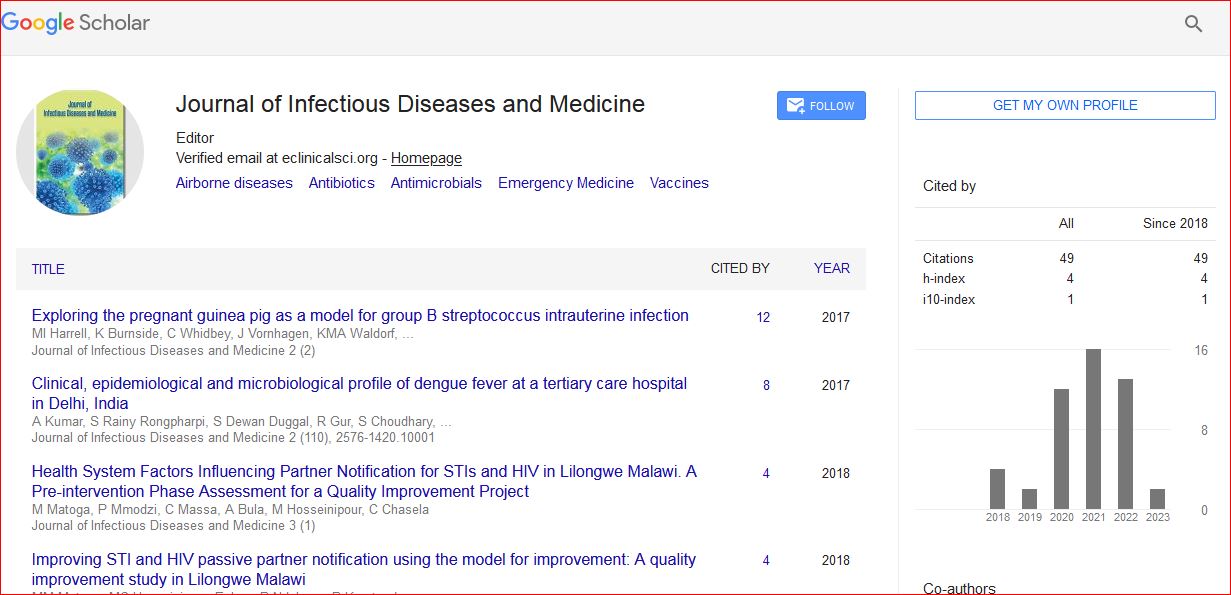
Journal of Infectious Diseases and Medicine received 1059 citations as per Google Scholar report