Brief Report - (2025) Volume 13, Issue 3
Received: 01-Jun-2025, Manuscript No. JCMG-26-185534;
Editor assigned: 03-Jun-2025, Pre QC No. P-185534;
Reviewed: 17-Jun-2025, QC No. Q-185534;
Revised: 23-Jun-2025, Manuscript No. R-185534;
Published:
30-Jun-2025
, DOI: 10.37421/2472-128X.2025.13.337
Citation: Fischer, Hannah. ”Advancing Genomics: Precision Medicine, Diagnostics, and Ethical Care.” J Clin Med Genomics 13 (2025):337.
Copyright: © 2025 Fischer H. This is an open-access article distributed under the terms of the Creative Commons Attribution License, which permits unrestricted use, distribution and reproduction in any medium, provided the original author and source are credited.
The field of clinical genomics is undergoing a profound transformation, driven by rapid advancements in sequencing technologies and their integration into patient care. Initially limited by the cost and complexity of DNA sequencing, genomics has evolved to offer unprecedented insights into individual health and disease predisposition. Next-generation sequencing (NGS) technologies have democratized access to comprehensive genomic profiling, making it a powerful tool for diagnosis, treatment selection, and risk assessment across a spectrum of conditions [1].
In the realm of cancer, genomic analysis has revolutionized our understanding of tumor biology. By examining the complete genetic makeup of tumors, researchers and clinicians can now unravel tumor heterogeneity, identify critical somatic mutations, and track their evolutionary trajectory. This detailed molecular portrait enables the development of targeted therapies and offers prognostic information crucial for effective cancer management [2].
The diagnostic odyssey for individuals with rare genetic disorders has been significantly shortened by the advent of whole exome sequencing (WES). This technology allows for the interrogation of the protein-coding regions of the genome, pinpointing causative genetic variants in a substantial proportion of patients who previously lacked a diagnosis. The integration of phenotypic data with WES results is vital for accurate variant interpretation and achieving definitive diagnoses [3].
Pharmacogenomics, the study of how genes affect a person's response to drugs, is emerging as a critical component of personalized medicine. By identifying genetic variations that influence drug metabolism, efficacy, and toxicity, clinicians can tailor medication choices and dosages to individual patients, thereby optimizing treatment outcomes and minimizing adverse drug reactions [4].
The sheer volume and complexity of genomic data generated in clinical settings necessitate sophisticated bioinformatics infrastructure. The development of robust, scalable, and accurate pipelines for data processing, from raw sequencing reads to actionable clinical insights, is paramount. These pipelines ensure the reliability and interpretability of genomic reports, forming the bedrock of clinical genomic applications [5].
As clinical genomics becomes more widespread, a complex web of ethical, legal, and social implications (ELSI) arises. Issues surrounding data privacy, genetic discrimination, informed consent, and equitable access to these advanced technologies require careful consideration. Robust regulatory frameworks and open public discourse are essential to navigate these challenges responsibly [6].
Reproductive medicine has also benefited immensely from genomic technologies. Carrier screening, prenatal diagnosis, and preimplantation genetic testing allow prospective parents to assess genetic risks for their offspring. These applications empower informed reproductive decision-making and have the potential to reduce the incidence of genetic disorders [7].
The application of clinical genomics extends significantly to cardiovascular diseases. Genetic testing can identify individuals predisposed to inherited conditions like cardiomyopathies and arrhythmias, enabling early intervention and personalized preventive strategies. The incorporation of polygenic risk scores is further enhancing risk stratification for common cardiovascular ailments [8].
The continuous evolution of sequencing technologies is a driving force behind the expansion of clinical genomics. From Sanger sequencing to the high-throughput capabilities of NGS and the emerging long-read technologies, each advancement contributes to greater accuracy, efficiency, and cost-effectiveness, broadening the scope of genomic medicine [9].
Neurological disorders represent another area where clinical genomics is making significant inroads. Genomic testing aids in the diagnosis of inherited neurological conditions, providing crucial information for risk assessment, prognosis, and the development of targeted therapeutic approaches. The insights gained are vital for both patient care and family counseling [10].
The transformative journey of clinical genomics begins with foundational sequencing technologies and culminates in their practical application in patient care. Advancements in next-generation sequencing (NGS) have significantly enhanced the accessibility and interpretability of comprehensive genomic profiling. This progress enables precise diagnoses, the formulation of personalized treatment strategies, and the identification of actionable genetic variants for a wide array of diseases, including various cancers and rare genetic disorders. Furthermore, the authors underscore the indispensable role of robust bioinformatics pipelines and the careful consideration of ethical implications associated with genomic data. The integration of genomic information into routine clinical practice and the ongoing pursuit of improved patient outcomes through tailored therapies are also highlighted [1].
Focusing specifically on cancer genomics, this review meticulously details how whole-genome and exome sequencing have fundamentally altered our understanding of tumor heterogeneity and its evolutionary patterns. It elaborates on the clinical value derived from identifying somatic mutations, copy number alterations, and structural variations, which are crucial for therapeutic targeting and prognostic assessments. The authors delve into the practical applications of liquid biopsies and circulating tumor DNA (ctDNA) analysis for non-invasive cancer detection, monitoring treatment responses, and identifying minimal residual disease. Challenges pertaining to data interpretation and the effective implementation of precision oncology are thoroughly examined, alongside the considerable potential offered by multi-omics approaches [2].
This study rigorously investigates the diagnostic yield and clinical impact of whole exome sequencing (WES) in patient populations suffering from rare, undiagnosed genetic diseases. The findings from an extensive cohort demonstrate WES's capability to identify causative variants in a significant number of cases that had remained undiagnosed despite conventional genetic testing. The authors address the inherent complexities in variant interpretation and emphasize the critical importance of integrating detailed phenotypic information with genomic data. The paper firmly establishes WES as an exceptionally powerful tool for achieving definitive diagnoses, which subsequently informs patient management decisions and genetic counseling efforts [3].
The article provides an in-depth exploration of pharmacogenomics' integration into clinical practice, specifically examining how an individual's genetic makeup can predict their response to various medications. It meticulously outlines key pharmacogenomic markers and their associated clinical guidelines for drugs used in critical areas such as cardiology, psychiatry, and oncology. The authors articulate the manifold benefits, including enhanced therapeutic efficacy, a reduction in adverse drug reactions, and optimized dosing strategies. Significant challenges related to implementation, encompassing clinician education and reimbursement policies, are also critically evaluated, thereby illuminating the pathway toward truly personalized drug therapy [4].
This paper presents a comprehensive examination of the bioinformatics challenges encountered in clinical genomics and proposes effective solutions. It directly addresses the pressing need for scalable and highly accurate pipelines designed for the processing of vast quantities of sequencing data, encompassing critical steps like alignment, variant calling, annotation, and interpretation. The authors discuss the ongoing development of standardized workflows and rigorous quality control metrics essential for ensuring the utmost reliability of genomic reports. The pivotal role of extensive databases and comprehensive knowledge resources in facilitating variant interpretation and informing clinical decision-making is also emphasized, alongside the significant contribution of artificial intelligence in accelerating these complex processes [5].
The article undertakes a thorough examination of the ethical, legal, and social implications (ELSI) inherent in the widespread application of clinical genomics. It meticulously discusses critical issues such as data privacy and security, the nuances of informed consent, the potential for genetic discrimination, and ensuring equitable access to advanced genomic technologies. The authors emphatically highlight the imperative for robust regulatory frameworks and active public engagement to effectively address these multifaceted challenges. The crucial role played by genetic counselors and the paramount importance of clear, transparent communication with patients regarding the implications of their genomic information are also strongly underscored [6].
This review centers on the specific applications of genomic sequencing within the field of reproductive medicine, encompassing preconception carrier screening, prenatal diagnosis, and preimplantation genetic testing. It thoroughly discusses the benefits associated with identifying genetic risks for prospective parents and their future offspring, thereby enabling more informed reproductive decision-making. The authors address the significant technological advancements that have led to improved sensitivity and expanded scope of these diagnostic tests, as well as the persistent ethical considerations and the complexities of interpreting incidental findings [7].
This article critically highlights the crucial role of clinical genomics in the effective management of cardiovascular diseases. It explores in detail how genetic testing can accurately identify individuals at elevated risk for inherited cardiomyopathies, arrhythmias, and hypercholesterolemia, thereby facilitating early intervention and the implementation of proactive preventive strategies. The authors discuss the practical aspects of implementing genetic screening programs and their demonstrable impact on family health outcomes. The integration of polygenic risk scores for common cardiovascular conditions is also presented as a highly promising area for refining personalized risk assessment and management approaches [8].
The paper critically examines the constantly evolving landscape of sequencing technologies integral to clinical genomics. It traces the progression from first-generation Sanger sequencing to the current era dominated by next-generation sequencing (NGS) and the emergence of innovative long-read technologies. The authors discuss the distinct advantages and inherent limitations of each technology when applied to various clinical scenarios, including targeted gene panels, whole exome sequencing, and whole genome sequencing. Emphasis is placed on the continuous innovation that drives improvements in throughput, accuracy, and cost-effectiveness, ultimately expanding the accessibility and reach of genomic medicine [9].
This article delves into the application of clinical genomics in the comprehensive management of neurological disorders. It provides detailed insights into how genomic testing significantly aids in diagnosing a range of inherited neurological conditions, such as Alzheimer's disease, Parkinson's disease, and various rare pediatric neuropathies. The authors discuss the profound implications for risk assessment, prognosis, and the strategic development of targeted therapeutic interventions. The inherent challenges associated with interpreting complex genetic findings and their subsequent impact on patient and family counseling are also thoroughly addressed, underscoring the considerable potential for enhancing the quality of neurological care [10].
Clinical genomics is rapidly advancing, leveraging technologies like NGS for precise diagnoses and personalized treatments in areas ranging from cancer to rare genetic disorders. Whole exome sequencing (WES) is crucial for diagnosing rare diseases, while pharmacogenomics tailors drug responses. Bioinformatics pipelines are essential for managing genomic data, and ethical considerations are paramount. Genomics plays a vital role in reproductive medicine, cardiovascular disease risk stratification, and neurological disorder management. Continuous innovation in sequencing technologies further expands the reach of genomic medicine, improving patient care and outcomes across diverse medical fields.
None
None
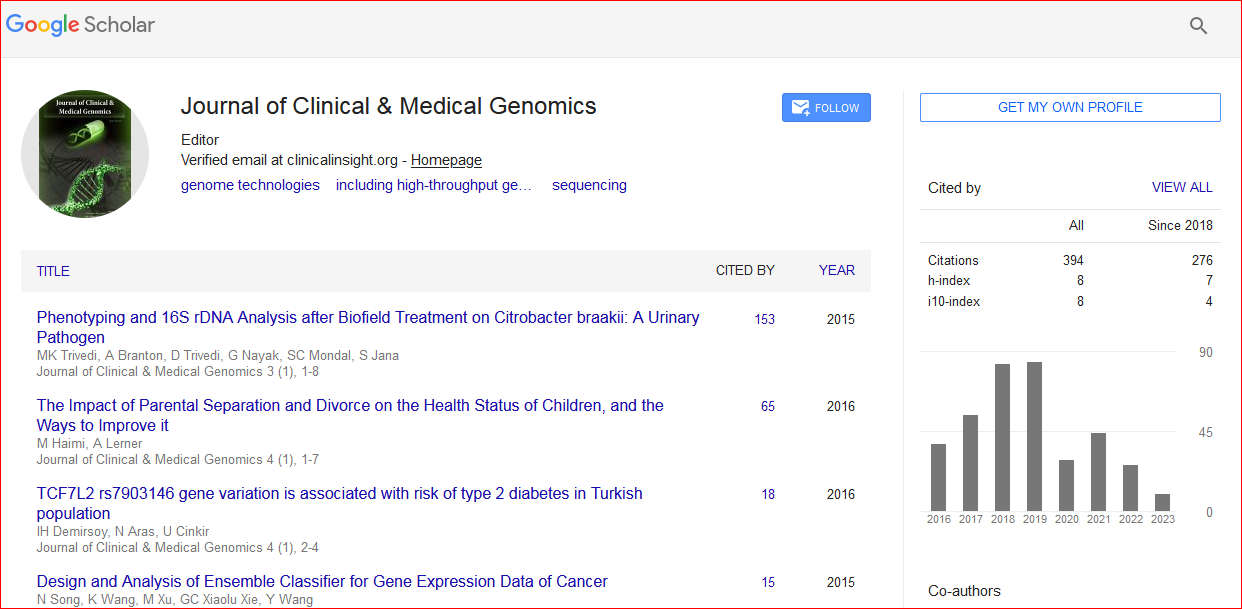
Journal of Clinical & Medical Genomics received 391 citations as per Google Scholar report