Commentary - (2025) Volume 9, Issue 4
Received: 01-Aug-2025, Manuscript No. ahbs-26-182487;
Editor assigned: 04-Aug-2025, Pre QC No. P-182487;
Reviewed: 18-Aug-2025, QC No. Q-182487;
Revised: 22-Aug-2025, Manuscript No. R-182487;
Published:
29-Aug-2025
, DOI: 10.37421/2952-8097.2025.9.324
Citation: Herrera, Diego. ”Advancing Animal Vaccination: Technology
Meets Welfare.” J Anim Health Behav Sci 09 (2025):324.
Copyright: © 2025 Herrera D. This is an open-access article distributed under the terms of the Creative Commons Attribution License, which permits unrestricted use,
distribution and reproduction in any medium, provided the original author and source are credited.
Recent advancements in vaccination strategies for animals are shifting towards more targeted and effective approaches, including subunit vaccines, DNA vaccines, and mRNA vaccines, aiming to improve immunogenicity and reduce side effects. Simultaneously, understanding and addressing behavioral considerations in vaccine administration is crucial for successful implementation. This involves strategies to minimize stress and fear in animals, such as positive reinforcement techniques, controlled environments, and appropriate handling protocols, ultimately enhancing compliance and the overall efficacy of vaccination programs [1].
The development of next-generation vaccines, particularly mRNA and viral vector platforms, offers unprecedented speed and adaptability for controlling emerging animal diseases. These technologies, along with improved understanding of animal behavior during medical procedures, are vital. Recognizing species-specific stress responses and implementing evidence-based handling techniques, such as low-stress stockmanship, can significantly improve animal cooperation and reduce the negative impact of vaccination [2].
Precision vaccination, utilizing data-driven insights into pathogen evolution and host immune responses, is revolutionizing disease prevention. This approach is complemented by a growing emphasis on understanding the neurobiological underpinnings of fear and anxiety in animals, informing the design of less stressful handling and administration protocols. The integration of these technological and behavioral advancements promises more efficient and humane vaccination outcomes [3].
The development of multi-component vaccines, capable of providing broad-spectrum protection against several pathogens simultaneously, is a key area of innovation. This efficiency gain is being matched by research into animal behavior, focusing on creating predictable and rewarding experiences during vaccination. Techniques such as desensitization and counter-conditioning are proving effective in reducing fear and improving the acceptance of veterinary interventions [4].
The landscape of animal vaccination is being reshaped by advancements in adjuvant technologies, which significantly boost the immune response to antigens. Concurrently, a deeper understanding of animal cognition and emotion is driving the adoption of welfare-centric approaches to vaccination. This includes utilizing positive reinforcement and minimizing restraint to foster positive associations with veterinary care [5].
The application of bacteriophage therapy alongside traditional vaccination strategies presents an innovative approach to combating antimicrobial resistance in animal populations. This dual strategy requires careful consideration of animal behavior, particularly during herd-level interventions, to ensure optimal uptake and minimize disruption. Education and training for farm personnel on low-stress handling are paramount for successful implementation [6].
Advances in genomics are enabling the development of precisely targeted vaccines that elicit potent and durable immune responses. This scientific progress is being matched by a growing awareness of the importance of behavioral economics in promoting vaccine uptake among animal owners and handlers. Incentive-based programs and clear communication strategies are proving effective in this regard [7].
The integration of artificial intelligence (AI) in vaccine design and production is accelerating the development of novel immunogens and delivery systems. Concurrently, AI-powered tools are being used to analyze animal behavior, identifying subtle signs of stress or discomfort during handling, which can then inform more humane vaccination practices. This synergy between technology and animal welfare is a defining characteristic of modern veterinary medicine [8].
The use of adjuvants that modulate the immune response in a targeted manner is a key area of vaccine development, enhancing efficacy and reducing the required antigen dose. This scientific advancement is paralleled by a growing emphasis on the psychological well-being of animals, with research exploring methods to minimize fear and anxiety associated with veterinary procedures. Implementing these behavioral strategies leads to improved animal compliance and a more positive experience [9].
The development of self-amplifying mRNA (saRNA) vaccines offers enhanced immunogenicity with lower doses, representing a significant leap in vaccine technology for animal health. This progress is being complemented by a focus on understanding and mitigating the behavioral impact of vaccination on animals. Strategies such as environmental enrichment and habituation are proving effective in reducing stress and improving acceptance of routine veterinary care [10].
Innovations in veterinary vaccine delivery are focusing on novel technologies like subunit, DNA, and mRNA vaccines to enhance immunogenicity and minimize adverse effects. Complementing these advancements is a critical focus on animal welfare during vaccine administration, employing strategies such as positive reinforcement and controlled environments to reduce stress and fear, thereby improving compliance and vaccine program efficacy [1].
Next-generation vaccine platforms, including mRNA and viral vectors, are being developed for rapid response to emerging animal diseases. This technological progress is intrinsically linked to a better understanding of animal behavior, emphasizing species-specific stress responses and the implementation of low-stress handling techniques to foster cooperation and reduce the negative impacts associated with vaccination [2].
Precision vaccination strategies are revolutionizing disease prevention by leveraging data-driven insights into pathogen evolution and host immune responses. Concurrently, significant attention is being paid to the neurobiological aspects of animal fear and anxiety, guiding the development of handling and administration protocols designed to be less stressful, leading to more effective and humane vaccination outcomes [3].
The creation of multi-component vaccines that confer broad-spectrum protection against multiple pathogens simultaneously represents a significant area of advancement. This pursuit of efficiency is mirrored by research into animal behavior, aiming to create predictable and positive vaccination experiences through methods like desensitization and counter-conditioning to alleviate fear and enhance acceptance of veterinary procedures [4].
Adjuvant technologies are a cornerstone of modern animal vaccine development, playing a crucial role in amplifying immune responses and increasing vaccine efficacy. Simultaneously, a deeper understanding of animal cognition and emotional states is fostering the adoption of welfare-centric vaccination practices, utilizing positive reinforcement and reduced restraint to cultivate positive associations with veterinary interventions [5].
Bacteriophage therapy, when integrated with conventional vaccination, offers a promising approach to combatting antimicrobial resistance in animal populations. The successful application of this combined strategy hinges on careful consideration of animal behavior, especially during herd-level administrations, to maximize uptake and minimize disruption, underscoring the importance of low-stress handling training for farm personnel [6].
Genomic research is fundamentally driving the development of highly targeted vaccines capable of inducing robust and lasting immune responses. This scientific advancement is being amplified by a growing recognition of behavioral economics principles in encouraging vaccine adoption among animal owners and handlers, with incentive programs and clear communication proving to be effective tools [7].
The incorporation of artificial intelligence (AI) into vaccine design and manufacturing is accelerating the discovery of new immunogens and delivery systems. Furthermore, AI is being employed to meticulously analyze animal behavior, identifying subtle indicators of stress during handling, which directly informs the implementation of more humane vaccination practices, thereby advancing veterinary medicine through technology and welfare integration [8].
Adjuvants designed for targeted immune modulation are central to current vaccine research, enhancing efficacy and potentially reducing antigen requirements. This scientific progress is accompanied by an increased focus on animal psychological well-being, with research dedicated to methods that reduce fear and anxiety during veterinary procedures, ultimately improving animal compliance and their overall experience [9].
Self-amplifying mRNA (saRNA) vaccines represent a significant technological leap, offering improved immunogenicity at lower doses for animal health applications. This development is paralleled by dedicated efforts to understand and alleviate the behavioral impacts of vaccination, with strategies like environmental enrichment and habituation proving successful in reducing stress and fostering greater acceptance of routine veterinary care [10].
The field of animal vaccination is undergoing significant transformation driven by technological innovations and a heightened focus on animal welfare. Advanced vaccine platforms like mRNA, DNA, and viral vectors are being developed for greater efficacy and adaptability, while precision vaccination and genomics are enabling more targeted approaches. Complementary to these scientific advancements is a growing emphasis on understanding and mitigating animal stress and fear during vaccine administration. Strategies such as positive reinforcement, low-stress handling, environmental enrichment, and behavioral economics are crucial for improving compliance, animal cooperation, and the overall success of vaccination programs, leading to more humane and effective outcomes in veterinary medicine.
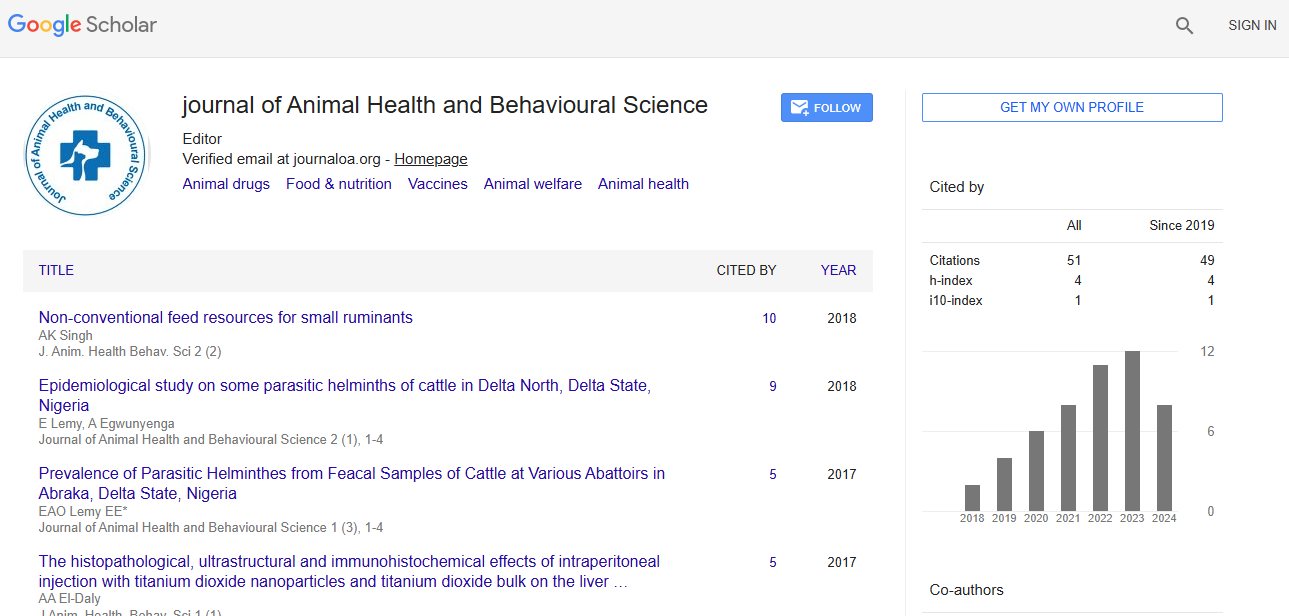
Journal of Animal Health and Behavioural Science received 38 citations as per Google Scholar report