Brief Report - (2025) Volume 16, Issue 3
Received: 02-Jun-2025, Manuscript No. csj-26-183438;
Editor assigned: 04-Jun-2025, Pre QC No. P-183438;
Reviewed: 18-Jun-2025, QC No. Q-183438;
Revised: 23-Jun-2025, Manuscript No. R-183438;
Published:
30-Jun-2025
, DOI: 10.37421/2160-3494.2025.16.455
Citation: O’Connor, Michael. ”Advanced Polymers: Design, Applications, and Innovations.” Chem Sci J 16 (2025):455.
Copyright: © 2025 O’Connor M. This is an open-access article distributed under the terms of the Creative Commons Attribution License, which permits unrestricted use, distribution and reproduction in any medium, provided the original author and source are credited.
The field of polymer chemistry has witnessed remarkable progress in recent years, driven by innovative approaches to designing and synthesizing advanced macromolecular systems. These advancements are crucial for developing materials with tailored properties for a wide array of applications, from medicine to sustainable technologies. The exploration of novel synthetic strategies has unlocked new possibilities for controlling polymer architecture and functionality, paving the way for next-generation materials. Fundamental polymer science continues to intersect with applied research, fostering an interdisciplinary environment where theoretical understanding directly informs practical solutions. The pursuit of enhanced material performance necessitates a deep dive into the fundamental principles governing polymer behavior and self-organization. Understanding how molecular structure translates into macroscopic properties is paramount for designing functional materials that meet the demands of modern technological challenges. The development of responsive materials that can adapt to environmental cues is a significant area of focus, promising breakthroughs in areas like targeted drug delivery and smart coatings. Sustainability is an increasingly important consideration, driving research into biodegradable polymers and environmentally friendly synthesis methods. The integration of polymers with other materials, such as nanoparticles, is leading to the creation of hybrid systems with synergistic properties, expanding the scope of achievable functionalities. Membrane technology, reliant on precisely engineered polymers, is advancing rapidly to address critical needs in separation processes, including water purification and gas separation. Finally, the burgeoning field of organic electronics is being revolutionized by conjugated polymers, which are enabling the development of more efficient and stable electronic devices. [1] These advancements highlight the dynamic and evolving nature of polymer science, promising exciting future developments across numerous sectors. The careful manipulation of polymer chains at the molecular level allows for unprecedented control over material characteristics. The ability to create complex macromolecular architectures is a testament to the sophistication of modern synthetic techniques. As research progresses, we are seeing a convergence of different sub-disciplines within polymer chemistry to tackle multifaceted problems. The demand for high-performance materials in specialized applications continues to fuel innovation in polymer design and synthesis. The inherent versatility of polymers makes them ideal candidates for addressing a broad spectrum of technological and societal needs. The ongoing exploration of self-assembly phenomena in polymeric systems offers a powerful route to creating ordered nanostructures with precisely defined properties. The development of stimuli-responsive polymers is a key area of innovation, enabling dynamic control over material behavior. The drive towards a circular economy is placing greater emphasis on the development of sustainable and biodegradable polymeric materials. The creation of composite materials, combining the strengths of polymers with other components, is a fertile ground for discovering novel functionalities. The critical role of polymer membranes in separation technologies underscores the importance of controlled polymer morphology. The rapid progress in organic electronics is largely attributable to the design of advanced conjugated polymers with superior charge transport capabilities. The interdisciplinary nature of this field is fostering collaboration and cross-pollination of ideas, accelerating the pace of discovery and innovation. [2] The continuous innovation in synthetic methodologies is a cornerstone of modern polymer science. Precise control over polymer architecture at the nanoscale is fundamental to achieving desired material properties. This understanding is vital for developing materials that can perform complex functions in various technological domains. The growing emphasis on sustainability is reshaping research priorities, leading to the development of eco-friendly polymers and processes. The synergy between polymer science and other disciplines is creating novel hybrid materials with enhanced capabilities. The field of polymer membranes is crucial for addressing global challenges related to resource management and environmental protection. The development of organic electronic devices is heavily reliant on the unique electrical and optical properties of conjugated polymers. The ability to precisely engineer polymer structures allows for the creation of advanced functional materials with unprecedented performance. The exploration of supramolecular chemistry in polymer design offers new avenues for developing intelligent and responsive materials. The impact of polymer science extends to additive manufacturing, enabling the creation of complex and customized objects. The ongoing research in controlled polymerization techniques is crucial for precise control over molecular weight and architecture. The focus on interdisciplinary approaches is accelerating the translation of fundamental discoveries into practical applications. [3] The design of polymers with specific responsive behaviors is a key area of research, offering solutions for targeted delivery and sensing applications. The development of biodegradable polyesters is an important step towards reducing plastic waste and its environmental impact. The combination of polymers with inorganic nanoparticles creates composite materials with enhanced mechanical and thermal properties. The advancement of membrane technologies is critical for efficient separation processes in various industrial and environmental applications. Conjugated polymers are at the forefront of innovations in organic electronics, enabling the development of flexible and transparent devices. Controlled radical polymerization techniques provide precise control over polymer architecture, leading to materials with highly tailored properties. Supramolecular chemistry offers a powerful toolkit for designing complex polymer assemblies with dynamic and reversible interactions. The application of polymers in additive manufacturing is transforming the way complex functional objects are produced. The exploration of advanced macromolecular systems is driving innovation across a broad spectrum of scientific and technological fields. The integration of fundamental polymer science with real-world applications is accelerating the development of new materials and technologies. [4] The pursuit of sustainable polymeric materials is a major driver of current research, aiming to reduce reliance on petrochemicals and minimize environmental footprints. Innovations in polymer synthesis are enabling the creation of materials with increasingly complex architectures and functionalities. The development of stimuli-responsive polymers is opening new frontiers in areas such as healthcare and advanced manufacturing. Hybrid materials formed by combining polymers with other components are exhibiting synergistic properties that surpass those of their individual constituents. The role of polymer membranes in efficient separation processes is becoming increasingly critical for resource recovery and pollution control. Conjugated polymers are central to the ongoing revolution in organic electronics, facilitating the creation of next-generation devices. Precision polymer synthesis allows for the fine-tuning of material properties, enabling applications where exact performance characteristics are required. The application of supramolecular principles in polymer design is leading to the development of sophisticated materials with dynamic and self-healing capabilities. Additive manufacturing, powered by advanced polymer formulations, is enabling the rapid prototyping and custom fabrication of intricate functional objects. The growing interdisciplinary nature of polymer science is fostering collaboration and accelerating innovation across diverse research areas. [5] The design of advanced macromolecular systems is central to addressing many contemporary technological challenges. Precise control over molecular architecture is essential for tuning the properties of polymeric materials for specific applications. The growing emphasis on sustainability is leading to the development of novel biodegradable polymers and greener synthesis routes. Hybrid materials, such as polymer-inorganic nanocomposites, are demonstrating remarkable synergistic properties. The development of highly efficient polymer membranes is crucial for advancements in separation science and technology. Conjugated polymers are revolutionizing the field of organic electronics with their unique charge transport and optical properties. Controlled polymerization techniques offer unparalleled precision in creating polymer structures with defined molecular weights and architectures. Supramolecular chemistry is enabling the design of dynamic polymer systems with self-assembly and responsiveness capabilities. The integration of polymers into additive manufacturing processes is facilitating the creation of complex, functional three-dimensional objects. The ongoing research in polymer chemistry is characterized by its interdisciplinary nature, bridging fundamental science with applied engineering. [6] Recent breakthroughs in polymer chemistry have enabled the design of sophisticated macromolecular systems with unprecedented functionalities. The precise control over polymer architecture at the molecular level is fundamental to tailoring material properties for diverse applications. The development of sustainable and biodegradable polymers is a key focus, addressing environmental concerns associated with conventional plastics. Polymer-inorganic nanocomposites are emerging as a class of materials with synergistic properties, offering enhanced performance. Advanced polymer membranes are critical for addressing global challenges in water purification, gas separation, and other separation technologies. Conjugated polymers are driving innovation in organic electronics, leading to the development of more efficient and flexible devices. Precision polymer synthesis techniques allow for the creation of well-defined polymer architectures, crucial for high-performance applications. Supramolecular polymer systems are enabling the design of materials with dynamic, self-healing, and responsive characteristics. The application of polymers in additive manufacturing is transforming product design and fabrication, allowing for the creation of complex functional geometries. The interdisciplinary nature of polymer science is fostering a collaborative environment where insights from various fields are integrated to solve complex problems. [7] Innovative synthetic strategies are continuously expanding the repertoire of accessible polymer architectures and functionalities. The self-assembly of block copolymers, for instance, allows for the creation of ordered nanostructures with tuneable properties for advanced applications. The development of stimuli-responsive polymers is a significant area of research, enabling dynamic control over material behavior in response to external triggers. Biodegradable polyesters are gaining importance as sustainable alternatives to conventional plastics, with enhanced mechanical properties for various applications. Polymer-inorganic nanocomposites offer synergistic enhancements in thermal stability, mechanical strength, and catalytic activity, opening new avenues for material design. Advanced polymeric membranes are being developed for highly efficient separation technologies, addressing critical needs in water and gas purification. Conjugated polymers with improved charge transport properties and stability are central to the advancement of organic electronic devices, such as solar cells and transistors. Precision polymer synthesis via controlled radical polymerization techniques provides exquisite control over molecular weight, dispersity, and architecture, leading to materials with tailored performance. Supramolecular polymer architectures formed through dynamic non-covalent interactions are enabling sophisticated drug delivery systems with triggered release capabilities. Polymers are playing an increasingly vital role in additive manufacturing, allowing for the fabrication of complex functional objects with unique mechanical and electrical characteristics. [8] The design and application of advanced macromolecular systems represent a frontier in materials science, with far-reaching implications across numerous industries. The ability to precisely control polymer architecture through sophisticated synthetic methods is a key enabler of these advancements. The growing demand for sustainable materials is driving the development of biodegradable polymers and eco-friendly manufacturing processes. Hybrid materials, combining polymers with inorganic nanoparticles, are exhibiting synergistic properties that enhance their performance in critical applications. The development of advanced polymer membranes is crucial for efficient separation processes, addressing environmental and industrial needs. Conjugated polymers are at the heart of innovation in organic electronics, paving the way for flexible and high-performance devices. Precision polymer synthesis techniques are essential for creating well-defined materials with predictable and reliable performance. Supramolecular chemistry offers a powerful framework for designing responsive and dynamic polymer systems for advanced applications. The integration of polymers into additive manufacturing is revolutionizing fabrication processes, enabling the creation of customized and complex functional components. The interdisciplinary nature of polymer science fosters a collaborative environment, accelerating the pace of discovery and the translation of research into practical solutions. [9] The continuous evolution of polymer chemistry is characterized by the development of sophisticated macromolecular systems and novel synthetic methodologies. The precise control over polymer structure and architecture is fundamental to achieving desired material properties for advanced applications. The drive towards sustainability is spurring research into biodegradable polymers and greener chemical processes. The creation of polymer-inorganic nanocomposites is leading to hybrid materials with synergistic properties and enhanced performance. Advanced polymeric membranes are critical for addressing separation challenges in areas such as water purification and gas separation. Conjugated polymers are enabling significant progress in the field of organic electronics, leading to more efficient and stable devices. Precision polymer synthesis techniques offer unparalleled control over molecular characteristics, essential for high-performance materials. Supramolecular polymer architectures are providing novel platforms for the development of responsive and dynamic drug delivery systems. The application of polymers in additive manufacturing is expanding the possibilities for creating complex functional objects with tailored properties. The interdisciplinary nature of polymer science is fostering collaboration and innovation across a wide range of scientific and technological domains. [10] These ongoing advancements underscore the pivotal role of polymer science in addressing contemporary technological and societal challenges, promising continued innovation and impactful discoveries in the years to come.
The field of polymer chemistry is experiencing rapid advancements, particularly in the design and application of sophisticated macromolecular systems. Innovative synthetic strategies are being employed to create polymers with precisely controlled architectures and functionalities. These advanced polymers are finding applications in diverse areas such as biomaterials, nanotechnology, and sustainable technologies, highlighting the interdisciplinary nature of this research. The growing emphasis on sustainability is driving the development of biodegradable polymers as environmentally friendly alternatives to conventional plastics. Research efforts are focused on improving the mechanical properties and processability of these sustainable materials, with potential applications in packaging and biomedical devices. Furthermore, the integration of polymers with inorganic nanoparticles is leading to the creation of hybrid materials, known as nanocomposites, which exhibit synergistic properties like enhanced thermal stability and mechanical strength. These advanced composites are opening new avenues for functional coatings and structural materials. The development of advanced polymeric membranes is another significant area, crucial for separation technologies such as water purification and gas separation. The precise control over polymer architecture and morphology in these membranes is key to achieving high flux and selectivity. In the realm of organic electronics, conjugated polymers with improved charge transport properties and stability are enabling the creation of more efficient and stable devices like organic solar cells and transistors. Precision polymer synthesis, particularly through controlled radical polymerization techniques, allows for exquisite control over molecular weight, dispersity, and polymer architecture, leading to materials with tailored properties for demanding applications. Stimuli-responsive polymers are being engineered to undergo conformational changes in response to environmental triggers, enabling targeted drug delivery and applications in precision medicine. Supramolecular chemistry is also being leveraged to design polymer-based drug delivery systems utilizing dynamic non-covalent interactions for controlled encapsulation and release of therapeutic agents. Finally, polymers are increasingly important in additive manufacturing (3D printing), with research focused on developing novel polymer formulations that enable high-resolution printing and the fabrication of materials with unique characteristics. [1] This extensive research landscape demonstrates the broad impact of polymer science, from fundamental synthesis to high-impact technological applications. The continuous innovation in creating advanced macromolecular systems is a testament to the field's dynamism. The ability to precisely engineer polymer chains at the molecular level is central to achieving desired material performance. The growing integration of polymer science with other disciplines is fostering the development of novel hybrid materials with unique properties. The critical role of polymers in separation technologies, such as advanced membranes, addresses pressing global needs. The advancements in organic electronics, powered by conjugated polymers, are leading to a new generation of electronic devices. Precision synthesis techniques are enabling the creation of materials with highly predictable and reliable performance characteristics. The application of supramolecular principles is unlocking new possibilities for developing dynamic and responsive polymer systems. The use of polymers in additive manufacturing is transforming industrial design and production processes. The interdisciplinary approach within polymer science is accelerating the translation of fundamental discoveries into practical solutions. [2] The development of advanced macromolecular systems is at the forefront of polymer science, with a focus on innovative synthesis and targeted applications. These polymers are being designed to possess specific properties that address critical needs in fields such as healthcare and sustainable energy. The ongoing research into biodegradable polymers is crucial for mitigating environmental pollution and promoting a circular economy. Polymer-inorganic nanocomposites are emerging as powerful materials due to their synergistic effects, offering enhanced functionalities compared to their individual components. The advancement of polymer membranes is essential for efficient separation processes, supporting water purification and gas separation technologies. Conjugated polymers are a key focus in the development of high-performance organic electronics, enabling flexible and efficient devices. Precision polymer synthesis techniques provide the means to create materials with exact specifications, crucial for advanced applications. Supramolecular polymer architectures are enabling the design of complex systems capable of dynamic interactions and controlled release. The integration of polymers into additive manufacturing is revolutionizing fabrication, allowing for complex object creation with tailored properties. The interdisciplinary nature of this research fosters collaboration and accelerates innovation across various scientific and technological domains. [3] Recent advancements in polymer chemistry are enabling the design of sophisticated macromolecular systems with enhanced functionalities and broader applications. The precise control over polymer architecture is fundamental to achieving these tailored properties. The increasing focus on sustainability is driving the development of biodegradable polymers as eco-friendly alternatives to traditional plastics. Polymer-inorganic nanocomposites are showcasing synergistic properties, leading to materials with improved performance characteristics for advanced applications. The development of high-performance polymer membranes is crucial for efficient separation technologies, addressing environmental and industrial challenges. Conjugated polymers are at the core of innovations in organic electronics, paving the way for flexible and efficient devices. Precision polymer synthesis techniques allow for the creation of well-defined materials with predictable performance, essential for demanding applications. Supramolecular chemistry is providing new avenues for designing dynamic and responsive polymer systems with unique functionalities. The application of polymers in additive manufacturing is transforming product design and fabrication, enabling the creation of complex functional components. The interdisciplinary nature of polymer science fosters a collaborative environment, accelerating the translation of fundamental discoveries into practical solutions. [4] The design of advanced macromolecular systems is a cornerstone of modern polymer science, with researchers exploring novel synthetic routes and functionalities. The precise control over polymer architecture at the molecular level is paramount for tailoring material properties for specific applications. The growing imperative for sustainability is driving significant research into biodegradable polymers and environmentally conscious synthesis methods. Polymer-inorganic nanocomposites are demonstrating remarkable synergistic properties, leading to the development of advanced materials with enhanced performance characteristics. The ongoing development of high-performance polymer membranes is critical for addressing global challenges in separation science and technology. Conjugated polymers are at the forefront of advancements in organic electronics, enabling the creation of more efficient and versatile electronic devices. Precision polymer synthesis techniques provide the ability to create well-defined materials with predictable and reliable performance, crucial for high-tech applications. Supramolecular chemistry is opening up new possibilities for designing dynamic and responsive polymer systems with intricate functionalities. The integration of polymers into additive manufacturing processes is revolutionizing fabrication techniques, allowing for the rapid creation of complex functional objects. The interdisciplinary nature of polymer science fosters a rich environment for collaboration and innovation, bridging fundamental research with applied engineering. [5] Innovations in polymer chemistry are continually expanding the scope of advanced macromolecular systems and their applications. Precise control over polymer architecture is essential for developing materials with specific, high-performance characteristics. The critical need for sustainable materials is fueling research into biodegradable polymers and greener manufacturing processes. Polymer-inorganic nanocomposites are exhibiting enhanced synergistic properties, leading to novel hybrid materials for advanced applications. The development of efficient polymer membranes is vital for addressing separation challenges in areas such as water purification and gas separation. Conjugated polymers are key to the ongoing progress in organic electronics, enabling the creation of more efficient and flexible devices. Precision polymer synthesis techniques offer unparalleled control over molecular characteristics, essential for advanced material design. Supramolecular polymer architectures are providing innovative platforms for developing responsive and dynamic systems for applications like drug delivery. The application of polymers in additive manufacturing is expanding the possibilities for creating complex functional objects with tailored properties. The interdisciplinary nature of polymer science is fostering collaboration and innovation across a wide range of scientific and technological domains. [6] Recent breakthroughs in polymer chemistry have enabled the design of sophisticated macromolecular systems with unprecedented functionalities and applications. The precise control over polymer architecture at the molecular level is fundamental to tailoring material properties for diverse technological needs. The growing demand for sustainable materials is driving research into biodegradable polymers and greener synthesis routes, aligning with global environmental goals. Polymer-inorganic nanocomposites are emerging as a class of materials with significant synergistic properties, offering enhanced performance in areas such as thermal stability and mechanical strength. The development of advanced polymer membranes is crucial for efficient separation technologies, addressing critical needs in water purification, gas separation, and other industrial processes. Conjugated polymers are at the forefront of innovation in organic electronics, leading to the development of more efficient, stable, and flexible electronic devices. Precision polymer synthesis techniques, such as controlled radical polymerization, allow for exquisite control over molecular weight, dispersity, and architecture, leading to materials with highly tailored performance characteristics. Supramolecular polymer systems, leveraging dynamic non-covalent interactions, are enabling the design of sophisticated materials with self-assembly and responsive capabilities. The integration of polymers into additive manufacturing processes is transforming product design and fabrication, allowing for the creation of complex functional geometries and customized components. The interdisciplinary nature of polymer science is fostering a collaborative environment, accelerating the translation of fundamental discoveries into practical, impactful solutions. [7] Innovative synthetic strategies are continuously expanding the capabilities of advanced macromolecular systems, enabling precise control over polymer architecture and properties. The self-assembly of block copolymers, for instance, allows for the creation of ordered nanostructures with tuneable characteristics for applications in areas like advanced lithography and drug delivery. The development of stimuli-responsive polymers represents a significant frontier, enabling dynamic material behavior in response to specific environmental cues, which is crucial for targeted delivery and precision medicine. Biodegradable polyesters are gaining prominence as sustainable alternatives to conventional plastics, with research focusing on improving their mechanical properties for applications in packaging and biomedical devices. Polymer-inorganic nanocomposites are demonstrating synergistic enhancements in properties such as thermal stability and mechanical strength, opening new possibilities for advanced functional coatings and structural materials. Advanced polymeric membranes are being engineered for highly efficient separation technologies, addressing critical needs in water purification and gas separation through controlled polymer morphology and architecture. Conjugated polymers with improved charge transport properties and stability are central to the advancement of organic electronic devices, facilitating the development of efficient organic solar cells and transistors. Precision polymer synthesis, particularly via controlled radical polymerization techniques, offers exquisite control over molecular weight, dispersity, and polymer architecture, leading to materials with tailored properties for applications like stimuli-responsive hydrogels and high-performance coatings. Supramolecular polymer architectures, formed through dynamic non-covalent interactions, are enabling sophisticated drug delivery systems with controlled encapsulation and triggered release capabilities, offering a promising platform for therapeutic agents. Finally, polymers are playing an increasingly vital role in additive manufacturing, with research focused on developing novel polymer formulations that enable high-resolution printing and the fabrication of materials with unique mechanical and electrical characteristics. [8] The design and application of advanced macromolecular systems represent a rapidly evolving frontier in materials science, with significant implications across numerous industries. The ability to precisely control polymer architecture through sophisticated synthetic methods is a key enabler of these advancements. The growing demand for sustainable materials is driving the development of biodegradable polymers and eco-friendly manufacturing processes, aiming to reduce environmental impact. Hybrid materials, such as polymer-inorganic nanocomposites, are demonstrating remarkable synergistic properties, offering enhanced performance in critical applications. The development of advanced polymer membranes is crucial for efficient separation processes, addressing global environmental and industrial needs. Conjugated polymers are at the forefront of innovation in organic electronics, paving the way for flexible, high-performance, and transparent electronic devices. Precision polymer synthesis techniques provide the ability to create well-defined materials with predictable and reliable performance, essential for high-tech applications where exact specifications are required. Supramolecular chemistry is opening up new possibilities for designing dynamic and responsive polymer systems with intricate functionalities, including self-healing capabilities. The integration of polymers into additive manufacturing processes is revolutionizing fabrication techniques, enabling the rapid creation of complex functional objects with customized properties. The interdisciplinary nature of polymer science fosters a rich environment for collaboration and innovation, bridging fundamental research with applied engineering to solve complex challenges. [9] The continuous evolution of polymer chemistry is characterized by the development of sophisticated macromolecular systems and novel synthetic methodologies, leading to materials with unprecedented properties and applications. The precise control over polymer structure and architecture is fundamental to achieving desired material properties for advanced applications, from healthcare to electronics. The critical drive towards sustainability is spurring intensive research into biodegradable polymers and greener chemical processes, aiming to minimize environmental footprints. The creation of polymer-inorganic nanocomposites is leading to hybrid materials that exhibit synergistic properties, resulting in enhanced performance for advanced applications such as functional coatings and structural components. The development of advanced polymeric membranes is becoming increasingly crucial for addressing separation challenges in critical areas such as water purification and gas separation, supporting resource management and environmental protection. Conjugated polymers are at the forefront of significant progress in the field of organic electronics, enabling the creation of more efficient, stable, and flexible devices like organic solar cells and transistors. Precision polymer synthesis techniques offer unparalleled control over molecular characteristics, essential for the design of advanced materials with predictable and reliable performance. Supramolecular polymer architectures are providing innovative platforms for the development of responsive and dynamic systems, particularly for advanced drug delivery applications with controlled release mechanisms. The application of polymers in additive manufacturing is expanding the possibilities for creating complex functional objects with tailored mechanical, electrical, and thermal properties. The interdisciplinary nature of polymer science is fostering robust collaboration and innovation across a wide range of scientific and technological domains, accelerating the pace of discovery and application. [10] These ongoing advancements underscore the pivotal role of polymer science in addressing contemporary technological and societal challenges, promising continued innovation and impactful discoveries in the years to come.
This collection of research highlights recent progress in polymer chemistry, focusing on the design and application of advanced macromolecular systems. Innovations in synthetic strategies are enabling precise control over polymer architecture, leading to materials with tailored properties for diverse applications in biomaterials, nanotechnology, and sustainable technologies. The development of biodegradable polymers and eco-friendly synthesis methods is a significant trend, driven by environmental concerns. Polymer-inorganic nanocomposites are showing synergistic properties, enhancing performance in areas like thermal stability and mechanical strength. Advanced polymer membranes are crucial for efficient separation technologies, including water and gas purification. Conjugated polymers are revolutionizing organic electronics, leading to more efficient devices. Precision polymer synthesis techniques allow for exquisite control over molecular characteristics, essential for high-performance materials. Stimuli-responsive polymers and supramolecular polymer architectures are enabling dynamic and targeted applications, particularly in drug delivery. Polymers are also playing a key role in additive manufacturing, facilitating the creation of complex functional objects. The field is characterized by its interdisciplinary nature, fostering collaboration and accelerating innovation across various scientific and technological domains.
None
None
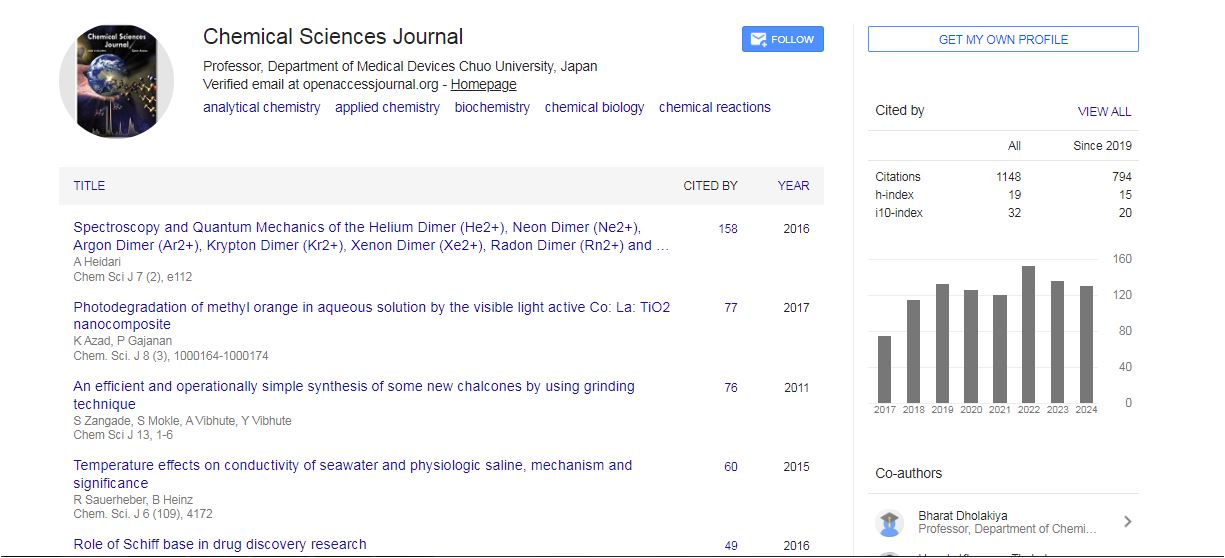
Chemical Sciences Journal received 912 citations as per Google Scholar report