Review Article - (2025) Volume 10, Issue 3
Received: 02-Jun-2024, Manuscript No. JFM-24-137905 ;
Editor assigned: 04-Jun-2024, Pre QC No. JFM-24-137905 (PQ);
Reviewed: 18-Jun-2024, QC No. JFM-24-137905 ;
Revised: 26-May-2025, Manuscript No. JFM-24-137905 (R);
Published:
02-Jun-2025
, DOI: 10.37421/2472-1026.2025.10.402
Citation: Chase, Mauricio, Sarah Fieldhouse, Stephen Bleay and Neil Lamont. "Acid Black 1, Acid Yellow 7 and Acid Violet 17 and the Factors Which Can Affect Blood-Contaminated Fingermark Enhancement: A Review ." J Forensic Med 10 (2025): 402.
Copyright: © 2025 Chase M, et al. This is an open-access article distributed under the terms of the creative commons attribution license which permits unrestricted use, distribution and reproduction in any medium, provided the original author and source are credited.
This review synthesizes current knowledge on the use of Acid Dyes (ADs) Acid Black 1 (AB1), Acid Yellow 7 (AY7), and Acid Violet 17 (AV17) identified by the UK home office as common enhancement agents for blood-contaminated fingermark impressions. Various factors which can influence AD bloodmark enhancement are reported in scientific literature, including sequence of application, time and temperature, dye formulation, substrate features, processing times and bloodmark volume, contaminants, fingermark age, deposition pressure and donor variation. While these dyes have demonstrated excellent capability on porous (excluding AY7) and non-porous substrates, this review has identified several gaps in understanding and application. Firstly, the effect of blood volume on the fixing and staining times of these dyes, particularly for marks associated with high volumes of blood, requires exploration. Additionally, factors such as air-to-surface temperature, substrate colour, composition, coating and degree of porosity need a comprehensive study to improve practitioner awareness and best practice capabilities. Research into the effects of temperature on AD staining times should also be probed to evaluate the performance and suitability of different dye formulations under operational conditions and their response to temperature fluctuations. Furthermore, examining the effect of proteinaceous and non-proteinaceous contaminants on blood mark visualisation substances is encouraged. Accurate modelling and regulation of deposition pressures and contact durations are also suggested to understand blood matrix responses and their influence on enhancement due to the likely impact on operational marks. Addressing these knowledge gaps will provide valuable insights, optimizing the selection and proficiency of AB1, AY7 and AV17 for blood mark application, thereby benefiting practitioners and researchers alike.
Fingermarks • Fingermark deposition • Blood • Enhancement • Acid dyes • Forensic science
Scope of the literature review
The aim is to provide an update of current knowledge surrounding common ADs AB1, AY7 and AV17 and the various factors potentially impacting the enhancement of blood-contaminated fingermarks. However, the literature examined also seeks to identify gaps in essential knowledge relating to AD enhancement of bloodmarks, which can operationally impact the deployment/selection of ADs. Introductory knowledge has been conveyed, concerning blood composition and principles of AD bloodmark enhancement, which is integral to understanding the reviewed literature. All information in this review has been sourced from government and university publications, government websites, books and peerreviewed journals between 1943-2023 to account for the maturity of thought [1].
Theoretical basis of blood composition and acid dye blood mark enhancement
There are a variety of contaminants and surfaces (porous, nonporous, and semi-porous) on which fingermark impressions are deposited. Porous substrates, such as paper, untreated wood, and fabric, contain microscopic pores that allow fingermark residues to permeate, resulting in absorption. Non-porous substrates, including glass, metals, and plastics, feature smooth, impermeable surfaces that prevent the passage of these residues. Semi-porous substrates, such as certain treated woods and leathers, possess intermediate characteristics, allowing for limited permeability and absorption. Regarding potential contaminants, blood is most frequently encountered at crime scenes. Blood-contaminated fingermarks are often easily observed due to the matrix’s strong absorbance in the visible light spectrum. However, visualisation may be obscured due to: (1) Substrate features such as colour and (2) The presence of trace quantities of blood. Consequently, enhancement may be required to optimise the visualisation of blood fingermarks, which may improve their evidential value in a criminal inquiry [2].
Blood consists of erythrocytes (red cells), leukocytes (white cells) and thrombocytes (platelets) in a proteinaceous plasma, which comprises 55% of whole blood volume [3]. Erythrocytes also consist of hemoglobin (protein) and agglutinogens (surface proteins). The enhancement of blood-contaminated fingermarks was first introduced circa 1954 when Odén and von Hofsten engineered a ninhydrin solution based on acetone [4]. The pair theorised that the ninhydrin formulation would target the proteins in blood and fingermark residues by reacting with amine groups, which are abundantly present in protein structures [4,5].
This reaction forms a characteristic purple color, which hypothesized the use of staining and ADs for targeting proteins or their breakdown products in blood fingermarks [2,6].
As depicted in Figures 1-3, the theoretical underpinning of ADs is the presence of a sulphonate (SO3-) group(s) (typically a sodium salt) in the dye formulation along with: (1) Water/a short chain alcohol and an acid [2]. The SO3- group provides solubility of the dye in alcohol/water, the primary solvents utilised [2,7]. The former inhibits the blood substrate diffusion during dyeing [8]. The latter generates a solution flashpoint of ≈ 30 degrees Celsius (°C), which facilitates the safe application of the dyes at crime scenes [2]. Upon interaction with blood in the acidic medium, the anionic SO3- group causes the proteinaceous material to become cationic [9]. This interaction favours the ionic bonding of the anionic AD ions to the cationic protein molecules, thereby enhancing any blood present in a fingermark [1]. However, the Home Office further educated that Van der Waals forces and hydrogen bonding also increase the affinity of the dyes to the target proteins [10].
The staining and visualisation process occurs in four distinct phases:
Fixation: The target mark(s) is fixed by exposure to 5-Sulfosalicylic Acid (SSA) dissolved in water. As an organic acid, SSA dissociates in solution to provide hydrogen ions (H+), facilitating the formation of ionic bonds between the anionic dye molecules and the cationic proteins. This acidic environment, maintained by SSA, is crucial for the proper fixation of ADs. Additionally, SSA can denature proteins, precipitating them and exposing more binding sites for the AD, thereby enhancing the dye-to-protein attachment and resulting in more vivid colouration;
Staining: The mark(s) is treated with the AD solution.
Destaining: The mark(s) is immersed in a solvent mix similar to the dye formulation (with dye absent) to dissolve the excess (unbound) dye and achieve maximum enhancement.
Fluorescence examination: Used to optimise visualisation [10]. Extensive research by the Home Office identified AB1, AY7 and AV17 as the most used dyes among forensic investigators on porous and non-porous substrates, which were ranked based on:
The AY7 solution directly stains blood with fluorescent species, which requires excitation in blue light at ranges of 400-490 nanometres (nm) for visualisation [13]. However, fluorescence examination of AD treated bloodmarks at the following wavelengths: 350-450 nm (AB1, AV17), 650 nm (AV17) and 850 nm (AV17) may also enhance mark to background credited to the improved light absorbance properties of the blood post-treatment [2].
Trial acid dyes
Acid black: Commonly referred to as amido black, this staining diazo dye produces a black/blue colouration upon interaction with blood proteins on non-porous and porous substrates (Figure 1) [14]. However, due to the porosity of the substrate, background staining may become an issue. Therefore, a control test away from the target mark(s) should be executed before application [10].
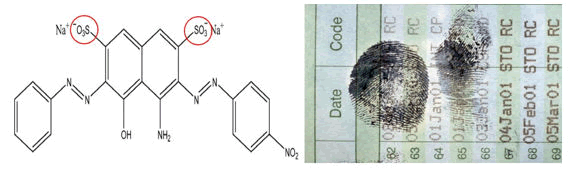
Figure 1. Chemical structure of AB1 with (2) SO3-groups highlighted and blue/black colouration post AB1 application on a porous substrate.
Acid violet
A purple coloration is observed after application on bloodcontaminated fingermarks (Figure 2) [15]. Like AB1, background staining may be an issue depending on the porosity of the surface. Therefore, a similar protocol is advised regarding a control test [10].
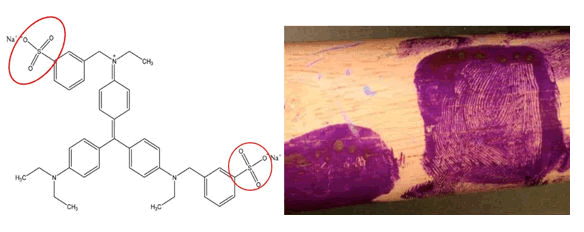
Figure 2. Chemical structure of AV17 with (2) SO3-groups highlighted and purple colouration post AV17 application on a nonporous substrate.
Acid yellow
AY7 produces a fluorescent yellow colouration when viewed under the appropriate filters (Figure 3). Unlike AB1 and AV17, AY7 dye is recommended solely for dark, non-porous substrates. This is attributed to the difficulty in removing background staining on porous substrates, which would significantly affect ridge clarity and visualisation [10].
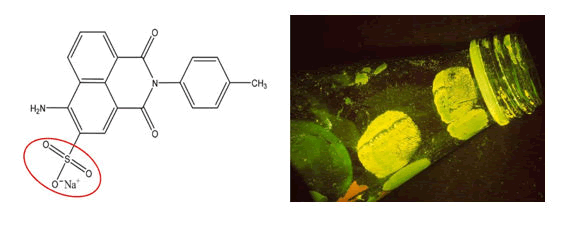
Figure 3. Chemical structure of AY7 with (1) SO3-group highlighted and fluorescent yellow colouration post AY7 application on a nonporous substrate.
Exploration of Factors that Can Influence AB1, AY7 and AV17 blood mark enhancement
Sears, Butcher and Fitzgerald [12] sought to evaluate the performance of AY7 as a bloodmark developer and investigate sequential treatment, including AB1 and AV17, to achieve optimum visualisation. Marks were deposited on various porous, non-porous and semi-porous surfaces, utilising an eighteen-impression depletion series to investigate the performance of the dyes with natural variations in blood mark volumes. A split mark deposition system was also incorporated to facilitate direct analysis of AB1, AY7 and AV17 treated blood marks. Similar methodologies were observed in AD research performed by Sears and Prizeman and during the experiment, notwithstanding the 6-mark depletion utilized in the former research [8,16]. Interestingly, the depletion series examined in the studies were duplicated [12]. Casadevall and Fang later warned that this approach should be revised with the minimum triplicate protocol recommended to validate scientific findings [17]. Therefore, some researchers may challenge the reporting outcomes of the before mentioned studies. However, the research accounted for this variable, evidenced by the investigation of three repeat depletion series for each target substrate.
Nonetheless, experiment recommended an AY7-AV17 sequence for non-porous surfaces to optimize mark development and contrast [12]. Whereas AY7 treatment, followed by AB1, significantly hindered the staining density within the fingermark(s). The AY7-AV17 sequence was reinforced by research [18]. However, the authors suggested this methodology was only apt for treating low-volume blood fingermarks. Concerning porous substrates, the study determined that the selection of AB1 versus AV17 is subjective, as both offered good development and contrast, seemingly contradicted by the study, which is discussed [16].
All of the assertions mentioned above were reinforced in the recently published Fingermark Visualisation Manual (FVM) for both substrate types [10]. However, the document further suggested the following concerning porous surfaces: (1) The use of AV17 in isolation would offer greater coloration, and (2) AY7 may be applied post AB1 or AV17 treatment as a counterstain to generate a fluorescent background which may improve mark contrast [10]. The study also determined that AY7 is most sensitive for developing blood fingermarks on non-porous surfaces in contrast with AB1 and AV17 [12]. However, application to heavy blood deposits was not encouraged as fluorescence intensity was inversely linked to blood thickness by a detected downward shift in emission wavelengths (500-485 nm). These outcomes further support the before mentioned sequential recommendation in research and have been upheld in the FVM [10,18]. The diminished fluorescence was attributed to the reabsorbance of light by the heme group in the blood (quenching). Researchers subsequently recommended conducting extensive dyeing of high-volume marks to afford adequate binding of the dye to the proteins throughout the volume of blood present, which may improve observational outcomes [12]. However, a specific/minimum time frame was not identified in either study, highlighting the demand for further research.
Research highlights the significant impact of cyanoacrylate fuming on the effectiveness of subsequent dye applications, including ADs, in developing blood-contaminated fingermarks. Bouwmeester, Leegwater, and de Puit noted that cyanoacrylate fuming affects the polymer structure of latent fingerprints by forming a polymerized layer that encapsulates the fingermark residues and associated contaminants [19]. Consequently, post-treatment with ADs may be ineffective as the dye cannot adequately interact with the proteinaceous blood to achieve optimal visualisation and enhancement. They recommended using lumicyano (luminol-based cyanoacrylate) before applying AY7 for better development and visualisation of blood marks. However, the study did not evaluate the impact on non-fluorescent dyes like AB1 and AV17. Further research is essential to understand the interactions between cyanoacrylate fuming and AD applications for forensic casework. This underscores the importance of carefully considering the sequence and compatibility of forensic treatments to ensure optimal fingerprint development and visualisation.
Time and temperature
There is a deficiency of peer-reviewed literature alluding to the effect of time and temperature on the efficacy of ADs. However, scientists Lawal and Nwochoka inform that the AD mechanism is temperature dependent [20]. Utilising Ads Red 151, Ingrain black and AB1, it was discovered that dye: Solubility, de-aggregation, rate of reaction and subsequent uptake is directly proportional to temperature. These effects were directly linked to the chromophores, solubilising and premetallised groups within the dye architecture. The experiment further determined that AB1 dye uptake plateaued at ≈ 66°C due to shrinkage and increased rigidity in the targeted leather medium. Therefore, it is likely that temperature may affect the staining processing time of ADs. The morphological alterations linked to the changes in dye solution temperature also highlight the need to consider the effect of substrate temperature on the contribution to the appearance of AD treated bloodmarks.
Kristina Malsagova and a team of researchers further determined that blood proteins bradykinin, renin, angiotensin I and II, bombesin and somatostatin concentrations generally decreased. This was deduced post Matrix Assisted Laser Desorption Imaging (MALDI)-MS of samples stored at -20,+4 and +25°C and sampled at 0,7,14 and 35 days. This was corroborated by a study, which stated that protein detectability was directly proportional to environmental temperature. This was established due to an observed 7-20% decrease in the levels of 92 targeted blood proteins stored for 10 years at -24 to +4°C. The FVM further educated that blood proteins begin to degrade at 150°C, evidenced by the lack of fluorescence of AY7 treated fingermarks stored at 100°C for 8 hours (hrs) and 200°C for 1 hr [10]. A similar trend was also observed during the study [16] concerning AY7 and AV17 following 100°C (8 hr) and 200°C (8 hr) exposure protocol (Figure 4).
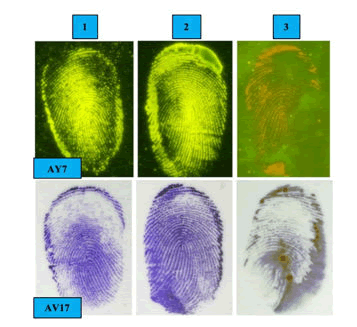
Figure 4. Photographs depicting degradation of AY7 and AV17 treated bloodmarks as a function of temperature and time: (1) Control, (2) 100°C (8-hour exposure) and (3) 200°C (8-hour exposure).
The research further determined that AV17 was best suited for the non-porous substrates tested (ceramic tile and brass metal) versus AB1 for porous surfaces (white A4 card) at ambient air temperatures of 100-300°C and 500-900°C. However, there is a significant disparity in the temperature ranges tested (arson investigation focused) and the range of land surface temperatures 25-45°C likely encountered during daily operations [16]. Therefore, blood experimentation in the latter environment may generate varying observations, results and statistical outcomes. Like, proteomic analysis of the blood at various post-deposition intervals would also aid researchers in assessing protein concentrations as a function of time and temperature and the effect on AD enhancement outcomes. Related research utilized MALDI-MS to map and chemically image proteins from bloody fingerprints in situ without damaging ridge details. Alternatively, studies employed Liquid Chromatography-Mass Spectroscopy (LCMS) and LC-MS/MS, respectively, to conduct blood proteome profiling.
In contrast to the findings presented in research [8], the experiment outlined in study [16] did not clearly indicate which dye formulation methanol-based, water-based, or ethanol/water-based corresponded to the results observed across various environmental conditions. This lack of differentiation makes it challenging to attribute specific outcomes to the particular dye formulations used. It is noteworthy that the experiment utilised two grading schemes to separately analyses contrast and ridge detail, thereby capturing distinct features that contribute to overall fingermark visualisation. In contrast, the research conducted by Mutter, Deacon, and Farrugia focused solely on grading ridge detail in post-cyanoacrylate processed fingermarks treated with methanol and ethanol/water-based AV17.
The cold denaturation of proteins at -20°C due to the loss of tertiary and quaternary folds of the protein structure was also advanced. The scientists added that the time the sample was retained in the environment should be considered as it is directly proportional to the decay rate. Irrespective of the disparity of the opinions offered, the above mentioned experimental outcomes indicate that temperature affects the development capabilities of AB1, AY7 and AV17, which can influence operational guidance and application.
Dye formulation, solvent system and chemical structure
The research by Sears and Prizeman [8] sought to identify the optimum solvent system for AB1 using a comprehensive analysis of methanol, water and ethanol-based AB1 formulations. The study determined that the methanol and ethanol/water-based formulations outperformed the purely water-based AB1 formulations concerning stain intensity, and there was no ridge diffusion on porous surfaces. Post analysis, the optimum AB1 formulation proposed was: (1) Fixing: 20 grams of SSA in 1000 millilitres (ml) of water, (2) Staining: 1 gram of AB1 in 250 ml of ethanol, 50 ml of acetic acid and 700 ml of distilled water, and (3) Destaining: 250 ml of ethanol and 50 ml of acetic acid in 700 ml of distilled water. Notably, there was no difference between the methanol and ethanol-based formulations regarding enhancement; and the study did not include AY7 and AV17 in its analysis. However, Sears, Butcher and Fitzgerald [12] informed that the most effective staining formulation for AY7 was identical to the AB1 formulation recommended by Sears and Prizeman [8]. Publications in the 2022 FVM further corroborated the formulae for AB1, AY7 and AV17 at each stage, albeit an increase to 23 grams of SSA during the fixing phase was proposed [10]. It must be noted that the AB1 water/ethanol-based formulation in the Sears and Prizeman [8] study was recommended as a lower-risk option to the methanol-based alternative for in-field application without compromising enhancement capabilities. This is due to methanol's highly flammable and toxic properties. However, the scientists stated that the experiments were small-scale, and temperature recording during testing was not mentioned. Therefore, it may be prudent to evaluate further the performance of pure water, ethanol/water and methanol-inclusive formulations of AB1, AY7 and AV17. This research is encouraged as the 30°C flashpoint generated by ethanol/water-based AD formulations is < the maximum 45°C temperature range likely encountered during daily scene operations. Consequently, deployment of the optimum ethanol-based ADs is not always possible, particularly in tropical environments where temperatures often >30°C and fire scenes where sources of ignition may be active [8]. It is important to highlight that notwithstanding support from other scientists, most of the existing research specifically focused on ADs has been conducted by Vaughn Sears through the UK home office. Consequently, further independent studies are encouraged to expand upon these findings.
Study endeavoured to improve the luminescent properties of ethanol/water AY7 to further enhance visualisation by: (1) Replacing SSA with ethanol, propanol, and methanol as fixing agents and (2) Altering the pH of the staining solution from 2.6 (commercial AY7) in 0.1 unit increments. The scientists’ determined ethanol was the most suitable alternative for bloodmark fixing without impacting sensitivity. In contrast, propanol was deemed detrimental to solution sensitivity. Concerning methanol, while initially demonstrating robust adeptness for bloodmark fixing, visibility of subsequently AY7 stained bloodmarks was lost during destaining. It was also discovered that while visualisation was not improved by replacing SSA, the probability of developing a DNA profile without loss to mark detail at Ph 4.3 was most likely. However, limitations exist concerning the degree to which the reporting outcomes are accepted. This is due to flaws in the experimental engineering, such as the absence of repeats and statistical significance testing, unlike research in sections, respectively [16]. This was indirectly conceded by the authors, where it was suggested that the DNA testing executed was preliminary and urged further testing to provide more definitive results.
Colour and coatings
The FVM informed that practitioners should consider substrate colour prior to selecting a fingermark developer/enhancer to achieve optimum mark-to-substrate contrast [10]. However, no specific instruction was discovered addressing AB1, AY7 and AV17 selection and surface colour. Nonetheless, the study initially highlighted the potent enhancement of AY7 treated bloodmarks on dark surfaces compared to AB1, owning to the fluorescent properties of the former. In contrast, post research analysis confirmed that AY7 also superiorly enhanced blood marks on colorless glass with third-level detail compared to the AB1 equivalent. The before mentioned assertion was supported when superior final visualisation was observed on AY7 enhanced blood stains on black tiles in contrast to the equivalent on light-colored ceramic tiles [13]. Literature directly assessing the optical effects of AB1 and AV1 and 7 on light-colored surfaces was not discovered. However, it is hypothesized that the dark-colored dyes would afford optimum visualisation due to the disparity in their optical properties with light-colored substrates.
The substrate related morphological changes observed in the experiment [20] in above section also denote the need to examine the relation between colour and temperature and the resultant effect on dyed blood mark visualisation. Cohen determined that there is a direct relationship between thermal load and colour for common textiles and paints, where darker colours absorb larger quantities of radiant energy, resulting in higher surface to ambient temperature. These discrepancies can affect: (1) dye to bloodmark aggregability linked to protein denaturation, mark to background contrast due substrate specific alterations, which can result in dye absorbance of both the substrate and bloodmark. However, a 2018 study further introduced that substrate temperatures of identical structures/objects with similar colours can vary ≈ 47.6°C using conventional versus commercial paints due to photonic engineering. Industrial paints are frequently utilised on buildings, automobiles and electronics, commonly encountered during crime scene investigation. Pockett and Belusko further informed that industrial paint thermal loads might be decreased using pigments and silica/ceramic additives, which reflect greater infrared and longer solar wavelength radiation, respectively. It is hypothesised that the fluctuations in thermal loads may generate variations in the dye to bloodmark response at manipulated substrate temperatures due to the factors mentioned. The utilisation of fluorescence paint (such as household art) must also be considered, as visualisation may be obscured post AY7 treatment due to background fluorescence. This hypothesis was corroborated by Reib, Prestel and Giering, where fluorescent brick red and green paints demonstrated clear fluorescence excitation utilising fluorescence spectroscopy at 450 nm and 507 nm, respectively. The wavelengths observed are within ± 10 nm excitation wavelength ranges of AY7 and were attributed to the presence of solvent yellow 172 dye in the paint resins.
To date, literature that targeted the effect of the variation in chemical profiles of colour and paint and the resultant impact on AD visualisation was not discovered. Therefore, further research of these parameters is paramount to fill the gaps in practitioner knowledge and improve operational success post AD processing.
Porosity
Sears, Butcher and Prizeman [11] informed that test substrates selected in AD research were intended to reflect operational use and were practitioner influenced. To that end, the following were examined: (1) Porous-photocopy paper, wallpaper, and vinyl matte paint for porous surfaces, (2) Semi-porous-lacquer-coated wallpaper and vinyl satin paint, and (3) Nn-porous-blown polyethene vinyl wallpaper, PVC tablecloth, vinyl silk paint and glass were identified. These choices were corroborated in the [8] and [12] studies. However, a study by Munro, Deacon and Farrugia sought to investigate alginate's suitability for lifting AY7 and AB1 treated blood marks utilising ceramic tiles and dark denim as test substrates.
Sears and Prizeman [8] discovered that water-based AB1 produced inferior results to the methanol-based alternative on porous surfaces due to high background staining, reduced ridge stain intensity, and ridge diffusion. While AV17 and AY7 were not included in the experimental of the before mentioned study, the research [12] determined that AY7 was ill-suited for porous substrates and outperformed AV17 and AB1 on the non-porous equivalent. Interestingly, the quality of the enhanced AV17 and AB1 blood marks was indistinguishable. Nevertheless, experiment [15] galvanised the previous AY7 outcomes where AY7 demonstrated the ability to constantly enhance/develop bloody fingermarks with level 3 detail on non-porous substrates. It must be noted that the performance rankings in the study [12] were subjective and not data analysis generated. Therefore, the findings may have been unknowingly influenced by researcher biases conceived during the collection, handling and interpretation of findings.
Coincidentally, there was no consideration for the degree of porosity of the target substrates in any of the abovementioned publications, which is hypothesised to influence dye to substrate uptake and obscure enhanced bloodmark optics. This was partly confirmed by Astuti, Wibowo and Ayub, who examined the liquid absorption capabilities of Tissue (TP), Filter (FP) and Wood-Free Papers (WFP) utilising scanning electron microscopy coupled with ImageJ software analysis. It is laudable that the methodology analysed variants of the beforementioned papers. Utilising the imagegenerated porosity values, the following sequential absorption list was determined: FP α (51,50586)>WFP β (27,70944)>WFP α (23,31616)>TP β (20,96931)>FP β (18,30719)>TP α (9,174701). This outcome aligns with the claim by Kearsley and Wainwright, alluding to the linear relationship between water absorption and porosity whilst investigating the absorption features of concrete. However, the year 2000 publication cautioned that substrate pore size distribution is inversely related to dye solvent capillary action and defines overall imbibition rates. This was due to the observed retardation of liquid absorption rates on high porosity large, pored matte paper. Circa, two decades after, the research determined that substrate absorption can be inhibited due to variation in the minute pore size ranges of coated paper (20 nm to 25 μm) versus uncoated (1 to 25 μm).
Jones and Pounds also theorised that porosity values may be inversely linked to AD staining times. This was discovered where methanol-based AB1 required 150 seconds of exposure to paper as opposed to 600 seconds to stainless steel knives and glass slides for maximum visualisation. Considering the educational outcomes discussed above, researchers must note that blood viscosity is higher than water. Hence, the substrate absorption rates of the former would be lethargic compared to the latter. Nevertheless, this does not alter the direction of the absorption/porosity relationship. Therefore, researchers should explore the degree of substrate porosity and the influence (if any) on dye/blood mark to substrate absorbance and resultant mark visualisation.
Composition
During research [16], the following observations were recorded at an operational temperature of 25°C. AV17 enhanced blood marks with superior contrast and ridge detail on card. Interestingly, whilst AY7 is not usually applied to card, a higher ridge detailed blood mark was attributed to AY7 compared to AB1, and discernment between the two dyes concerning contrast was not possible [16]. This unusual result was associated with the fact that AY7 dyed the background due to the porous/semi-porous nature of the medium, and the blood marks strongly absorbed the blue light [10]. Consequently, the final visualisation documented was black fingermark ridges against a fluorescent background, thus improving the contrast of the AY7 treated marks [16]. Any reduction in contrast of the AV17 blood marks may also be attributed to the porosity of the medium resulting in background staining [10]. Regrettably, whether the card was coated was not stated, which can mitigate porosity effects versus virgin surfaces.
Regarding non-porous ceramic white tiles, AB1 outperformed AV17 and AY7 in both of the aforementioned analysed features [16]. However, concerning contrast, AV17 treated bloodmarks surpassed the AY7 parallel, whereas AY7 treated marks were attributed a higher grade to AV17 for ridge detail. In comparison, AY7 achieved ridge detail superiority to the indiscernible AB1 and AV17 bloodmarks on tin plated steel. Regarding contrast, AB1 was highest, followed by AY7 and AV17. Lamentably, the research did not directly compare ridge detail or contrast data relative to substrate composition. Consequently, no explanation was given for the disparities observed.
Nonetheless, the AY7 contrast-related tile result was unsurprising due to the guidance given in the study outlining the adeptness of AY7 for developing blood marks on dark surfaces. Similarly, irrespective of the 1st and 2nd ridge detail rankings on both substrates, the robust performance of AY7 on both substrates was expected as AY7 was touted as the most sensitive of the dyes [10,12]. The consistent performance of AB1 (1st-2nd rankings for both features on both nonporous mediums) compared to AY7 (1st-3rd) and AV17 (2nd-3rd) is also noteworthy as they oppose the sequential AY7-AV17 optimum visualisation pathway [12]. However, whilst there was no immediate explanation for this outcome in the research, it is apparent that substrate composition (excluding porosity classification) influences dye performance. Therefore, a study incorporating this caveat into the experimental work is desired, generating more comparable data and allowing researchers to determine the influence, if any, on dye selection.
Miscellaneous
During the execution of the Sears and Prizeman [8] research, the duo discovered that the application of methanol based AB1 resulted in the softening or damage to plastic substrates and those with painted and varnished finishes, such as wood. These substrate alterations resulted in damage to/destruction of fingermark ridge detail. Consequently, the application of water-based ADs was proposed for application where the before mentioned circumstances were encountered.
Processing times and blood mark volume
Regarding ethanol/water-based AB1 and AV17, the FVM recommends the following processing times: (1) Fixing: 5 minutes, (2) Staining: 3-4 mins and (3) Destaining: Subjective until excess dye is removed. However, concerning AY7, there is a disparity with the staining phase, where 5-10 mins is proposed for optimum results [10]. However, regarding methanol-based AB1, Sears and Prizeman observed leaching during dye application to heavy blood deposits and suggested that extended fixing times would circumvent such an occurrence [8]. While the theory explaining this phenomenon was not stated, it is hypothesized that larger volumes of blood would require longer periods to precipitate the proteins present in the blood mark [2]. The home office [10] subsequently accepted the recommendation, resulting in the observed 1-hour fixing window for methanol-based AB1, AY7 and AV17 in the FVM. The FVM further noted that processing times are not definite and suggested that fixing time is directly proportional to blood deposit volume [10]. However, [8] and [10] did not advance a minimum fixing time for large volume marks, which is vital to prevent: (1) premature staining and potential obliteration of mark ridge detail. Jones and Pounds also argued that blood-contaminated fingermarks do not require fixing. This opinion was derived due to the lack of distinction regarding enhancement quality between AB1 one-step treated blood marks versus 5-minutefixed, then AB1 stained marks. However, it should be noted that the deposition to enhancement window was 2 hours–10 weeks, which exceeds the 4-hour blood coagulation and drying window mentioned. The pair also alluded to the effects of porosity on staining times.
Proteinaceous and non-proteinaceous contaminants
Mixed samples can alter the visualisation of blood fingermarks post AD treatment and are often generated due to the presence and interaction of blood with contaminants on the substrate. The presence of these contaminants may naturally occur during daily activities. For example, trace residues of protein-rich foods, such as egg/milk, are likely in the kitchen and dining areas. Contaminants may also be derived from circumstances surrounding the perpetration of the crime. For example, it is not rare to encounter blood mixed with semen (which embodies a high concentration of proteins) at a crime scene of a sexual nature. Therefore, applying ADs in the before mentioned environments/circumstances may result in staining substances other than blood, which may alter the visualisation of treated fingermarks. However, the publication determined that improved selectivity may be gained by utilizing peroxidase reagents such as Leucocrystal Violet (LCV), which targets the heme molecule in hemoglobin using an oxidation reaction. This was tested when Bodziak sought to develop an alternative to AB1 and diaminobenzidine (peroxidase reagent) for shoeprints in blood. However, whilst these reagents offer greater specificity than ADs, they are less sensitive for fingermark enhancement due to the dearth of hemoglobin material present for the reaction, making visualisation of the fine detail in fingermark recovery likely difficult. This was recognized post analysis, where AB1 was proposed as an LCV post-treatment technique to capture all protein-inclusive contaminants and optimize enhancement. However, it must be noted that fingermark contaminants would vary to the footwear impression equivalent, which identifies the likelihood for further exploration regarding ADs and heme-specific alternatives for blood fingermark development.
Studies such as sought to govern the effect of foreign material by washing the glass slides with acetone preceding the placement of the bloodstains [13]. Whereas research utilised a rinse, air dry protocol with detergent and ethanol before blood mark deposition [16]. While exploring the effect of surface texture on fingermark material, the experiment probed the effect of contaminants by requiring donors to wash their hands 30 minutes prior to deposition on pre-sanitized and unclean target substrates. Alternatively, donors were required via questionnaire to disclose whether they used cosmetics, hair, sunscreen or grease, which can alter the virgin composition of fingermark residue and influence reporting outcomes. Therefore, similar approaches may be considered for AD research to mitigate the occurrence of flawed interpretations concerning AD performance and subsequent operational utility. Nevertheless, the presence of proteinaceous contaminants should be factored into operational decision-making regarding dye utilization and selection.
As of this writing, no peer-reviewed literature has been identified that examines the effect of biological contaminants on the treatment and visualisation of blood marks with ADs, which may suggest practitioner and industry satisfaction with AD performance. However, a study by demonstrated robust enhancement and visualisation of 1,7,14 and 28-day-old semen stains using AV17 and AY7 under white light. Thus, the effect of biological contaminants on AD blood mark enhancement and visualisation warrants investigation. Additionally, a 2017 master’s thesis found that aqueous AB1, LCV, and AV19- treated fingermarks showed good contrast and ridge detail on mud, salt, pollen, dust, and motor oil-contaminated glass and metal substrates. Corcoran further asserted that contaminants sometimes improved visualisation compared to uncontaminated blood marks. Whilst the before mentioned analysis was a preliminary indicator of appropriate scientific rigour, there was no mention of the execution of statistical significance testing to reduce the impact of cognitive bias and generate objective outcomes. It must also be noted that there was no procedural instruction in the 2022 FVM concerning the application of ADs on contaminated substrates/blood fingermarks [10].
Fingermark age
According to Houwen and Adewoyin and Nwogoh, blood naturally coagulates with the passing of time and pre-treatment drying times can range from 1-4 hours, dependent on the size of the mark. This physiochemical process is crucial to the success of the AD process as premature fixing inhibits coagulation activities, which may result in the leaching or diffusion of ridge details in the targeted fingermark [1].
Therefore, James, Kish and Sutton recommend that target substrates and blood fingermarks are dry before applying SSA. This was previously recognised during the study [8], as evidenced by the incorporation of a 12-hour drying window in the research discussed. However, the time allotment was not standardised as further AD experiments utilised a 16-hour to ten-month pre-treatment period [12]. Post deposition, marks were successfully developed using AB1 and AY7 in the research, albeit no numerical data was available for scrutiny. A Home Office [2 3] assessment of grading (0- poor to 4- maximum visualisation) data generated from bloodmarks deposited on nine mediums treated 24 hours’ post-deposition determined that: AB1, AY7 and AV17 enhanced (68.4%, n=244), (68.6%, n=274) and (69%, n=232) grade 4 marks respectively. In contrast, enhancement 14 days after deposition yielded the following: AB1 (68.3%, n=243), AY7 (60.7%, n=275) and AV17 (71.6%, n=243). Visually, notwithstanding the slight disparities, the dyes performed relatively consistently between the mentioned periods (≤ ± 2.6%). However, no data analysis results were offered to determine if the variations in percentage values observed were statistically significant.
Deposition pressure
Lamenting the research aimed at assessing the contribution of physical factors to blood fingermark quality, Langenburg sought to investigate the effect of Deposition Pressure (DP) on bloodmark ridge detail. Utilising a 250 microlitres (μL) pipette and a whiteboard substrate, 10, 20, 30, 40, 50, 70 and 100 μL of blood was evenly spread across the thumb. The bloodmarks were subsequently deposited (vertically and horizontally) in 0-4 min intervals post blood interaction at DPs of: 0.8-1.5, 2.0-6.0, 8.0-13 and 18-25 pounds/inch squared (psi) utilising a digital scale. Alternatively, Fieldhouse investigated the effects of DP and Duration of Contact (DOC) on fingermark residues utilising a novel designed variable force fingermark mechanism. The sampler permitted the examination of strictly regulated DPs and DOCs on inked fingermarks. The UK Defence Science and Technology, via Gwinnett, submitted that DP effects may be mitigated in fingermark research by asking participants to deposit marks with pressure equivalent to picking up an object.
Nevertheless, Langenburg determined that elevations in DP favoured increased bloodmark detail (up to 20 μL volume). This relationship was consistent with the uncontaminated fingermark residue equivalent examined in a 2013 study. The effect of DP became negligible for marks generated with blood volumes ≥ 30 μL, as there was a sufficient volume of the matrix to generate identifiable fingermarks. However, the quality of the ≥ 30 μL deposited marks increased where 1-2 minutes’ post blood interaction was recorded, which was linked to the required drying of excess blood.
It must be lauded that Lunenburg accounted for the effect of the volume of blood on blood mark detail, which can influence AD uptake due to variation in blood protein. Conversely, Sears, Butcher and Fitzgerald [12] employed an alternative approach via incorporation of the depletion series explained in above section. However, while this method mitigates the effect of variations in blood volume, the lack of regulation must be accounted for in post-study interpretations. It is also important to stress that, unlike latent fingermark residues, no flattening or distortion of bloodmark ridges was observed post deposition at extreme pressures (18-25 psi). This finding highlights the disparity between the contact dynamics of blood fingermarks and natural fingermarks residues. Therefore, researchers should probe any assumptions made concerning the distortion of fingermarks in a blood matrix that are otherwise applicable to uncontaminated fingermark material, such as: (1) increased Duration of Contact (DOC) and (2) substrate smoothness, which are directly proportional to fingermark quality.
Commendably, the study investigated the effect of vertically and horizontally deposited blood fingermarks to reflect casework accurately. The research also intentionally manipulated donor skin and air temperatures to accurately generate marks deposited during the engagement of the fight/flight response in high stressed situations. However, fingermarks were viewed in their virgin state without enhancement, and the introduction of chemical enhancers such as ADs would have improved the depth of the study. Moreover, greater scientific rigour and comparisons could have been executed by introducing other non-porous, semi-porous and porous surfaces [12].
Intra and inter-donor variation of proteins in human blood
The home office [10] reported that ADs do not detect the natural constituents of fingermark residues. Therefore, variations in eccrine concentrations (which are amino acid inclusive) are unlikely to impact AD enhancement capabilities. However, a study sought to assess the variation in the protein levels of platelets, plasma and Peripheral Blood Mononuclear Cells (PBMC) in humans. Utilising 10 volunteers (7 females and 3 males), (1) 10 ml whole blood sample was retrieved post overnight fasting per week for a month. Notably, the researchers sought to exclude participants consuming aspirin, herbal medicines and anti-inflammatory drugs, which are recognised to alter platelet mechanism/homeostatic processes which can manipulate natural protein yields. Upon completion of proteomics analysis, the following ranges were observed: (1) Platelets: 400–1,500 micrograms (μg); (2) PBMC: 100–600 μg; and (3) Plasma depleted of Immunoglobulin G (blood anti-body) and Albumin (protein synthesised by the liver) 350– 650 μg. It is hypothesised that the inter (INTER) and intra (INTRA) donor variability of protein between subjects (Platelets: INTER: 20-22%, INTRA: 2-18%; PBMC: INTER: 25-32%, INTRA: 4-16%, Plasma: INTER: 6-12%, INTRA: 3-14%) would impact AD interaction and subsequent enhancement of blood fingermarks. Therefore, it is paramount that the variables mentioned in section are incorporated into any research/final interpretations made concerning AD performance to demonstrate adequate scientific rigour.
Medication, disease, surgery and lifestyle
The experiment also introduced the idea that the captioned variables may alter blood protein levels, and experimentation by research presented more detailed findings. The latter research aimed to determine the systemic effect of anti-hypertension medication on the plasma protein levels in blood. Of the 425 proteins analyzed in 228 donors, it was determined that anti-hypertensive (19 variants) or lipid-reducing drugs affected 33.1% of the proteins, resulting in a 35.7% reduction in plasma protein quantities. Furthermore, P ≤ 0.05 was observed in the blood proteome levels of 141 hypertensive medicated donors versus non-medicated participants. This was further supported by a study while investigating albumin (the blood's most abundant circulating protein) expression in humans affected by diabetes. The scientists reported that diabetes disrupts protein metabolism, lowering albumin levels, which can hinder AD interaction. Consequently, elevated blood albumin levels are observed in type 1 diabetic patients prescribed insulin, activating gene transcription in the liver.
Individuals with blood cancer, liver/kidney disease, viral infections and pneumonia will also present with persistently high blood protein concentrations (hyperproteinaemia). On the contrary, persons with conditions/lifestyles/medical procedures resulting in hyperproteinemia, such as pancreatic damage, malnutrition, gastric sleeve surgery, inflammatory bowel disease and celiac must also be considered. There is a paucity of research regarding the molecular mechanisms of conditions which result in hyperproteinemia. However, any fluctuation in blood protein levels (other than natural) is expected to manipulate AD enhancement due to the abundance/ scarcity of proteins present.
Lifestyle habits such as smoking also significantly influence blood protein levels, which can impact AD to blood mark bonding. This was confirmed by research, which endeavored to analyses the effect of tobacco smoking on alpha-2-macroglobulin, albumin and serum total protein levels. Post examination, statistically significant lower concentrations of Albumin (ALB) (P<0.023) and Total Protein (TP) (P<0.000) were observed between the male smokers (n=186) (ALB-2.4-7.1 grams (g)/decilitre (dl) (median), TP-6.2-9.9 g/dl) versus male non-smokers (n=102) (ALB-3.1-6.0 g/dl, TP 6.8-9.9 g/dl). Experiment contradicted the before mentioned findings where higher ALB values were observed for smokers (n=24) (5.02 ± 0.17 g/dl) versus non-smokers (n=78) (4.66 ± 0.45 g/dl) in pregnant females. However, in addition to the gender difference between the studies, the variation in sample sizes must be considered, as sample size (n) is directly proportional to the accuracy of results. Moreover, the study targeted pregnant donors, which can dysregulate homeostatic mechanisms/pathways and result in hyperproteinemia and hypoalbuminemia. While all the studies mentioned in this section are not fingermark/blood mark related, it is evident that variation in blood protein levels was observed. Therefore, donor medical history should be considered during AD blood mark research and in any subsequent interpretations relating to enhancement capabilities.
Age and gender
Plasma protein levels also fluctuate with age, which is hypothesized to influence AD enhancement capabilities dependent on protein blood volumes. This was discerned when blood was analyzed from 1086 donors over a decade (ages 70, 75 and 80). Post analysis, statistically significant differences (where the alpha level P=<0.00059 due to Bonferroni adjustment) were observed between 72.6% of the proteins analyzed, with blood concentrations mainly increasing with age. This observation was attributed to the inversely proportional relationship between the glomerular filtration rate of the kidneys and age. In contrast, using statistical analysis of variance, the study determined that age did not significantly influence protein yields in blood where n=10. However, the variation in sample sizes (n=10) versus (n=1086) may be an indicator of small sample size limitations and may account for the lack of statistical significance observed.
Nevertheless, Hawkins, Speck and Leonard further introduced that post-examination of blood from 1308 Males (M) (Ages 6-98) and 1424 Females (F) (6-94), the average hemoglobin% valued for Ms and Fs were: Ages 14-20 (M-15 Gm/100 ml, F-13 Gm/100 ml). The study further stated that in the 14-20 age group, hemoglobin levels were maintained in the subjects until 30 years for both sexes. However, a decline to an average of 12.4 Gm/100 ml was observed in male subjects ≥ 50 years, whereas the female equivalent remained unchanged. This was corroborated when it was discovered that anemia increases at >60 years of age in both genders (n=90). Nevertheless, while hemoglobin may be linked to blood protein concentrations, no preference for the direction of the effect has been established. Therefore, the size of the effect on dye to blood mark enhancement cannot be hypothesized and should be accounted for in all post research interpretations.
Published literature consistently reports that AB1, AY7 and AV17 are effective enhancement agents for blood-contaminated fingermark impressions. AB1 and AV17 demonstrate potent enhancement on porous and non-porous substrates, whereas the fluorescence signal of AY7 offers robust ridge detail enhancement and contrast on nonporous mediums. Numerous factors that can potentially affect blood mark enhancement have been identified, including sequence of application, time and temperature, dye formulation, substrate features, processing times and blood mark volume, contaminants, fingermark age, deposition pressure, and donor variation. However, information concerning the specific effect of some of the variables on AD enhancement is generally lacking, likely attributed to:
Operational restrictions and satisfied performance: Practitioners often adhere to the best practice guidelines issued by employing organizations/institutions and, therefore, simply complete tasks with the products made available. Conversely, improvement of AD blood mark enhancement may not be the current priority of forensicmandated institutions, partly due to funding limitations.
Experimental demands: As outlined by the Forensic Science Regulator, blood mark research should consider, at a minimum: mark age, deposition factors, substrate features, blood fluid dynamics and mark imaging, preservation, handling and comparison. These considerations require extensive sample generation, risk and ethical assessments, and specific infrastructural requirements. Depending on the investigated variable, the research may also necessitate that samples are stored in temperature-controlled conditions. Some dye studies may also include proteomics/other chemical profiling, which requires the services of analytical instruments. These systems ordinarily entail some measure of sample preparation and processing steps which would contribute to the overall absence of knowledge in this area.
Nevertheless, the effect of blood volume on the fixing and dyeing times of AB1, AY7 and AV17 treated marks, as well as the resultant effect on sequential treatment, should be further probed. This is based on the lack of specificity regarding the ‘extensive’ staining and fixing advanced for high-volume blood marks observed. Moreover, the results yielded from the study, where high-volume virgin blood marks (≥ 30 μL) seemingly overpowered the effects of deposition pressure to produce identifiable marks, reinforces the need for further experimentation. Therefore, developing a methodology that regulates blood volume and processing times is suggested to define ‘extensive’ and to introduce minimum fixing and staining times for high-volume blood marks to improve the operational success of AB1, AY, and AV17.
The effects of air to surface temperature on staining times and substrate color, composition, and coating on AD blood mark enhancement should be pursued to improve practitioner awareness and the nescience outlined in the review. Consideration should also be given to advancing Sears and Prizeman’s [8] study relating to the enhancement capabilities of methanol, ethanol-water and water AB1, AY7 and AV17 on porous, semi-porous and non-porous substrates. Research of the before mentioned variables is critical to: (1) Assess the performance and applicability of methanol, ethanol/water and pure water AB1, AY7 and AV17 in operational environments (-25-45° C), as previous studies were arson-focused, (2) Assess the influence of composition on AD selections (3) Determine the effect of the degree of porosity on AB1, AY7 and AV17 blood mark enhancement outcomes. Research has also documented varying blood protein volumes at -20, +4 and+25°C and protein denaturation at -20°C.
Therefore, periodic sampling and chemical profiling of blood proteins using MALDI-MS or LC/MS/MS may ascertain dye performance as a function of time. Moreover, it seeks to determine whether a link exists between AB1, AY7, and AV17 enhancement and blood protein volumes/denaturation due to temperature fluctuations. As suggested by Astuti, Wibowo and Ayub, scanning electron Microscopy and Image J analysis may also be employed to quantify the porosity of the target mediums and assess the likely absorbance of dyes and blood marks in the substrate and the resultant effect on enhancement.
The void of research regarding the effect of contaminants on blood mark AD visualisation/enhancement should also be investigated, as it is hypothesized that contaminants such as egg, milk, semen, dust, pollen and oil would influence AD outcomes. Utilising a contaminantfree substrate as a baseline, researchers may consider assessing AB1, AY7 and AV17 in the aforementioned environments to determine the effect (if any), its direction, and its implication on AD deployment. Additionally, the lack of distortion of bloodmark ridge detail at 18-25 psi indicates a divergence in the contact mechanics of blood marks versus virgin fingermark residues, which may impact AB1, AY7 and AV17 mark visualisation.
Therefore, research modelling should include regulated DPs and DOCs deposited bloodmarks versus unregulated DPs and DOCs. This is vital to ascertain information on blood matrix responses, the impact (if any) on blood mark enhancement, and the resultant effect on AD performance.
Where appropriate, researchers could incorporate the following, dependent on the goal of the research: (1) Contrast or ridge detailfocused grading schemes to assess targeted blood mark characteristics accurately; (2) Employment of questionnaires to account for the effect of inter and intra-donor variability on protein concentration in blood; (3) Pre-sanitization protocols to account/ eliminate the presence of foreign materials in blood marks; (4) Adequate depletion series and utilization of split mark deposition. Fingermark researchers may also wish to mitigate the effect of DP and DOC, where relevant. Concerted efforts should also be made to ensure adequate sample sizes, repeats, and meaningful statistical testing are designed into methodologies to obtain reliable and less subjective AD bloodmark enhancement results.
During the preparation of this work, the author used grammar Go to improve language and readability. After using this tool, the authors reviewed and edited the content as needed and take full responsibility for the content of the publication.
[Crossref] [Google Scholar] [PubMed]
[Crossref] [Google Scholar] [PubMed]
[Crossref] [Google Scholar] [PubMed]
[Crossref] [Google Scholar] [PubMed]
[Crossref] [Google Scholar] [PubMed]
[Crossref] [Google Scholar] [PubMed]
[Crossref] [Google Scholar] [PubMed]
[Crossref] [Google Scholar] [PubMed]
Journal of Forensic Medicine received 165 citations as per Google Scholar report