The giant congenital melanocytic nevus is generally defined as a melanocytic lesion present at birth that will reach a diameter ≥ 20 cm in adulthood. Its incidence is estimated in <1: 20,000 newborns. Despite its rarity, this lesion is important because it can be associated with severe complications such as malignant melanoma, affect the central nervous system (neurocutaneous melanosis), and have a major psychosocial impact on the patient and his family due to his unsightly appearance. The giant congenital melanocytic nevus usually presents as a brown lesion, with a flat or wetted surface, well-defined borders and hypertrichosis. The congenital melanocytic nevus is above all a clinical diagnosis. However, congenital nevuses differ histologically from acquired nevi mainly by their larger size, the spread of nevus cells to the deeper layers of the skin and by their more varied architecture and morphology. Although the giant congenital melanocytic nevus is recognized as a risk factor for melanoma development, the precise extent of this risk remains controversial. The estimated lifetime risk of developing melanoma ranges from 5 to 10%. Because of these uncertainties and the size of the lesions, the management of the giant congenital melanocytic nevus must be individualized. Treatment may include surgical and non-surgical procedures, psychological intervention and / or clinical follow-up, with particular attention to changes in color, texture or the surface of the lesion. The only absolute indication for surgery in the giant congenital melanocytic nevus is the development of a malignant neoplasm on the lesion.
Research Article: Clinical Depression
Research Article: Clinical Depression
Research Article: Clinical Depression
Research Article: Clinical Depression
Review Article: Clinical Depression
Review Article: Clinical Depression
Review Article: Clinical Depression
Review Article: Clinical Depression
Case Report: Clinical Depression
Case Report: Clinical Depression
Scientific Tracks Abstracts: Journal of AIDS & Clinical Research
Scientific Tracks Abstracts: Journal of AIDS & Clinical Research
Accepted Abstracts: Journal of AIDS & Clinical Research
Accepted Abstracts: Journal of AIDS & Clinical Research
Posters & Accepted Abstracts: Journal of Advanced Practices in Nursing
Posters & Accepted Abstracts: Journal of Advanced Practices in Nursing
Posters & Accepted Abstracts: Journal of Advanced Practices in Nursing
Posters & Accepted Abstracts: Journal of Advanced Practices in Nursing
Posters & Accepted Abstracts: Journal of Advanced Practices in Nursing
Posters & Accepted Abstracts: Journal of Advanced Practices in Nursing
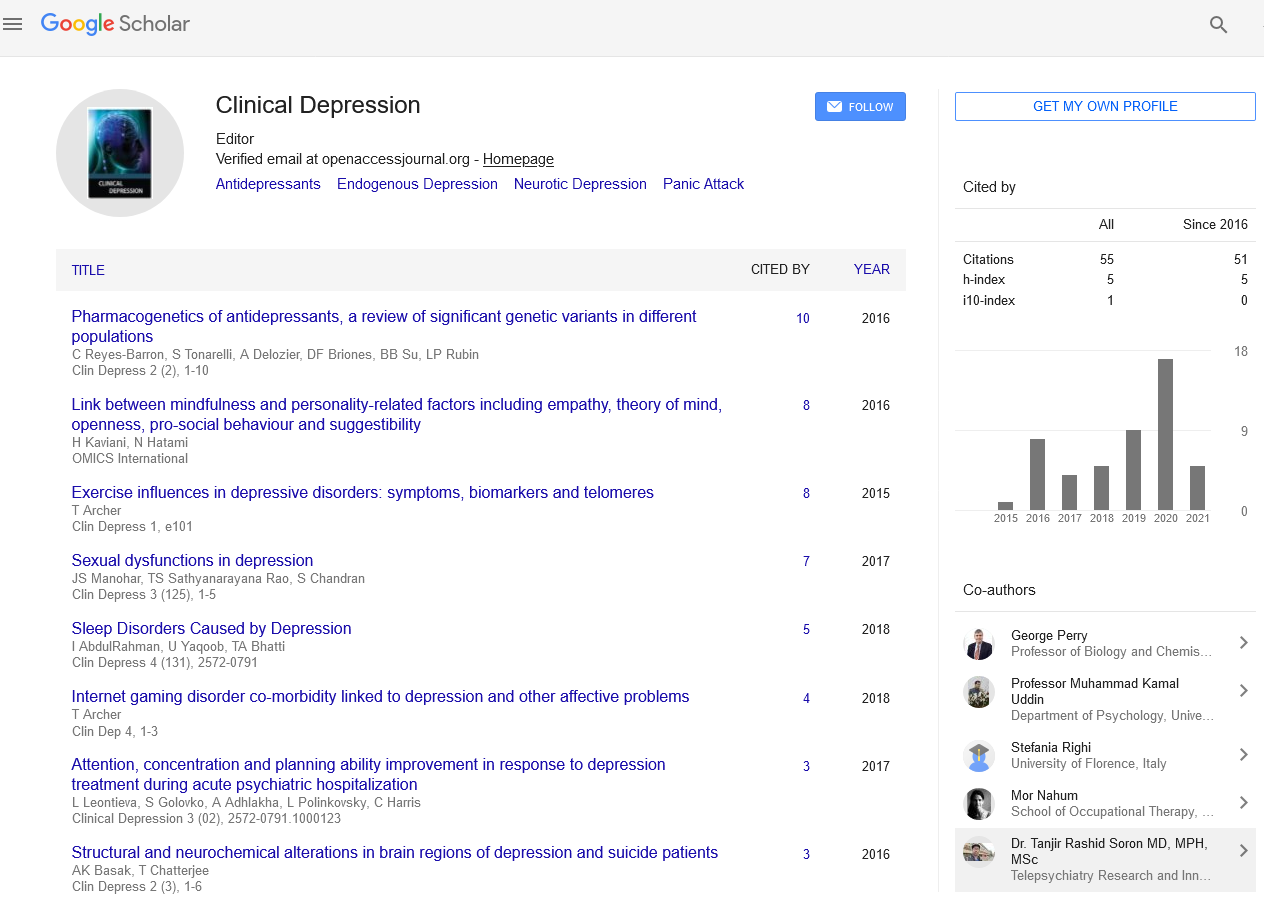
Clinical Depression received 89 citations as per Google Scholar report

 Spanish
  Chinese
  Russian
  German
  French
  Japanese
  Portuguese
  Hindi
Hindi 