Hemostasis occurs when blood is present outside of the body or blood vessels. It is the body's innate response to stop bleeding and blood loss. During hemostasis, three stages occur in a rapid sequence. Vascular spasm is the first response because blood vessels contract to allow less blood to be lost. In the second step, the formation of platelet plugs, the platelets stick to form a temporary seal to cover the rupture of the vessel wall. The third and final stage is called coagulation or blood clotting. Coagulation strengthens the platelet plug with fibrin threads which act as a "molecular glue". Platelets are an important factor in the hemostatic process. They allow the creation of the "platelet plug" which forms almost directly after the rupture of a blood vessel. Within seconds of the rupturing of the epithelial wall of a blood vessel, platelets begin to adhere to the surface of the subendothelium. It takes about sixty seconds for the first strands of fibrin to start spreading through the wound. After several minutes, the platelet plug is completely formed of fibrin
Case Report: Journal of Blood & Lymph
Case Report: Journal of Blood & Lymph
Research Article: Journal of Blood & Lymph
Research Article: Journal of Blood & Lymph
Research Article: Journal of Blood & Lymph
Research Article: Journal of Blood & Lymph
Research Article: Journal of Blood & Lymph
Research Article: Journal of Blood & Lymph
Research Article: Journal of Blood & Lymph
Research Article: Journal of Blood & Lymph
Scientific Tracks Abstracts: Alternative & Integrative Medicine
Scientific Tracks Abstracts: Alternative & Integrative Medicine
Scientific Tracks Abstracts: Journal of General Practice
Scientific Tracks Abstracts: Journal of General Practice
Keynote: Alternative & Integrative Medicine
Keynote: Alternative & Integrative Medicine
Scientific Tracks Abstracts: Cancer Science & Therapy
Scientific Tracks Abstracts: Cancer Science & Therapy
Scientific Tracks Abstracts: Journal of Health & Medical Informatics
Scientific Tracks Abstracts: Journal of Health & Medical Informatics
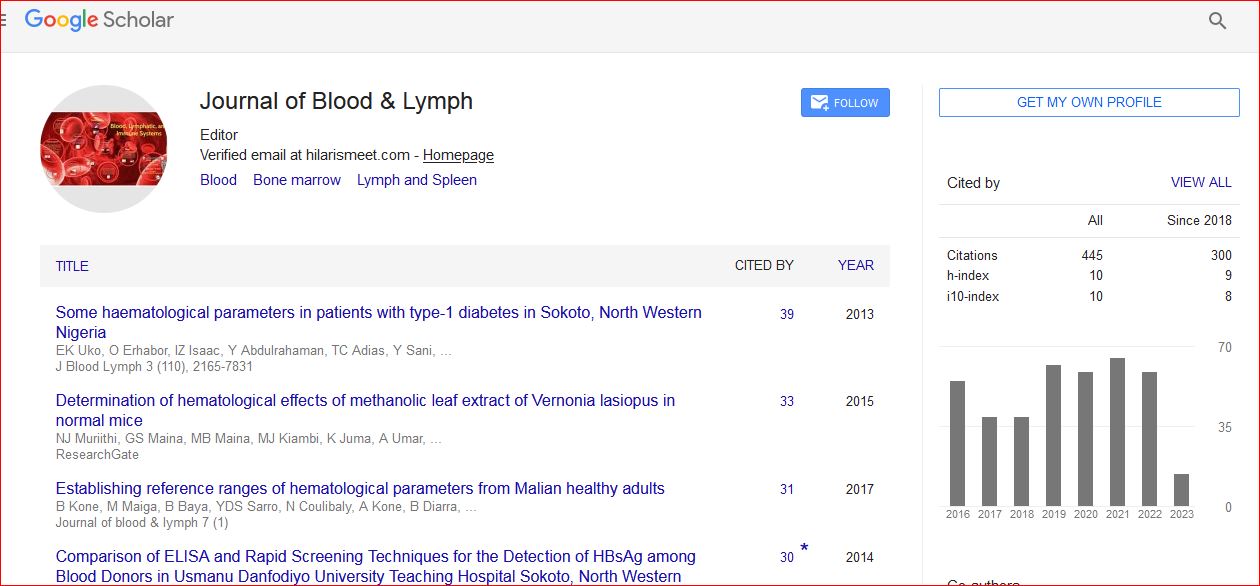
Journal of Blood & Lymph received 443 citations as per Google Scholar report
 Spanish
  Chinese
  Russian
  German
  French
  Japanese
  Portuguese
  Hindi
Hindi 