Ogbonnaya Ogbu, Moses Alo, Okoro Nworie and Jessy C. Uneke
L assa fever virus is the microbial pathogen associated with the outbreaks of Lasser fever, a zoonoses disease. The virus is arenavirus, a genus in arenaviridae family. The enveloped virus with RNA genome causes persistent, asymptomatic infection in rodent vector, Mastomys natalensis but sever symptoms in an infected person. Humans contract the disease through inhalation of contaminated air droplets, blood contact with infected individuals or materials, consumption of food contaminated with excretions from infected rodents and eating uncooked or under cooked infected rat meat. The infection in man is characterized by pathologies of gastrointestinal and respiratory tracts, conjunctivitis, mucosal bleeding, cardiovascular and neurological disorders. Lassa fever is endemic in West African countries including Liberia, Sierra Leone and Guinea. The infection has been reported in Senegal, Mali, Central African Republic and Congo Democratic Republic. Through international travels, the disease has been exported to United States of America, Canada, United Kingdom, Israel, Japan and Netherlands. Sub Sahara Africa is natural habitat of the vector rodents. It has been reported that 300,000 to 500,000 cases of Lassa fever out breaks with 5000 deaths occur annually in the sub region. In Nigeria including Jos 1970, Zonkwua from 1974 to 1977, Abo Mbaise and Owerri, 1985, Epkoma, 1990 to 1992, Lafiya 1992 and Abakaliki 2005, 2007, 2009 and 2011. The 2012, Lassa Haemorrhagic fever outbreak in 12 States of Nigeria claimed not fewer than 51persons lost their lives from 8,500 cases reported. Enzyme Linked Immunosorbent assay (ELISA), Immunofluoresence assay (IFA) and Polymerase Chain Reaction (PCR) techniques were used to detect viral antigens, its nucleic acid or specific antibody from pathological specimens. Ribavirine was the most effective drug used for treatment of Lasssa fever cases. Isolation of patients, barrier nursing, contact tracing, control of the vectors and adequate disposal of infectious wastes were effectively employed to prevent and control the outbreaks.
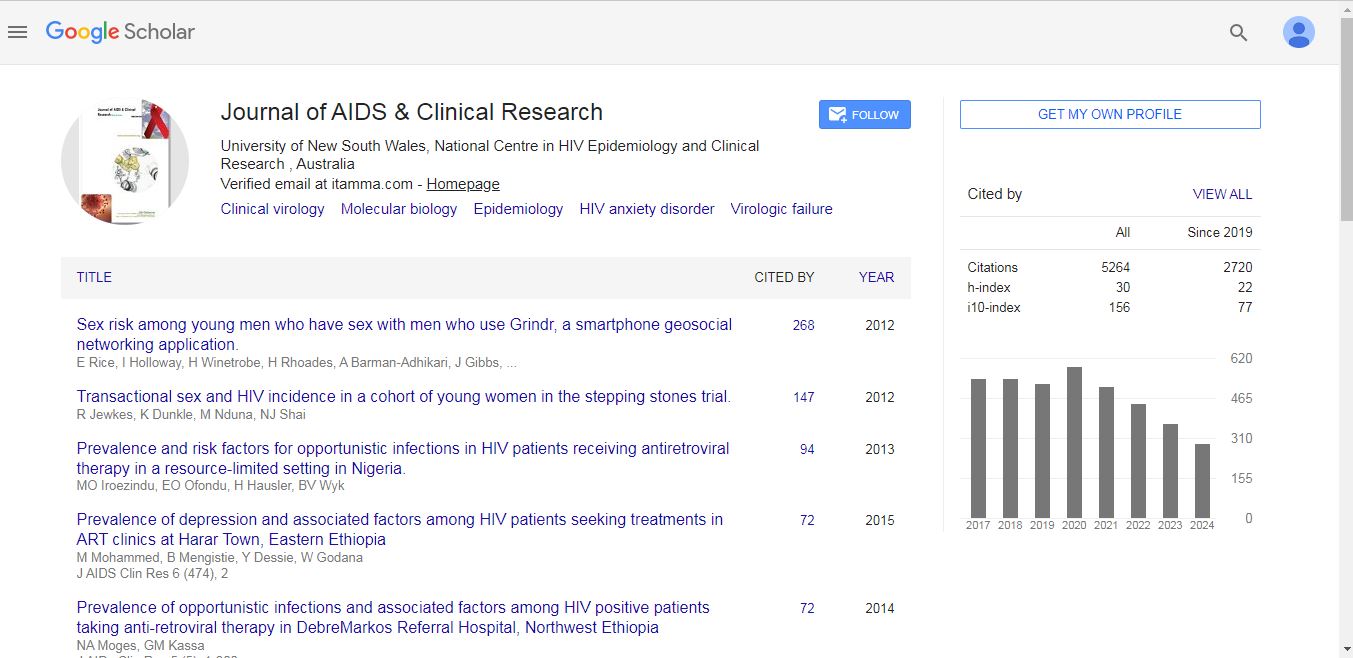
Journal of AIDS & Clinical Research received 5264 citations as per Google Scholar report
 Spanish
  Chinese
  Russian
  German
  French
  Japanese
  Portuguese
  Hindi
Hindi 