Ashok Kumar Kalyanam
Cognizant Technology Solutions, USA
Scientific Tracks Abstracts: J Comput Sci Syst Biol
The refrigeration industry has changed with the incorporation of smart technology and the introduction of commercial connected coolers. These are a class of advanced systems that apply IoT for improved efficiency in operation, energy consumption, and quality of products in many commercial industries such as retail, food storage, healthcare, and logistics. The features in smart connected coolers involve sensors, real-time monitoring, and automated control systems with advantages of predictive maintenance, remote monitoring, energy optimization, and data-driven decision making. To be able to deploy those features into reality, several challenges like very high initial cost, integration complexity, and security-related issues must be met. This article will discuss the key elements comprising IoT-enabled coolers, their applications across industries, the benefits they will come with, and challenges organizations must surmount if IoT-enabled coolers are ever to reach their full potential. It also touches on future trends in refrigeration technology, focusing on innovative, sustainable, and smart solutions as key factors in commercial refrigeration.
Ashok Kumar Kalyanam is a thought leader in IoT and smart buildings at Cognizant Technology Solutions. His future vision is focused on innovation and sustainability, aiming for seamless integration of smart technologies into daily life to improve quality of life and reduce environmental impact. A lifelong learner, Ashok stays updated with technological advancements and explores new IoT implementation possibilities. He is dedicated to empowering the next generation of innovators through mentorship and collaboration. Ashok's career is marked by significant contributions that have advanced IoT and smart building technologies, impacting how we design, manage, and interact with our environments. His legacy of innovation and excellence continues to inspire future generations to push technological boundaries.
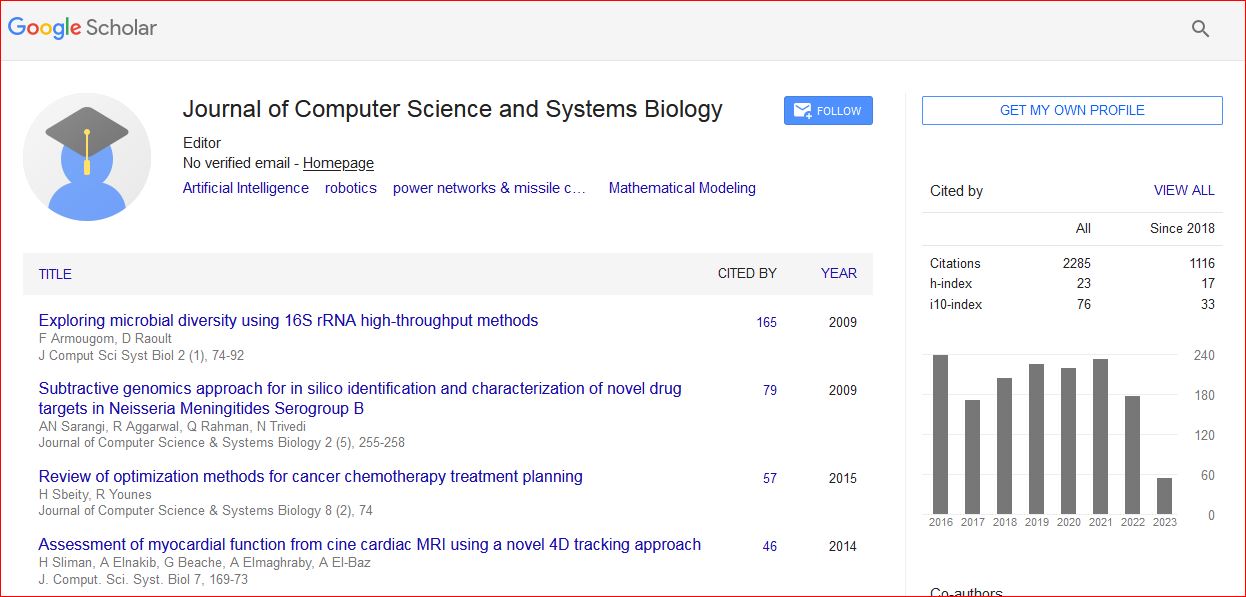
Journal of Computer Science & Systems Biology received 2279 citations as per Google Scholar report
 Spanish
  Chinese
  Russian
  German
  French
  Japanese
  Portuguese
  Hindi
Hindi 