Donatus Okafor
Royal London Hospital, UK
Scientific Tracks Abstracts: Surgery
Background: The GMC emphasises that patients must be given information they want or need in a way they understand. Clinic letters are the Most frequent communication in the NHS, yet they are often ambiguous to patients and GPs leading to poor patient care, outcomes and often litigations. Standards: The AoMRC has published guidelines to standardise clinic letters, which encourage doctors to write directly to patients rather than to GPs and to clear in clear plain readable terminology. We set a target of 100% of clinic letters from the vascular surgery clinic complying with the above standard, and having a flesh readability score of 60 or higher. Current Practice: 1st PSDA audit cycle showed that all clinic letters were addressed to doctors instead of patients, and only 52% achieved good readability scores. Intervention was via a consultant-led training on clinic letters in a department-wide approach. Improvement: At the second cycle, 80% of letters now complied with the guidelines, and more than 70% achieved good readability scores. Substandard letters were more likely to be published during busier clinics and when typing compared to when dictating letters. Conclusion: improvement in quality of clinic letters were achieved after educational campaign. Such campaign at a national level or involving medical students may have further reaching consequences.
Donatus Okafor is a trust grade registrar in the department of vascular surgery at the Royal London hospital. He has an interest in endovascular surgery with a focus on EVARs and surgical education where he has developed an interest in simulation-based education.
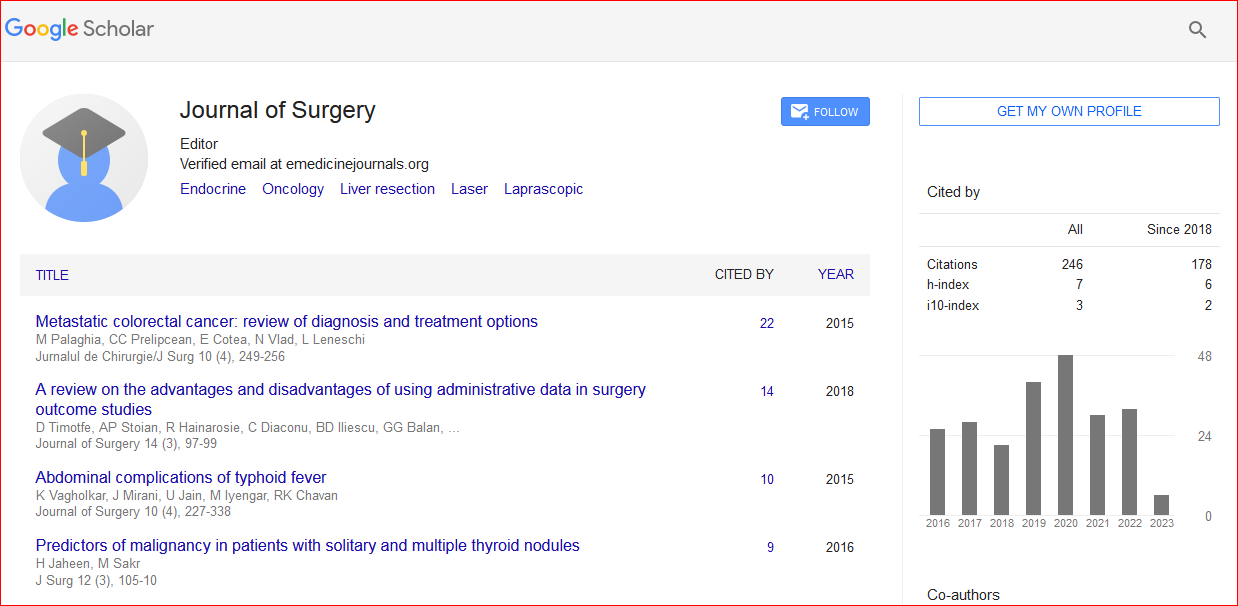
Journal of Surgery received 288 citations as per Google Scholar report
 Spanish
  Chinese
  Russian
  German
  French
  Japanese
  Portuguese
  Hindi
Hindi 