Reena Ghildyal, Kim C. Tran, Michael N. Teng, Leon Caly, Hongmei Li, John Mills and David A. Jans
R espiratory syncytial virus (RSV) is the major respiratory pathogen of infants and children worldwide, with no effective treatment or vaccine available. Within all paramyxoviruses, cytoplasmic matrix protein (M) plays a key role in assembly of new virions. Intriguingly, M localizes to the nucleus of infected cells early in infection where it inhibits host cell transcription, thus promoting viral transcription and pathogenesis. Nuclei of RSV-infected cells are deficient in transcription correlating with M nuclear localization and recombinant M is able to bind to DNA, RNA and inhibit in vitro transcription. Using in vitro and transfected cell systems, we have shown that M localizes in the nucleus through recognition of its nuclear localization signal (residues 155-172) by the importin β 1 nuclear transporter. M?s ability to shuttle to the cytoplasm is through the action of the nuclear export receptor Crm1 largely via a nuclear export signal within residues 196-210. M?s nucleocytoplasmic transport is regulated, at least in part, by CK2 phosphorylation at two positions, S95 and T205; mutation of both residues to alanine results in a loss of regulated nuclear transport. That nucleocytoplasmic trafficking of M is critical to RSV infection is indicated by the fact that recombinant RSV with M mutated to either block nuclear entry or nuclear export is replication-deficient compared with wild-type virus.
Reena Ghildyal obtained her PhD in Life Science from Jawaharlal Nehru University, New Delhi, India. This was followed by postdoctoral fellowships at the State Department of Agriculture, and Macfarlane Burnet Institute in Melbourne, Australia. In 2004 she was offered the opportunity to establish a respiratory virology research group as part of a new Chinese Government initiative within Fudan University, Shanghai. On her return to Australia in 2007, she has continued her association with Fudan University and has been instrumental in establishing several bilateral research collaborations between Chinese and Australian scientists. In 2010 Reena was appointed Assistant Professor at the University of Canberra, establishing the viral laboratory.
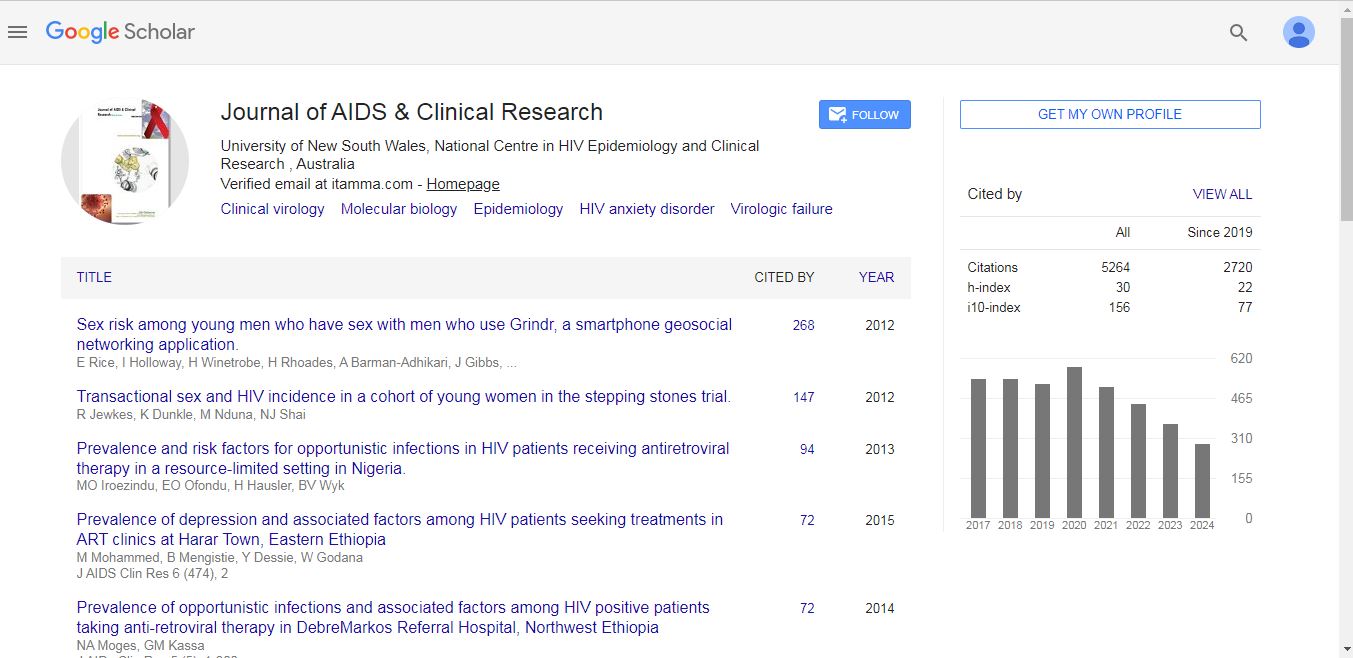
Journal of AIDS & Clinical Research received 5264 citations as per Google Scholar report
 Spanish
  Chinese
  Russian
  German
  French
  Japanese
  Portuguese
  Hindi
Hindi 