Daniel Hughes
University of California, USA
Scientific Tracks Abstracts: J Neurol Disord
Spinal cord injury (SCI) remains one of the most devastating neurological conditions, with limited therapeutic options for functional recovery. Recent advances in neuroregenerative medicine have shifted focus toward biomaterial scaffolds, stem-cell–based therapies, and bioengineered systems capable of supporting neuronal repair. This abstract discusses the translational progress of these approaches, emphasizing biocompatible hydrogels, 3D-printed scaffolds, and neurotrophic-factor–enhanced cell constructs. Biomaterial scaffolds replicate the extracellular matrix, providing structural support for axonal regrowth, modulation of inflammation, and controlled drug delivery. Concurrently, mesenchymal stem cells, induced pluripotent stem cells (iPSCs), and neural progenitor cells have demonstrated potential in promoting remyelination, synaptic reconnection, and neuroprotection. Preclinical studies highlight significant improvements in locomotor recovery, sensory function, and neuronal survival when combined with targeted rehabilitation. Despite these advances, challenges persist, including immune rejection, variability in cell viability, and long-term safety concerns. Integration of biomaterials with gene-editing technologies, such as CRISPR-Cas9, offers further potential to enhance regenerative outcomes. Current clinical trials show encouraging early results, but optimization of delivery methods and standardized protocols remains essential. With continued interdisciplinary collaboration, neuroregeneration therapies are expected to transition toward routine clinical application, offering hope for improved quality of life for SCI patients.
Daniel Hughes is a leading neuroscientist and neurosurgery researcher at the University of California, San Diego. His work focuses on spinal cord injury repair, neuroregeneration, stem-cell therapeutics, and biomaterial engineering. Over his 20-year career, he has led multiple NIHfunded projects and contributed significantly to translational neuroscience. Prof. Hughes has published widely in top-tier journals and mentors trainees in regenerative medicine. He is recognized globally for advancing innovative therapeutic strategies for spinal cord recovery.
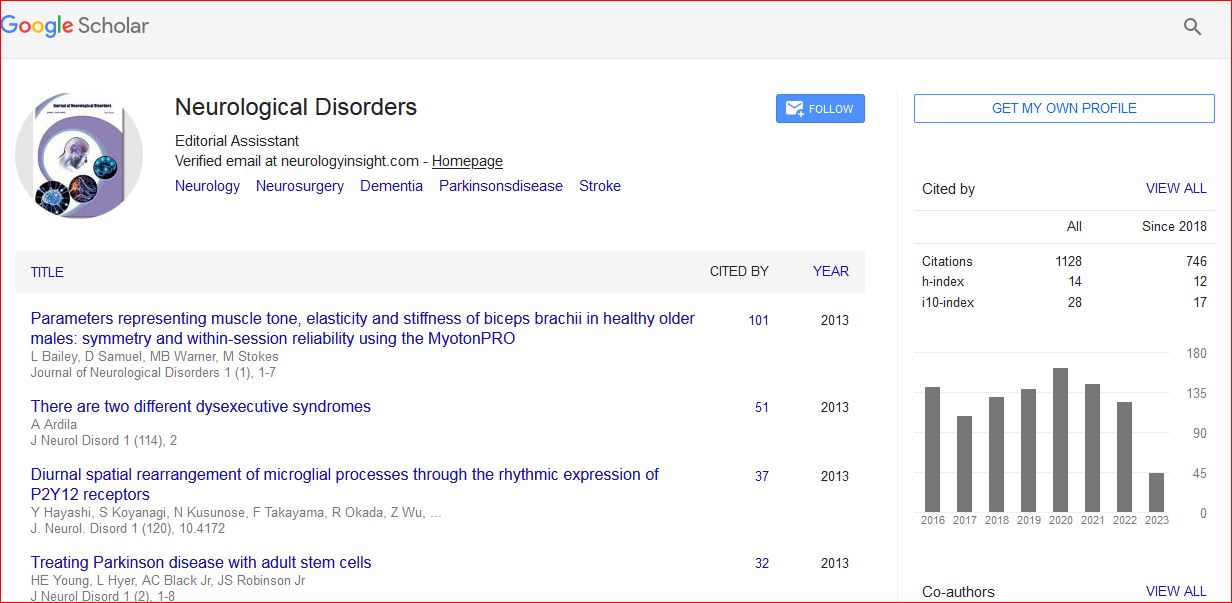
Neurological Disorders received 1343 citations as per Google Scholar report
 Spanish
  Chinese
  Russian
  German
  French
  Japanese
  Portuguese
  Hindi
Hindi 