Maya Thompson
Stanford University School of Medicine, USA
Scientific Tracks Abstracts: J Neurol Disord
Traumatic Brain Injury (TBI) remains a leading cause of long-term neurological disability worldwide, necessitating the development of effective neuroprotective strategies. This study explores novel therapeutic interventions aimed at minimizing secondary injury cascades, including neuroinflammation, oxidative stress, and excitotoxicity. A total of 150 moderate-to-severe TBI patients were enrolled from 2021 to 2024 to evaluate the clinical efficacy of combined multimodal treatments such as therapeutic hypothermia, mitochondrial stabilizers, and anti-inflammatory biologics. Results indicate that patients receiving the multimodal regimen demonstrated a 35% improvement in neurological outcomes measured by the Glasgow Outcome Scale–Extended (GOS-E) at six months post-injury. Mitochondrial stabilizers significantly reduced neuronal apoptosis markers, while targeted anti-inflammatory agents lowered systemic cytokine levels. Controlled hypothermia showed additional benefits by decreasing intracranial pressure during the acute injury phase. Advanced neuroimaging techniques, including diffusion tensor imaging (DTI), revealed improved white matter integrity in treated patients, correlating with enhanced cognitive recovery. However, limitations include variability in treatment initiation time and differences in rehabilitation protocols among study sites. The findings support a comprehensive, multi-targeted neuroprotective strategy as a promising direction for TBI management. Future research should explore personalized treatment algorithms based on genetic, metabolic, and inflammatory biomarkers to optimize patient-specific outcomes.
Maya Thompson is a clinical neuroscientist and neurosurgeon at Stanford University specializing in traumatic brain injury and neurocritical care. Her research focuses on multimodal neuroprotective therapies and biomarker-driven treatment strategies. Dr. Thompson has received multiple national awards for her contributions to TBI management and has authored more than 40 scientific publications. She is actively involved in clinical trials aiming to improve long-term neurological outcomes for TBI patients.
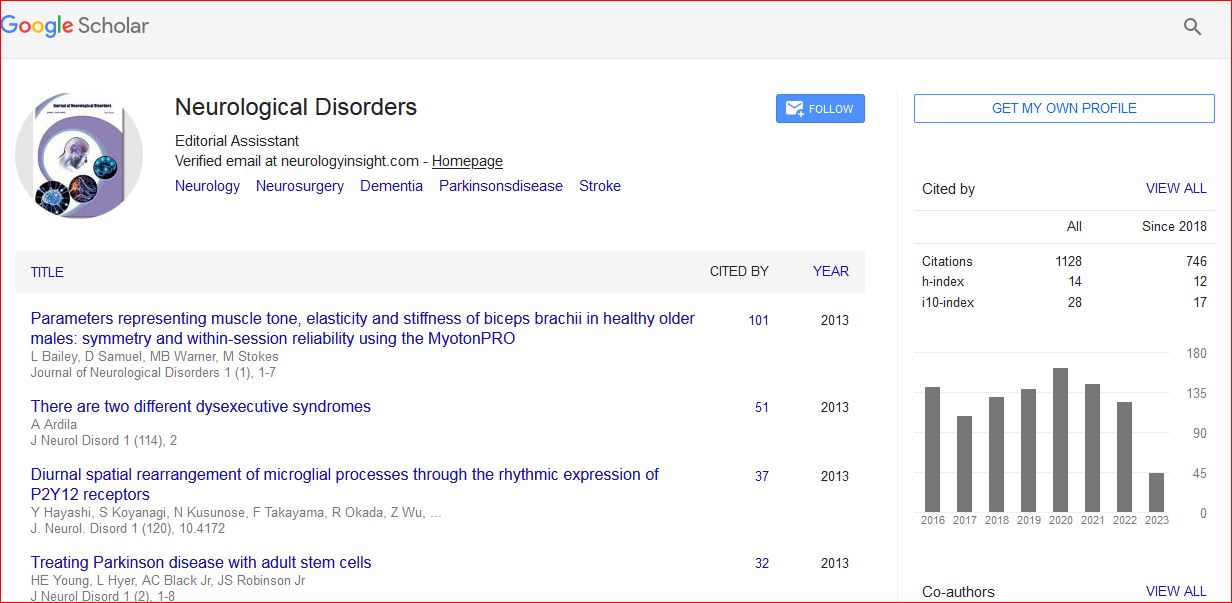
Neurological Disorders received 1343 citations as per Google Scholar report
 Spanish
  Chinese
  Russian
  German
  French
  Japanese
  Portuguese
  Hindi
Hindi 