Ping Huang, Li-jun Liang, Nian-mei Hou, Xin Zhang, Wen-zhe Su, Yong-hui Zhangand Jie Wu
A nnual H3N2 subtype influenza outbreaks in Guangdong, China are a severe public health issue and require ongoing monitoring of emerging viral variants. The variation and evolution of hemagglutinin (HA) and neuraminidase (NA) genes of influenza isolates from Guangdong and others from GenBank were analyzed using Lasergene 7.1 and Mega 5.03, and serologic analysis of antigens was determined by hemagglutination inhibition (HI). Susceptibility to drugs were correlated with genetic mutations. Phylogenetic analysis and alignments of HA and NA genes were performed on 18 Guangdong isolates and 26 global reference strains. The nonsynonymous (dN) evolutionary rate of the HA1 was 3.13 times that of HA2. Compared with the A/ Perth/10/2009 vaccine HA gene, homologies with Guangdong isolates in 2009 reached 98.8?99.7% and in 2010 reached 98.0? 98.4%. Amino acid substitutions were found in five epitopes of HA1 from Guangdong isolates between 2007?2011, especially in epitopes B (N160K) and D (K174R/N). The K189E/N/Q and T228A mutations in the receptor-binding site (RBS) occurred in the 2010 strains, which impacted the antigenicity of HA1. The antigenicity of the epidemic H3N2 isolates in 2010 was somewhat different from A/Perth/10/2009. The Guangdong H3N2 isolates were determined to be oseltamivir-resistant with IC50 of 0.396 ± 0.085 nmol/L (n = 17) and zanamivir-resistant with IC 50 of 0.477 ± 0.149 nmol/L (n = 18). Variations were present in epitopes B and D, two sites in the RBS and two glycosylation sites in the Guangdong H3N2 HA1 gene. The majority of the Guangdong H3N2 isolates were sensitive to oseltamivir and zanamivir. Compared to the World Health Organization (WHO) 2011 vaccine strains, Guangdong H3N2 strains were genetically and antigenically varied slightly
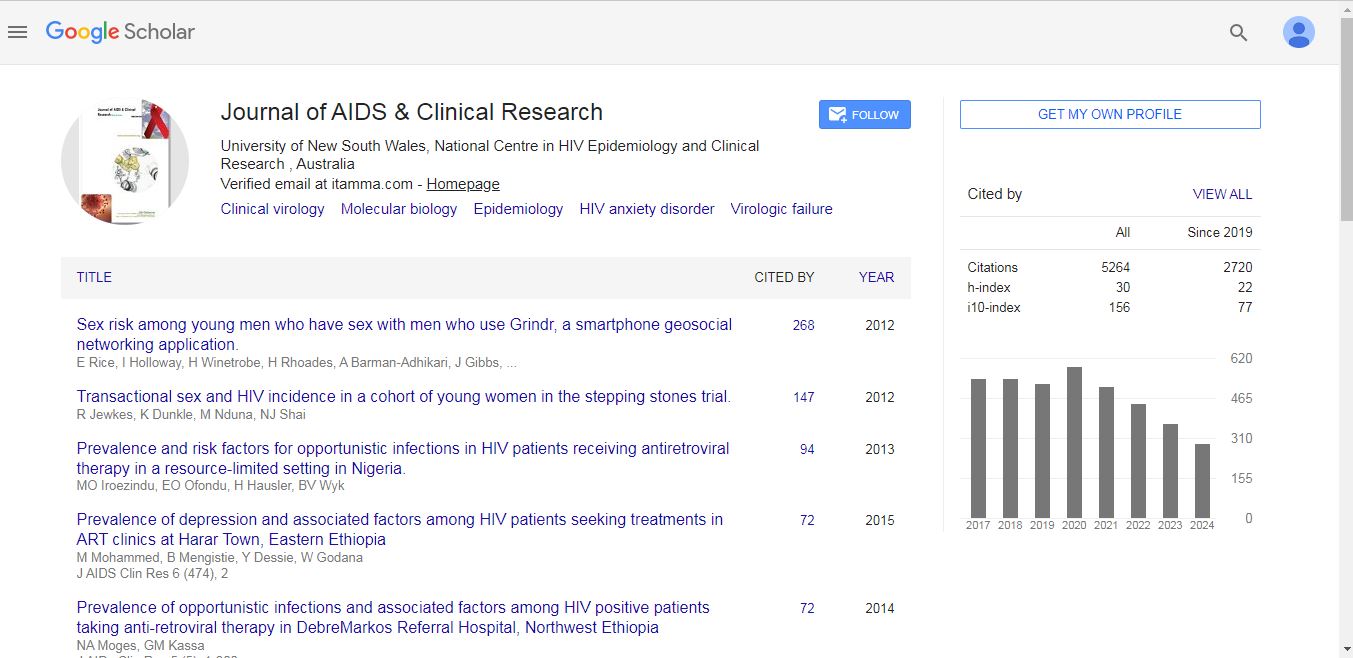
Journal of AIDS & Clinical Research received 5264 citations as per Google Scholar report


 Spanish
  Chinese
  Russian
  German
  French
  Japanese
  Portuguese
  Hindi
Hindi 