Saleh Nasiri
: J Bioengineer & Biomedical Sci
Due to the short shelf life of blood platelets which are stored in blood banks for 3-5 days, blood transfusion centers are under considerable pressure to provide fresh platelet concentrates for transfusion. Previous investigations have revealed that small carbohydrates such as trehalose, sucrose and maltose, have a special ability to stabilize cells during freezing, freeze-drying and air drying methods. In this researrh we performed platelet lyophilization process by using trehalose as a stabilizer to prepare functional freeze-dried platelets with aggregation ability to responding ADP, ristocetin and arachidonic acid agonists. Whole blood was obtained from Tehran Blood Transfusion Center (Vesal,Tehran) and then Platelet Rich Plasma (PRP) was prepared. Leukocytes were removed by centrifugation and supernatant containing platelet was washed with washing buffer containing 10 mmol/L EGTA and 10 μg/mL PGE1. Washed platelets were incubated at 37°C for 4 h in loading buffer containing 40 mmol/L trehalose. Platelets were pelleted and resuspended in lyophilization buffer containing 30 mmol/L trehalose and 1% human serum albumin. Platelet concentrates were transferred in freezer -80C° for 90 minutes. After freezing, the frozen platelet solutions were transferred to lyophilizator. Freeze dried platelet concentrates were prehydrated in a closed box with moisture-saturated air at 37°C and rehydrated with platelet poor plasma/water (2/1v/v). For aggregation tests, platelet suspensions were transferred to aggregation cuvettes with a magnetic stirrer and response of the platelet to the ADP, Ristositin and Arachidonic Acid agonists were measured. The results of lyophilized platelet aggregation tests by adding Arachidonic acid, ADP and Ristocetin agonists were measured by aggregometry with the activity of 75.5%, 55.9% and 17.3% respectively. Clot formation in aggregation test cuvettes of rehydrated lyophilized platelet with ADP, arachidonic acid and ristocetin agonists were observed obviously after adding agonists in five minutes. We concluded that this method of preserving platelets in the dried state is possible and practicable but hard struggles and further investigations are required to improve its quality.
Saleh Nasiri has completed his Ph.D at the age of 42 years from Institute Pasteur of Tehran, Iran in the biotechnology field. Now he is the member of scientific group of Iranian Blood Transfusion Organization as a assistant professor in research center of IBTO. He has published more than 10 papers in different journals and international congresses.
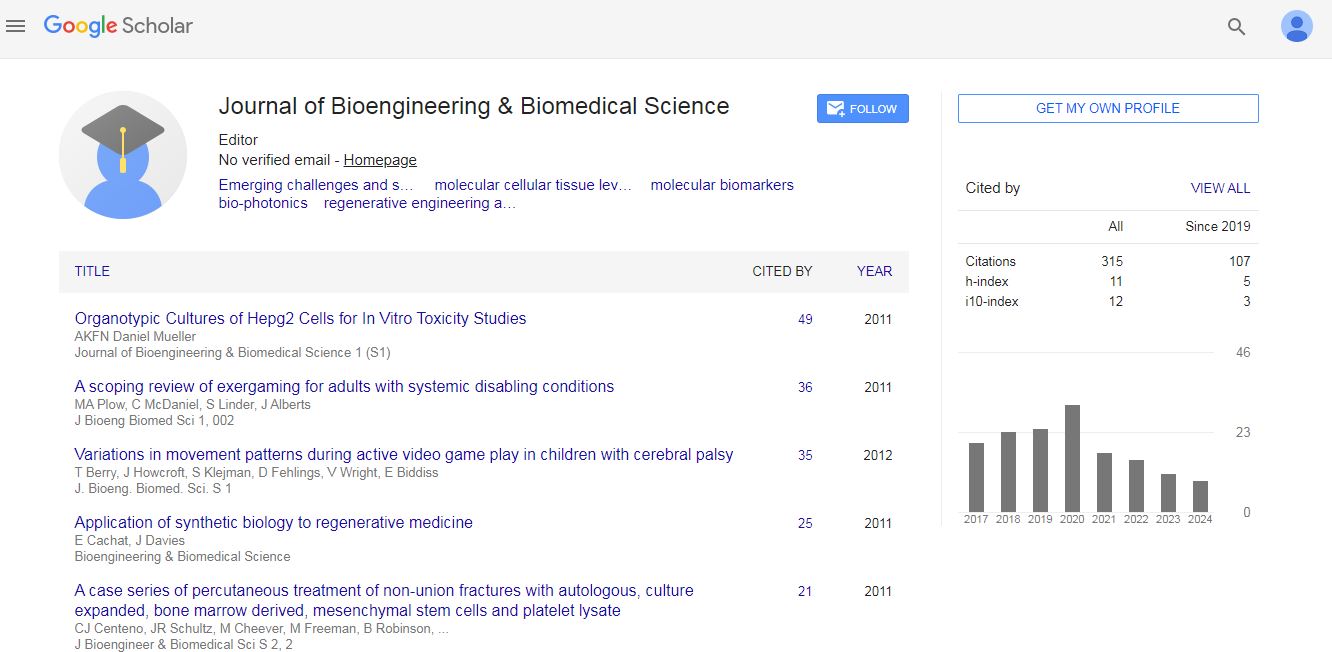
Journal of Bioengineering & Biomedical Science received 307 citations as per Google Scholar report
 Spanish
  Chinese
  Russian
  German
  French
  Japanese
  Portuguese
  Hindi
Hindi 