Hiroshi Yamamoto
Kyoto University, Japan
Scientific Tracks Abstracts: J Neurol Disord
Robotic-assisted spinal neurosurgery has emerged as a transformative technology for enhancing surgical precision, reducing intraoperative errors, and improving patient recovery. This study examines the outcomes of 95 patients who underwent robotic-assisted spinal reconstruction for deformities, degenerative diseases, and traumatic injuries between 2020 and 2025. Surgical accuracy, implant positioning, complication rates, and postoperative functional outcomes were evaluated. Robotic guidance significantly improved pedicle screw placement accuracy, achieving a 98% optimal positioning rate compared with 89% using conventional freehand techniques. Reduced intraoperative radiation exposure was observed due to real-time navigation and preoperative planning integration. Patients undergoing robotic procedures demonstrated faster mobilization and reduced postoperative pain due to smaller incisions and decreased muscle disruption. Complication rates, including hardware misplacement, neurological deficits, and infections, were markedly lower in the roboticassisted group. Long-term follow-up revealed improved spinal alignment correction and sustained functional improvements based on Oswestry Disability Index (ODI) scores. However, challenges include high equipment costs, limited accessibility in developing regions, and a required period of technical training for surgeons. The findings highlight robotic-assisted spinal surgery as a safe and effective modality, particularly for complex reconstructions requiring high precision. Future advancements in machine learning and intraoperative automation are expected to further enhance surgical outcomes.
Hiroshi Yamamoto is a leading spinal neurosurgeon at Kyoto University with expertise in robotic-assisted spine surgery and complex spinal reconstruction. With over a decade of clinical and research experience, he has contributed significantly to the development of robotics and navigation technologies in neurosurgery. Dr. Yamamoto has published extensively in high-impact journals and is frequently invited to speak at international neurosurgical conferences. His work focuses on improving surgical accuracy and patient outcomes through technological innovation.
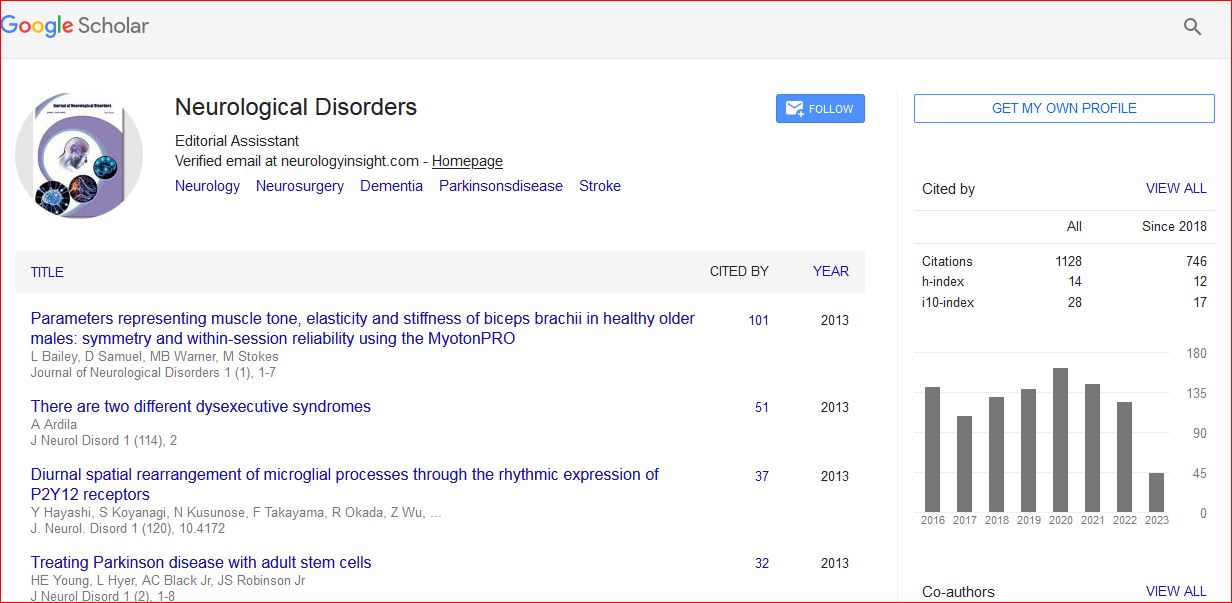
Neurological Disorders received 1343 citations as per Google Scholar report
 Spanish
  Chinese
  Russian
  German
  French
  Japanese
  Portuguese
  Hindi
Hindi 