Sofia Benitez
University of Barcelona, Spain
Posters & Accepted Abstracts: J Neurol Disord
Functional neurosurgery has emerged as a cornerstone in the management of drug-resistant epilepsy, offering alternatives to patients who do not achieve adequate seizure control with medication. This abstract highlights recent advancements in neuromodulation, cortical mapping, and image-guided surgical interventions for personalized epilepsy treatment. Deep brain stimulation (DBS), responsive neurostimulation (RNS), and vagus nerve stimulation (VNS) have demonstrated significant reductions in seizure frequency and improved quality of life. These technologies utilize real-time electrophysiological monitoring to detect and modulate abnormal neuronal activity. Additionally, laser interstitial thermal therapy (LITT) has become a minimally invasive option for treating well-localized epileptogenic zones with high precision and minimal collateral damage. Advanced preoperative mapping techniques—including stereo-EEG, high-density EEG, magnetoencephalography, and fMRI—provide detailed localization of seizure onset zones and eloquent cortex regions. Integration of artificial intelligence into seizure prediction algorithms further enhances decision-making for surgical planning. Outcomes research shows substantial improvement in seizure control, cognitive performance, and patientreported well-being following tailored neurosurgical interventions. Ongoing challenges include resource limitations, variability in individual brain networks, and long-term device management. The future of epilepsy surgery will rely on increasingly personalized, minimally invasive neuromodulation systems supported by continuous neuro-data analytics and adaptive algorithms.
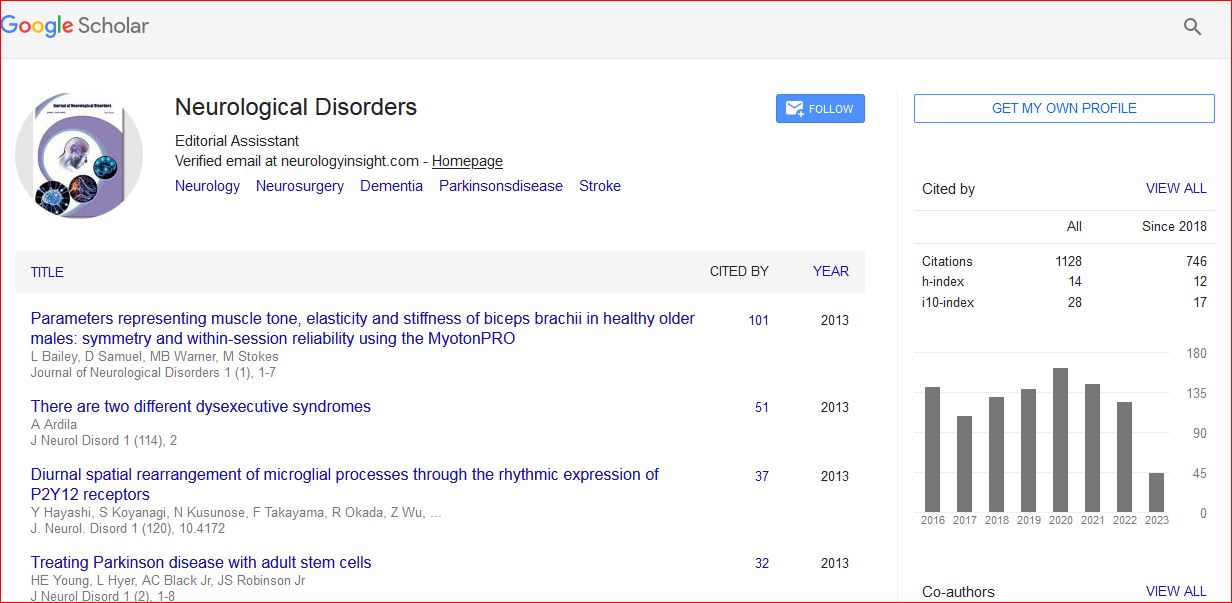
Neurological Disorders received 1343 citations as per Google Scholar report
 Spanish
  Chinese
  Russian
  German
  French
  Japanese
  Portuguese
  Hindi
Hindi 