Vibha Swarnkar, ICU RMO Eureka hospital and Research Center, India
Aster Whitefield, India.
Scientific Tracks Abstracts: Surgery
Statement of the Problem: Women’s health has long been discussed, yet access to ideal healthcare remains limited. Breast cancer (BC) is a leading cause of cancer-related mortality in women. While it has been extensively studied, early detection and timely management remain challenges. A study from a tertiary centre in Uttar Pradesh involving 308 patients revealed that malignant pleural effusion is often misdiagnosed, and in 15% of cases, the primary cancer remains unidentified. Behavioural barriers such as shyness, fear, and financial constraints hinder timely diagnosis. In contrast, a cohort study in Mumbai that actively promoted BC screening through outreach saw positive outcomes. Between June 2013 and June 2016, early-stage diagnosis rose from 74% to 81%, and node-negative Image cancers increased from 46% to 53%. Breast-conserving surgeries rose from 39% to 51%, while chemotherapy use decreased from 84% to 56%, underscoring the importance of awareness and screening. Another study from Delhi cited lack of awareness, poor health-seeking behaviour, and limited access to care as major factors contributing to undiagnosed BC cases. Case Summary: A 65-year-old woman presented to the ICU with shortness of breath and a persistent cough. Physical examination revealed absent breath sounds on the left and a Peau d’orange appearance on the right breast. Emergency thoracocentesis yielded nearly 2 litres of fluid, offering temporary relief. Further investigations confirmed inflammatory BC with malignant pleural effusion. Findings: The patient’s case highlighted several systemic gaps— delayed diagnosis, family neglect, financial limitations, and poor follow-up. Despite initiating treatment, the patient left the centre prematurely due to lack of financial aid, an available caregiver, and a poor prognosis. Conclusion G Significance: Elderly women often face neglect in healthcare settings, particularly for conditions like BC. Early detection through routine screening, public education, and community outreach is crucial. Strengthening health systems, addressing social and financial barriers, and promoting health-seeking behaviour can significantly improve outcomes for women with BC.
Vibha Swarnkar, a budding doctor, has started her journey as a resident ICU officer in Eureka Hospital and Research Centre in Indore, India. She has keen interest in developing a strong base in the prevention sector which is boosted by her belief in community health as a whole. She has worked on a research fellowship in Tobacco Research center and clinic established by CHRE-UK in Rural Hospital, Loni, India, where she worked on determinants and perception of tobacco use in females. She is actively involved in spreading awareness among the general public in regards to common health challenges faced by common people.
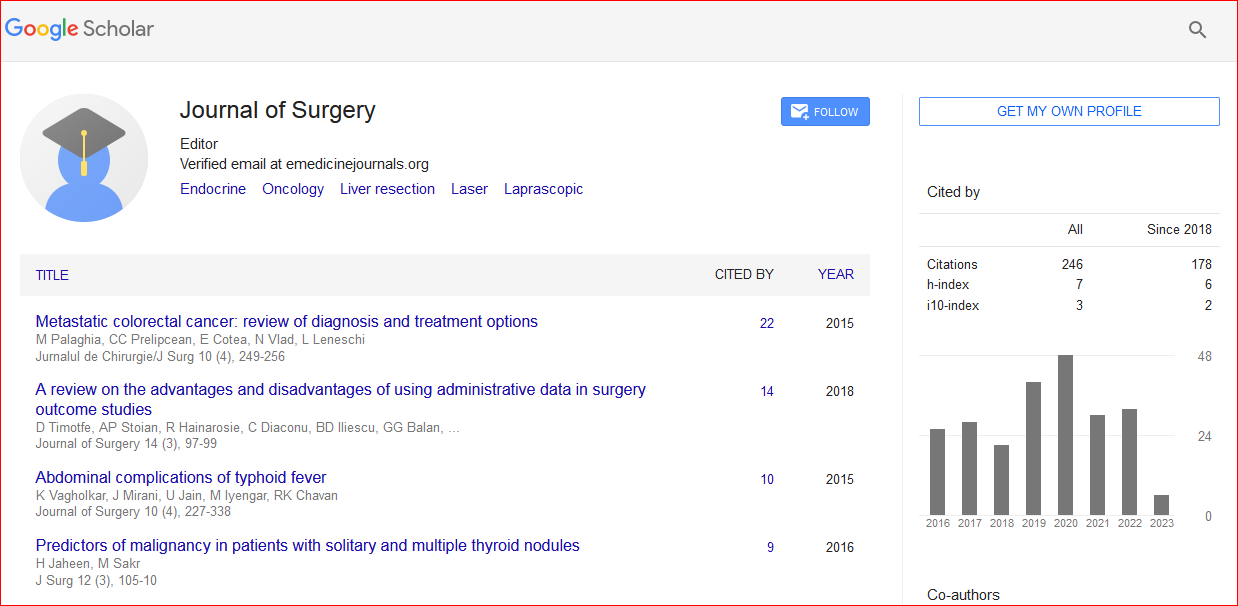
Journal of Surgery received 288 citations as per Google Scholar report

 Spanish
  Chinese
  Russian
  German
  French
  Japanese
  Portuguese
  Hindi
Hindi 