Steven Callaghan
Riyadh, Saudi Arabia
Scientific Tracks Abstracts: J Nurs Care
Anemia is prevalent in individuals with advanced cancer and may contribute to adversely affecting their quality of life. In Palliative Care, Red Blood Cells (RBCs) transfusions are regularly administered to address bothersome symptoms such as fatigue and dyspnea. However, they are not without risks and adverse effects in individuals who are often frail at the end of life. Within this context, RBCs transfusion benefits and drawbacks have yet to be demonstrated. Objective. This study aimed to assess RBCs transfusion targeted indications, practices, and clinical outcomes at the end-of-life in hospitalized patients with advanced malignancy. Material and Method. A retrospective cohort design was used. All adults with a cancer diagnosis admitted to a Palliative Care Unit in a tertiary care center in Saudi Arabia and who received at least one RBCs transfusion between January 1, 2020 and January 1, 2024, were included. Data was retrieved from their medical records (demographics, clinical, and transfusion episode information) and included the Charlson Comorbidity Index. Results. A total of 84 patients were included, comprising a total of 159 episodes of transfusion. Patients had a mean age of 47 years (19.4). The most frequent location of cancer was the gastrointestinal system (34.6%). For most patients, a low haemoglobin level was the main indication for the transfusion, without precise symptoms being targeted. There were no improvement following the majority of transfusion episodes (82.4%). A moderate negative correlation was observed between age and survival days’ post-transfusion. Conclusions. There is a need for further studies to better understand the benefits of RBCs transfusions at the end of life. In addition, more attention is warranted to establish targeted clinical outcomes pre-transfusion rather than relying on abnormal laboratory values. Validated self-reported tools should be used to ensure the benefits of an intervention that involves such a limited and valuable resource.
Steven Callaghan is a nurse from the United Kingdom and has been working in Saudi Arabia since 2022. He qualified as a nurse in 2011 from London South Bank University and later completed a Diploma in Tropical Diseases. He earned an MSc in Palliative Care and an MSc in Education through scholarships at King’s College London and City University of London. He is currently pursuing a PhD in Palliative Care at Lancaster University. Since 2023, he has published six papers and is involved in several research projects. His main interests include palliative care education, access to care in low-resource settings, and the role of nurses in end-of-life care. He works with international teams to improve patient care.
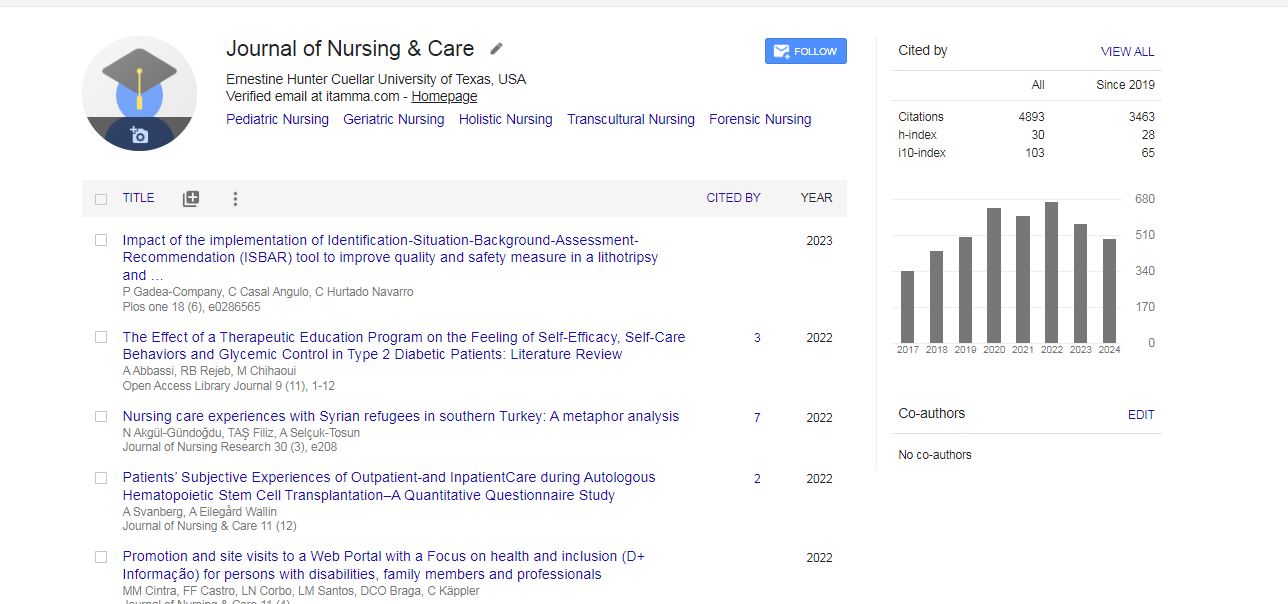
Journal of Nursing & Care received 4230 citations as per Google Scholar report
 Spanish
  Chinese
  Russian
  German
  French
  Japanese
  Portuguese
  Hindi
Hindi 