S C Mehta
G R Medical College, India
Posters & Accepted Abstracts: Med chem
Cancer is a disease of cells characterized by a defect in the normal control mechanisms that govern cell survival, proliferation and differentiation. It is the second most common cause of death in the United States. As our understanding of tumor biology and the molecules that make tumors grow and spread is expanding, new drugs that target these changes have emerged for the treatment of many different types of cancer. Targeted therapy is designed to target molecules in or on the tissue surrounding a tumor. Unlike standard chemotherapy drugs, targeted therapy drugs produce less severe side effects. Recently FDA approved Olaparib for the treatment of advanced ovarian cancer and Palbociclib for the treatment of advanced breast cancer. These drugs act by blocking a specific molecules responsible for the growth of cancer. Using the genetic makeup of different cancers new uses of existing drugs were also discovered. For example, the targeted therapy drug Ibrutinib, previously approved for chronic lymphocytic leukemia was found to be effective for the treatment of another type of blood cancer sharing the same genetic mutation,Waldestrom�s macrogloulinaemia (WM). Similarly, Sorafenib is a drug used to treat liver, kidney and thyroid cancer is effective against acute myeloid leukemia (AML) and Cabozantinib was found effective in advanced kidney cancer and non-small cell lung cancer (NSCLC). The present paper will discuss the different ways the targeted therapy can work and the types and common adverse effects of targeted therapy drugs.
Email: drscmehta@yahoo.co.in
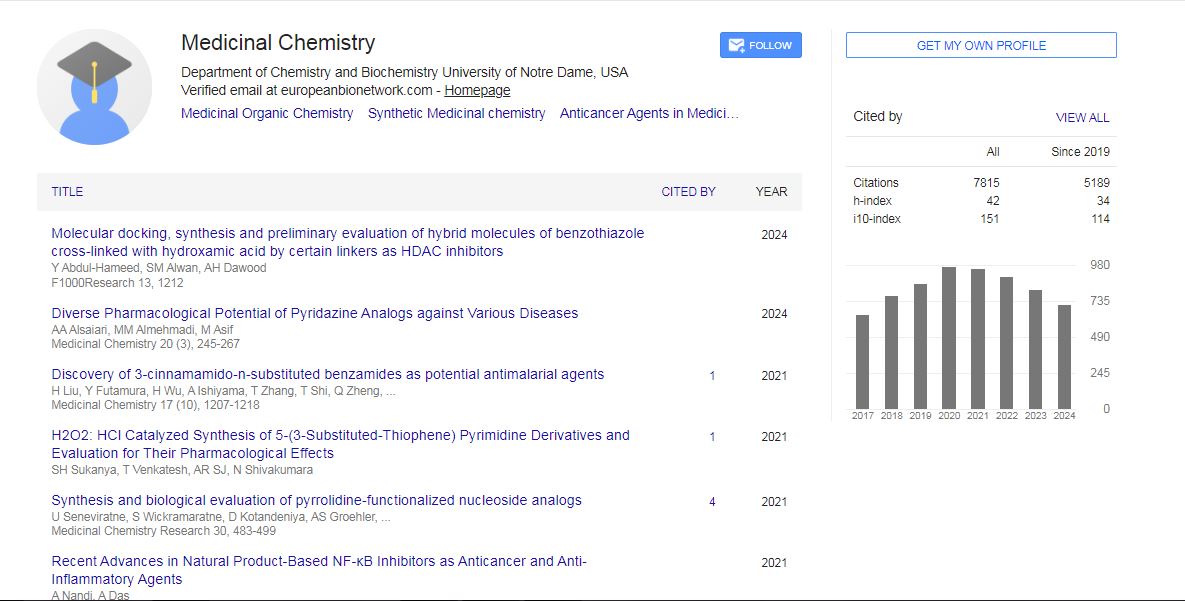
Medicinal Chemistry received 6627 citations as per Google Scholar report
 Spanish
  Chinese
  Russian
  German
  French
  Japanese
  Portuguese
  Hindi
Hindi 