Elena Morozova
Sechenov University, Russia
Scientific Tracks Abstracts: J Neurol Disord
Minimally invasive neurosurgery (MIS) has transformed modern neurological care by offering safer, more precise interventions with reduced recovery time compared to conventional open procedures. This abstract reviews key innovations in MIS, focusing on neuro-endoscopy, tubular retractors, neuronavigation, and robotic-assisted approaches. The integration of high-definition visualization and intraoperative imaging has significantly enhanced surgical accuracy, enabling surgeons to access deep-seated brain lesions through smaller corridors without compromising surrounding tissue. Recent advancements in fluorescence-guided surgery, augmented reality (AR), and 3D navigation have contributed to better delineation of tumor margins, improved anatomical orientation, and real-time decision support. Similarly, robotic platforms have introduced a new era of surgical consistency, particularly in stereotactic biopsies, ventricular endoscopy, and minimally invasive spine procedures. Clinical evidence demonstrates substantial reductions in postoperative complications, length of hospital stay, and patient pain scores. Moreover, MIS techniques have shown promising outcomes in the management of gliomas, pituitary adenomas, intraventricular tumors, and degenerative spine disease. However, challenges remain in the form of steep learning curves, cost of advanced technologies, and disparities in accessibility among low-resource settings. Future perspectives include the integration of artificial intelligence for preoperative planning, predictive analytics, and real-time intraoperative guidance. The continuous evolution of MIS will likely standardize precision neurosurgery and expand its applicability across broader patient populations.
Elena Morozova is an experienced neurosurgeon at Sechenov University, specializing in minimally invasive brain and spine surgery. With more than 12 years of clinical and research experience, she has contributed to advancements in endoscopic and image-guided neurosurgical techniques. Her work focuses on improving patient safety, surgical precision, and postoperative outcomes. Dr. Morozova has authored numerous peer-reviewed publications and participates actively in international neurosurgical forums, promoting innovation and collaboration in the field.
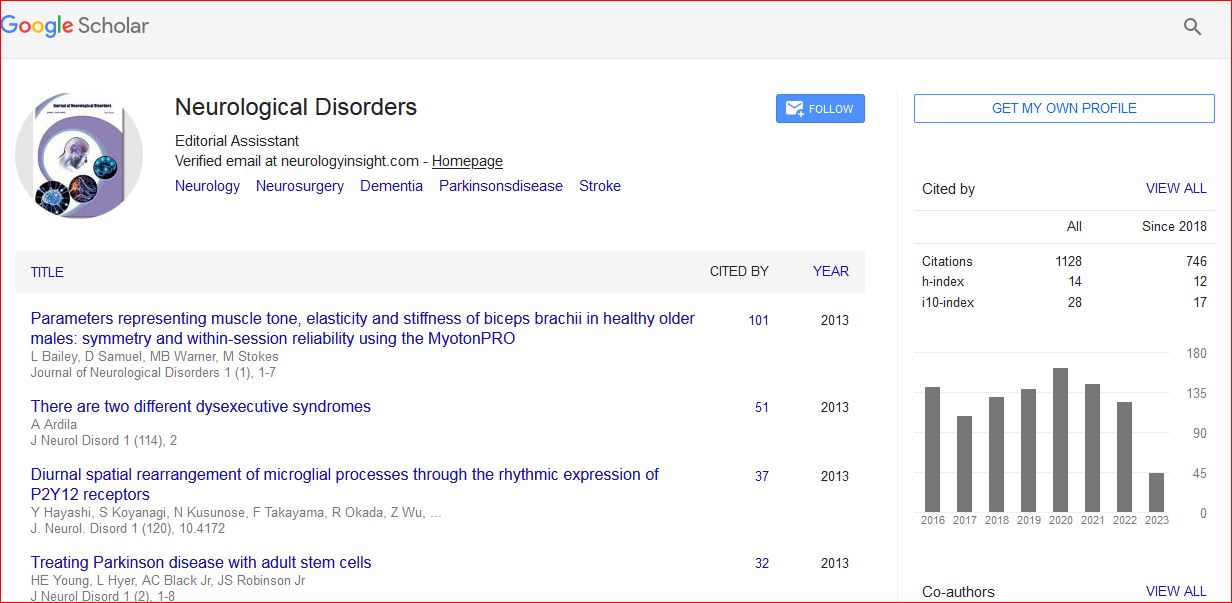
Neurological Disorders received 1343 citations as per Google Scholar report
 Spanish
  Chinese
  Russian
  German
  French
  Japanese
  Portuguese
  Hindi
Hindi 