Alessandro Romano
University of Milan, Italy
Scientific Tracks Abstracts: J Neurol Disord
Minimally invasive endoscopic neurosurgery has transformed the management of skull base tumors by reducing surgical morbidity and improving postoperative outcomes. This study evaluates recent innovations in endoscopic visualization, neuronavigation, and multi-portal access techniques that enhance surgical precision while minimizing tissue disruption. Data were collected from 120 patients undergoing endoscopic resection of pituitary adenomas, craniopharyngiomas, and sinonasal malignancies between 2020 and 2025. Parameters assessed included extent of resection, complication rates, visual outcomes, cerebrospinal fluid leak incidence, and length of hospital stay. The results demonstrate that high-definition angled endoscopes and intraoperative navigation significantly increased gross total resection rates to 87%, compared with 74% in conventional microscopic approaches. Postoperative complications, particularly CSF leaks, were managed effectively through vascularized flap reconstruction, decreasing long-term morbidity. Additionally, real-time fluorescence imaging allowed improved differentiation between tumor and critical neurovascular structures. Patients experienced faster recovery, with a 40% reduction in hospital stay and earlier return to normal function. The study also highlights the importance of a multidisciplinary approach integrating otolaryngology, neurosurgery, and radiology for optimal outcomes. Limitations include a learning curve for surgeons transitioning to advanced endoscopic systems and challenges in treating large invasive lesions. Overall, technological advancements and refined surgical protocols have positioned minimally invasive endoscopic neurosurgery as a preferred method for select skull base tumors, offering safe, effective, and patient-centered care. Future research should focus on robotic endoscopy and augmented reality to further expand clinical capabilities.
Alessandro Romano is a senior neurosurgeon at the University of Milan specializing in minimally invasive endoscopic skull base surgery. With over 15 years of clinical experience, his work focuses on innovations in endoscopic visualization, neuronavigation, and reconstruction techniques. He has authored multiple peer-reviewed publications and serves as a faculty instructor for advanced neurosurgical training programs. Dr. Romano is recognized for his contributions to improving surgical outcomes and promoting multidisciplinary approaches in skull base tumor management.
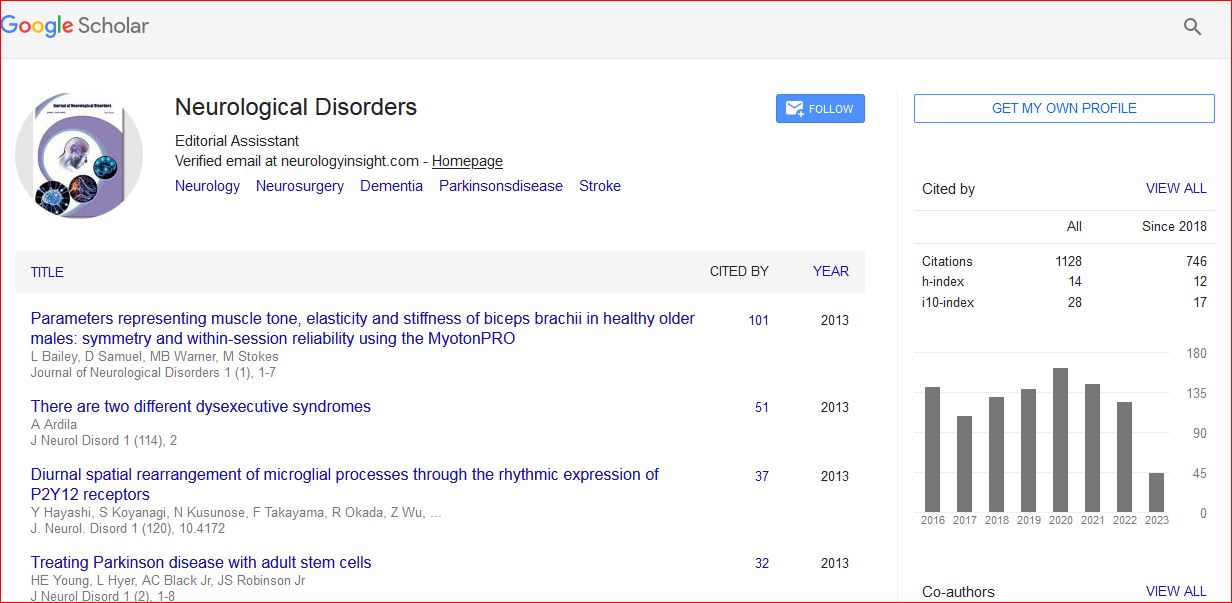
Neurological Disorders received 1343 citations as per Google Scholar report
 Spanish
  Chinese
  Russian
  German
  French
  Japanese
  Portuguese
  Hindi
Hindi 