Dr. Shireen Baqir
Speciality Registrar, Obstetrics & Gynaecology, JPUH, UK
Scientific Tracks Abstracts: Surgery
Objective: Ovarian cyst torsion is an acute emergency which can have significant implications on a woman’s health, particularly in adolescents. An undiagnosed or delayed diagnosis can impact fertility and overall reproductive health in women. Background: Ovarian or tubal torsion occurs in 2.4-7.4% of cases, more prevalent in women of reproductive age but may also occur in prepubertal and postmenopausal individuals. It is more common in women with PCOS or dermoid cysts and less frequent in those with endometriosis or malignant cysts due to adhesions. Case report: A 15 year-old girl presented in A&E with a sudden onset of acute abdominal pain, more pronounced in the left iliac fossa and radiating to the back. The pain was sharp and stabbing, persisting for the last 48 hours, with a severity of 9/10 which was accompanied with nausea and vomiting. She reported no urinary or bowel complaints. Management: Prompt recognition of ovarian torsion and appropriate management would aim to restore ovarian blood flow and preserve future fertility particularly in adolescents. Diagnostic laparoscopy is the recommended approach. Historically, oophorectomy or salpingo-oophorectomy was the preferred treatment option, but recent data favours a more conservative approach. This involves detorsion of the ovary and fallopian tube, even if ovary appears dark in colour or necrotic. Performing cystectomy at the time of detorsion is generally avoided due to the higher risk of damage and bleeding caused by friable tissue than benefits. However, an interval cystectomy after 2-3 weeks may be considered once edema and congestion have resolved. In recurrent cases of ovarian torsion, oophoropexy can be used to fix the contralateral ovary to the posterior abdominal wall, pelvic sidewall or posterior uterine wall to prevent future episodes. Conclusion: Early and accurate diagnosis of ovarian cyst torsion should be prioritised, particularly in adolescents to preserve the ovary and fallopian tube. The preferred approach for management is detorsion.
Dr. Shireen Baqir is a Specialty Registrar in Obstetrics and Gynaecology at James Paget University Hospitals NHS Foundation Trust. She has a strong interest in women’s health, clinical research, and advancing evidence-based practices in obstetrics and gynaecology. Dr. Baqir is dedicated to improving patient outcomes through compassionate care and continuous professional development.
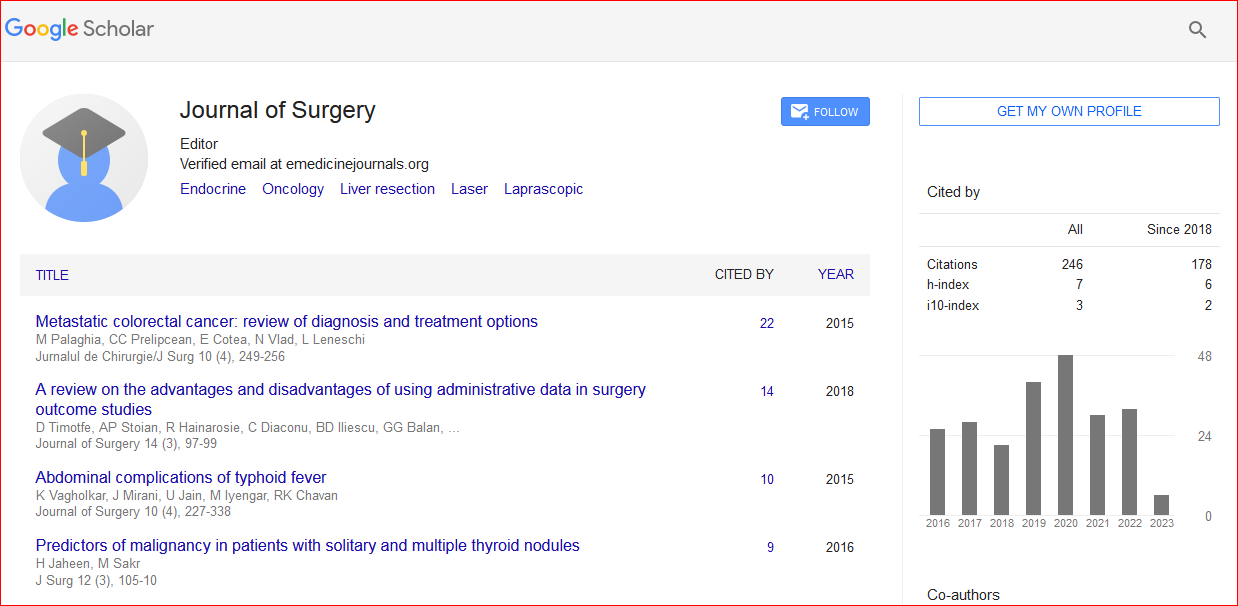
Journal of Surgery received 288 citations as per Google Scholar report
 Spanish
  Chinese
  Russian
  German
  French
  Japanese
  Portuguese
  Hindi
Hindi 