Dr. Mariatha Yazbek
Assoc Prof, South Africa
Scientific Tracks Abstracts: Surgery
Statement of the problem: Stillbirth remains a global challenge and traumatic loss to women, families, communities, and society at large despite all efforts made to reduce it. Globally 2.6 to 3 million stillbirths occur each year. Unexplained intrauterine deaths are the most common primary cause of perinatal deaths in South Africa. The placenta plays a key role in maintaining a healthy pregnancy. Malperfusion of the placenta may result in lesions associated with stillbirths. Placental lesions reflect various physical, social and environmental exposures which can be identified during examination. This study describes the macroscopical and microscopical placental lesions of stillbirths in a selected public hospital in the eMalahleni sub-district in South Africa. Methodology & Theoretical Orientation : A quantitative non-experimental observational descriptive study was conducted to examine 89 placentas of term singleton stillbirths macroscopically and microscopically. A questionnaire captured clinical data from patient files on variables of interest related to macroscopic and microscopic lesions for stillbirth cases. IBM SPSS Statistics version 28 package was used to analyse the data. Findings Statistical association and significance were found between the following variables: stillbirth and number of antenatal care visits (0.0035); birth weight and mid-upper arm circumference (0.013); birth weight and maternal vascular malperfusion (0.001); birth weight and birth attendant (0.034); type of stillbirth and birth attendant (0.033); type of stillbirth and previous obstetric history (0.038); cord insertion and smoking/substance abuse (0.012); cord insertion and haemoglobin (0.029); cord length and meconium histiocytes (0.031); cord diameter and syphilis (0.030); placental weight and onset of labour (0.012); placental weight and foetal vascular malperfusion (0.004); colour of membranes and maternal inflammatory response (0.002); colour of membranes and meconium histiocytes (0.000), and colour of membranes and syphilis (0.053). Conclusion & Significance Examination of the placenta may help to define the causes in more than 90% of stillbirth cases, inform research, and decrease stillbirth rates.
Mariatha Yazbek, a midwife specialist, is an associate professor in midwifery at the University of Pretoria teaching undergraduate and postgraduate midwifery. She supervises postgraduate research, moderates other national and international universities, develops curriculums, and leads the Maternal and Child publication group. She peer-reviews for multiple international and national journals, published widely in journals and nonrefereed magazines, and prescribed textbooks. Mariatha worked six years in various NICUs and 15 years as an independent midwife, is a leading expert in water births and level-one ultrasound for midwives and serves as a mentor and consultant for independent midwives. Her interests are to promote natural and normal birth and empower maternal care providers.
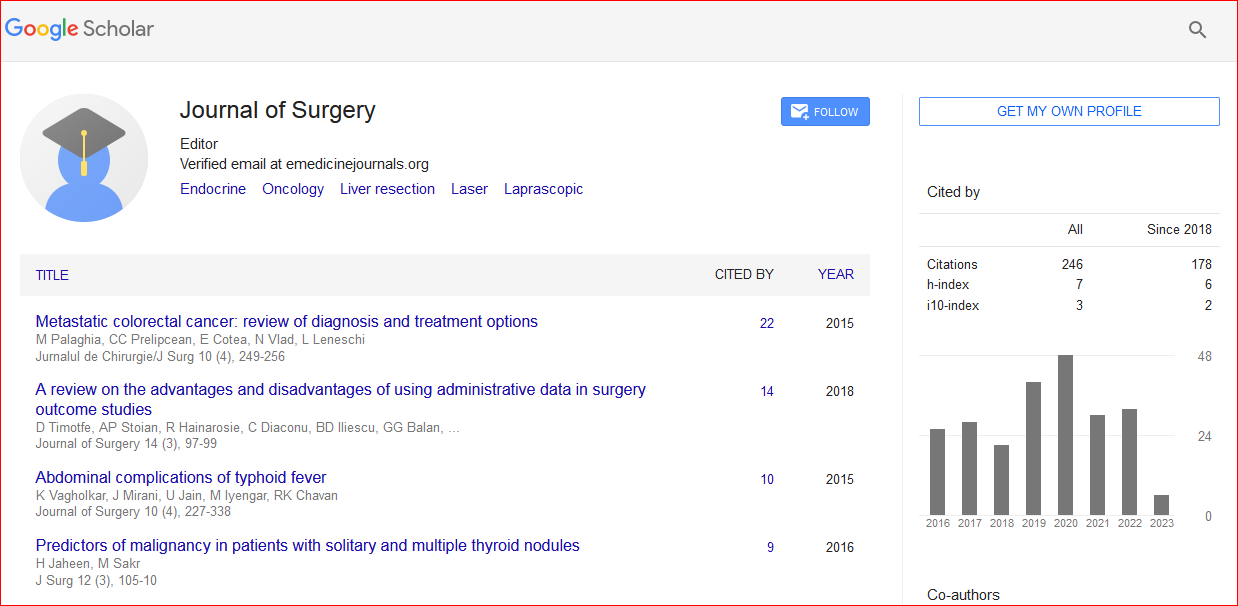
Journal of Surgery received 288 citations as per Google Scholar report
 Spanish
  Chinese
  Russian
  German
  French
  Japanese
  Portuguese
  Hindi
Hindi 