Mr. Atsebaha Gebrekidan Kahsay
College of Health Sciences, College of Veterinary Sciences, Mekelle University, Ethiopia
Scientific Tracks Abstracts: J AIDS Clin Res
In Ethiopia, salmonellosis is one of the most common zoonotic and foodborne illnesses. Ethiopia continues to be at risk for its fast-expanding medication resistance. For the development of preventative and control methods, summarized knowledge regarding salmonellosis is necessary. Objectives:- Determining a thorough evaluation of the prevalence, serotypes, and antibiotic resistance of Salmonella in humans and animals from January 1, 2010, to December 30, 2022, in Ethiopia was our goal. Results: There were a total of 43 investigations from food handlers, diarrhoeic patients, and animals. The prevalence rates ranged from 1% to 10% and 1% to 13% among food handlers and diarrhoea patients, respectively. The highest prevalence was among pigs (41.6%). S. Anatum in animals and S. Typhimurium in people were the predominant serotypes. Amoxicillin and ampicillin were claimed to be 100% resistant in human studies. The highest recorded resistances for ceftriaxone and ciprofloxacin were 16.7% and 100%, respectively. Animal studies revealed that Salmonella resistances to ampicillin, streptomycin and tetracycline were 100%, 90%, 86.4%, respectively. S. Kentucky showed complete resistance to tetracycline, ampicillin, gentamicin, ciprofloxacin, and streptomycin.
Mr. Atsebaha Gebrekidan Kahsay, My MSc is Medical Microbiology and graduated in 2015 at Mekelle University, Ethiopia. I am working as an assistant professor of Medical Microbiology in Mekelle University, Ethiopia since March 2015. Currently, I am attending my PhD program in Food Safety and Zoonosis by emphasis on salmonellosis especially the nontyphoidal salmonella which is the leading problem in sub Saharan Africa
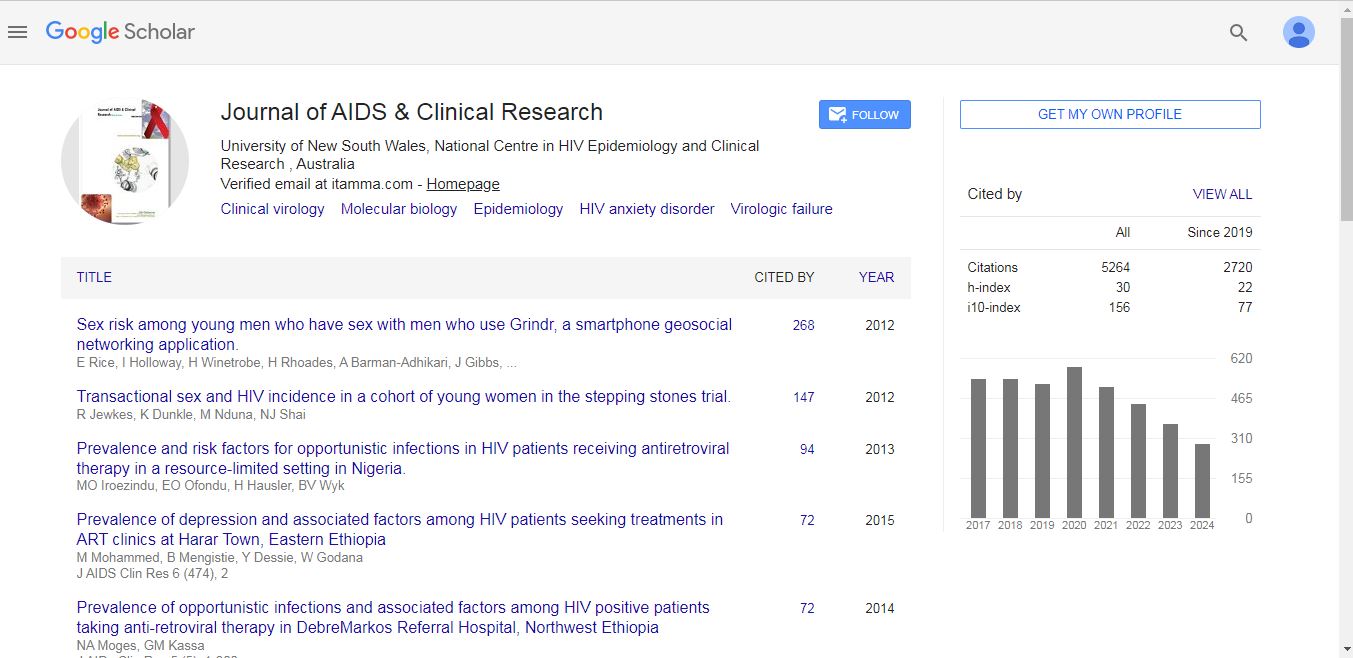
Journal of AIDS & Clinical Research received 5264 citations as per Google Scholar report
 Spanish
  Chinese
  Russian
  German
  French
  Japanese
  Portuguese
  Hindi
Hindi 