Aurelija Rimkiene, Sigitas Vejelis and Giedrius Balciunas
Vilnius Gediminas Technical University, Lithuania
Scientific Tracks Abstracts: J Biomed Sci
The present study hypothesises that the tensile strength of wood-duroplastic composites (WDPC) is influenced by the size and shape of wood waste particles. The aim of the research was to assess whether variations in the structural composition of wood waste particles impart a noticeable influence on the resulting properties of the composite materials. The analysis of the three types of wood waste – door production, packaging, and demolition waste – was conducted following mechanical and chemical treatment. The characterisation of particles was conducted through granulometric analysis and morphological evaluation using ImageJ software. Subsequently, composite specimens were developed using biopolyurethane binders. Tensile strength tests were conducted after 30 days of curing. The present study showed that the morphology of the particles, especially their aspect ratio and circularity, had a significant impact on the strength of the composite materials. Despite their comparatively greater density, attributable to their aluminium content, samples of door waste did not show superior tensile strength. The present study contributes to the field of sustainable waste reuse strategies and presents practical insights into the development of engineered wood products. Recent Publications 1. RimkienÄ?, A., KairytÄ?, A., VÄ?jelis, S., Kremensas, A., Vaitkus, S., & ŠeputytÄ?-JucikÄ?, J. (2024). Structure Formation in Engineered Wood Using Wood Waste and Biopolyurethane. Materials, 17(16), 4087. https://doi.org/10.3390/ma17164087. 2. RimkienÄ?, A., VÄ?jelis, S., & Vaitkus, S. (2025). Analysis and Use of Wood Waste in Lithuania for the Development of Engineered Wood Composite. Forests, 16(4), 577. https://doi.org/10.3390/f16040577. 3. European Chemicals Agency (ECHA). (2024). Wood packaging materials and biocides – Environmental and health risk review. https://echa.europa.eu/hot-topics/biocides. 4. Kociszewski, M., Gozdecki, C., WilczyÅ?ski, A., Zajchowski, S., & Mirowski, J. (2012). Effect of industrial wood particle size on mechanical properties of wood-polyvinyl chloride composites. European Journal of Wood and Wood Products, 70(1–3), 113–118. https://doi.org/10.1007/s00107-011-0531-5. 5. European Panel Federation (EPF). (2025). Proceedings of the 13th European Wood-Based Panel Symposium. Hamburg, Germany. https://www.european-wood-based-panel-symposium.org/custom/ media/13__HWS_24/Flyer_EWBPS2024_web.pdf
Aurelija RimkienÄ? is a doctoral student at Vilnius Gediminas Technical University (Lithuania), where she is specialising in the field of materials engineering. At the Thermal Insulation Materials and Acoustics Laboratory, she is working on the development of a new generation of largescale engineered wood that is sustainable, environmentally safe, and suitable for use in the construction sector. Aurelija's scientific approach is founded on the principles of openness, contextuality, and sustainability, with the objective of applying research findings to the development of practical solutions for industry. Aurelija combines engineering precision with a creative approach to material development, drawing on both experimental and analytical experience. The motivation behind her work is the belief that Lithuanian science has the potential to contribute to the resolution of global challenges by the creation of innovative, environmentally friendly building materials that will help to shape a more sustainable and technologically advanced future.
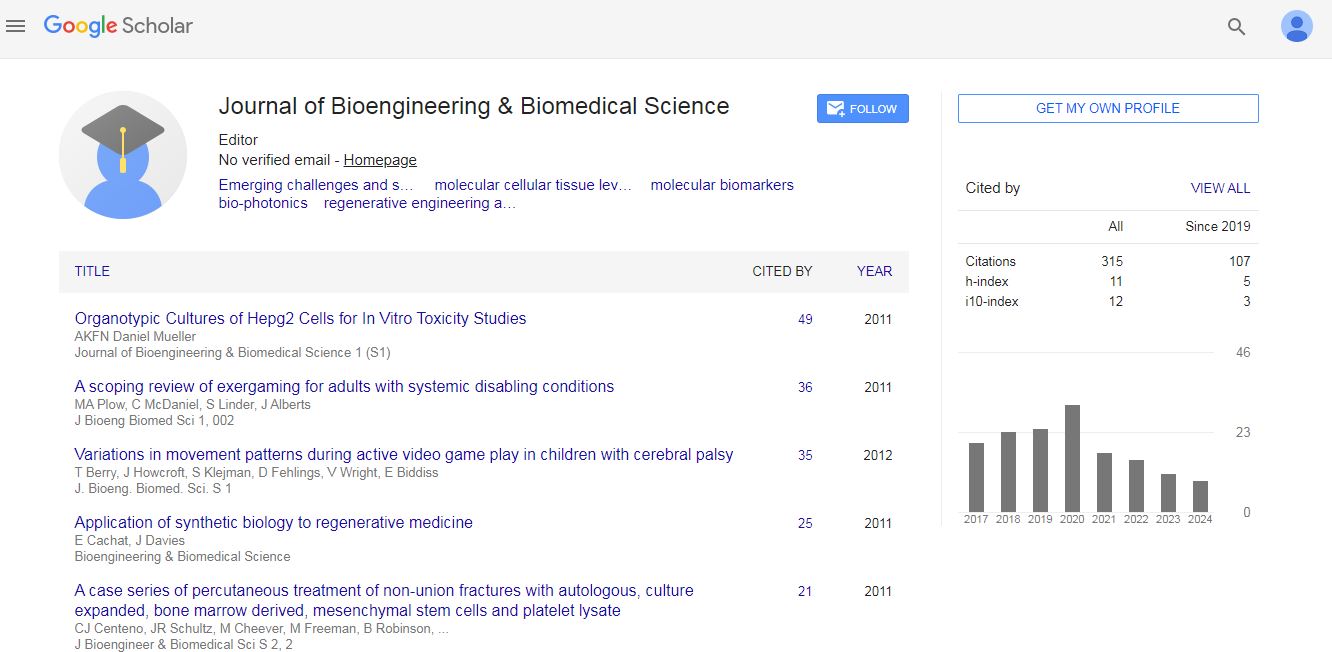
Journal of Bioengineering & Biomedical Science received 307 citations as per Google Scholar report

 Spanish
  Chinese
  Russian
  German
  French
  Japanese
  Portuguese
  Hindi
Hindi 