Perspective - (2025) Volume 16, Issue 2
Received: 01-Apr-2025, Manuscript No. jvst-26-187984;
Editor assigned: 03-Apr-2025, Pre QC No. P-187984;
Reviewed: 17-Apr-2025, QC No. Q-187984;
Revised: 22-Apr-2025, Manuscript No. R-187984;
Published:
29-Apr-2025
, DOI: 10.37421/2157-7579.2025.16.289
Citation: Brown, Laura. ”Zoonotic Diseases: Domestic Animals,
Threats, and Control.” J Vet Sci Techno 16 (2025):289.
Copyright: © 2025 Brown L. This is an open-access article distributed under the terms of the Creative Commons Attribution License, which permits unrestricted use, distribution
and reproduction in any medium, provided the original author and source are credited.
Zoonotic diseases represent a paramount global health concern, impacting both animal populations and human well-being significantly. Domestic animals, in particular, serve as critical reservoirs and amplifiers for a multitude of these pathogens, necessitating a comprehensive understanding of their role in disease transmission pathways and associated risk factors. Effective control and prevention strategies rely heavily on robust surveillance systems and a collaborative, interdisciplinary approach involving veterinary professionals, public health officials, and policymakers to mitigate the threat of zoonotic disease outbreaks. Early detection mechanisms, coupled with stringent biosecurity measures and widespread public awareness campaigns, are indispensable for reducing the impact of these pervasive diseases on society. [1]
This study delves into the prevalence of specific zoonotic pathogens, including *Salmonella* and *Campylobacter*, within poultry and swine populations, providing molecular characterization of isolates. The research assesses how farm management practices influence disease transmission, underscoring the critical need for enhanced hygiene protocols and effective vaccination strategies to curb the incidence of these foodborne zoonoses. [2] The emergence and spread of antimicrobial resistance (AMR) within zoonotic bacteria have become a pressing global challenge. This research specifically investigates the prevalence of AMR genes in *E. coli* strains isolated from companion animals like dogs and cats. It highlights the potential for transmission of these resistant strains to humans through direct contact and environmental contamination, reinforcing the importance of the One Health approach in combating AMR. [3] A specific focus is placed on neglected zoonotic diseases, particularly those caused by parasites affecting livestock populations. This exploration examines the epidemiological patterns of diseases such as cysticercosis and echinococcosis within rural communities where close human-animal interactions are commonplace. The authors strongly emphasize the necessity of integrated control programs that target both animal and human populations to effectively break the transmission cycles of these diseases. [4] The intricate role of wildlife as reservoirs for zoonotic diseases, and their subsequent transmission to domestic animals, is thoroughly examined in this paper. It presents compelling case studies, including West Nile Virus and Avian Influenza, detailing the mechanisms of spillover events and their spread within domestic animal populations, thereby posing risks to human health. The paper advocates for improved wildlife surveillance and management strategies. [5] Research concerning tick-borne zoonotic diseases affecting domestic animals across Europe is presented, surveying the prevalence of pathogens such as *Anaplasma phagocytophilum* and *Borrelia burgdorferi* in dogs and cattle. It discusses the influence of climate change on tick distribution and the subsequent alteration of disease transmission patterns. The study underscores the urgent need for enhanced tick control measures and advanced diagnostic tools. [6] The persistent global health issue of rabies in domestic animals, especially dogs, is critically analyzed. This paper evaluates current vaccination coverage rates and assesses the efficacy of ongoing control programs in endemic regions. It unequivocally emphasizes the pivotal role of community engagement and the accessibility of veterinary services in achieving the ultimate goal of rabies elimination. [7] This article investigates the zoonotic potential of arboviruses transmitted by mosquitoes to domestic animals, including horses and cattle. It elaborates on the clinical manifestations observed in these animals and discusses the significant implications for human public health, particularly in geographical areas where human and animal populations overlap and suitable vector habitats exist. Surveillance and vector control are identified as key intervention strategies. [8] The increasing frequency of human-animal interactions within urban and peri-urban environments presents unique and complex challenges for the effective control of zoonotic diseases. This paper examines the prevalence of various zoonotic pathogens found in urban pets and livestock, alongside the associated risks posed to urban dwellers. It highlights the critical need for the development of tailored public health interventions designed for diverse urban settings. [9] This comprehensive review synthesizes the most current knowledge regarding the economic ramifications of zoonotic diseases affecting both livestock and companion animals. It meticulously covers the direct financial burdens stemming from animal morbidity and mortality, as well as the indirect costs associated with trade restrictions, public health initiatives, and diminished productivity. The authors strongly advocate for increased investment in preventative measures and control strategies to mitigate these substantial economic losses. [10]Zoonotic diseases pose a significant global health threat, with domestic animals playing a crucial role as reservoirs and amplifiers of various pathogens. This article explores the diverse range of zoonotic pathogens found in common domestic species, detailing key transmission pathways and risk factors. It emphasizes the critical importance of establishing robust surveillance systems and fostering interdisciplinary collaboration among veterinarians, public health officials, and policymakers to effectively control and prevent zoonotic disease outbreaks. Essential strategies for mitigating the impact of these diseases include early detection, implementation of stringent biosecurity measures, and comprehensive public awareness campaigns. [1]
This research specifically investigates the prevalence of key zoonotic pathogens, such as *Salmonella* and *Campylobacter*, within commercial poultry and swine populations. The study provides detailed molecular characterization of isolated pathogens and critically assesses the influence of various farm management practices on disease transmission dynamics. The findings collectively underscore the urgent necessity for improved hygiene protocols and the strategic implementation of vaccination programs to reduce the overall incidence of these prevalent foodborne zoonoses. [2] The growing concern surrounding antimicrobial resistance (AMR) in zoonotic bacteria is explored in this research. It focuses on examining the prevalence of AMR genes within *E. coli* strains that have been isolated from companion animals, specifically dogs and cats. The study highlights the discernible potential for the transmission of these resistant bacterial strains to human populations through direct animal contact and indirect environmental contamination, thereby underscoring the vital importance of adopting a comprehensive One Health approach to effectively combat AMR. [3] This article addresses the critical issue of neglected zoonotic diseases, with a particular emphasis on those caused by parasitic infections in livestock. It delves into the epidemiological patterns observed in diseases such as cysticercosis and echinococcosis, particularly within rural communities characterized by frequent human-animal interactions. The authors strongly advocate for the implementation of integrated control programs that simultaneously target both animal and human populations to effectively interrupt and break the transmission cycle of these diseases. [4] The role of wildlife as a significant reservoir for zoonotic diseases and their subsequent transmission to domestic animal populations is thoroughly examined. This paper presents detailed case studies, including instances of West Nile Virus and Avian Influenza, illustrating how spillover events originate and propagate within domestic animal populations, consequently posing substantial risks to human health. The authors strongly advocate for the enhancement of wildlife surveillance and the implementation of effective management strategies. [5] This research specifically focuses on tick-borne zoonotic diseases that affect domestic animals throughout Europe. It systematically surveys the prevalence of important pathogens, including *Anaplasma phagocytophilum* and *Borrelia burgdorferi*, within dog and cattle populations. Furthermore, it critically discusses the profound impact of ongoing climate change on the geographical distribution of ticks and the subsequent alteration of disease transmission patterns. The study emphatically highlights the pressing need for enhanced tick control measures and the development of more sophisticated diagnostic tools. [6] The persistent global health challenge posed by rabies in domestic animals, with a particular focus on dogs, is extensively analyzed. This paper critically evaluates current vaccination coverage rates and assesses the overall effectiveness of implemented control programs in regions where rabies is endemic. It unequivocally emphasizes the absolutely critical role that active community engagement and accessible veterinary services play in achieving the ultimate goal of rabies elimination worldwide. [7] This article explores the significant zoonotic potential of arboviruses that are transmitted by mosquitoes to domestic animals, such as horses and cattle. It provides a detailed discussion of the clinical manifestations observed in affected animals and elaborates on the profound implications for human public health, especially in geographical areas where human and animal populations frequently overlap and suitable habitats for disease vectors exist. Surveillance and effective vector control measures are highlighted as key interventions. [8] The increasing frequency of interactions between humans and domestic animals in both urban and peri-urban settings creates unique and complex challenges for the effective control of zoonotic diseases. This paper meticulously examines the prevalence of various zoonotic pathogens found in urban pets and livestock, as well as the associated risks they pose to urban inhabitants. It strongly emphasizes the imperative need for the development and implementation of tailored public health interventions specifically designed for diverse urban environments. [9] This extensive review synthesizes the most current and relevant knowledge concerning the substantial economic impact of zoonotic diseases affecting both livestock and companion animals. It comprehensively covers the direct financial costs associated with animal morbidity and mortality, alongside the indirect economic consequences stemming from trade restrictions, public health interventions, and overall lost productivity. The authors strongly advocate for a significant increase in investment dedicated to preventative measures and control strategies to effectively mitigate these considerable economic losses. [10]This collection of research highlights the pervasive threat of zoonotic diseases, emphasizing the critical role of domestic animals as reservoirs and amplifiers. Studies examine the prevalence of specific pathogens like Salmonella and Campylobacter in poultry and swine, and antimicrobial resistance in E. coli from companion animals, stressing improved hygiene and one health approaches. Neglected parasitic zoonoses in livestock and tick-borne diseases in European domestic animals are discussed, alongside the impact of climate change. The paper also addresses rabies epidemiology, arboviruses transmitted by mosquitoes, and the unique challenges of zoonotic disease control in urban environments. Finally, the significant economic burden of these diseases on livestock and companion animals is analyzed, advocating for increased investment in prevention and control. Control strategies consistently emphasize surveillance, biosecurity, vaccination, public awareness, and interdisciplinary collaboration.
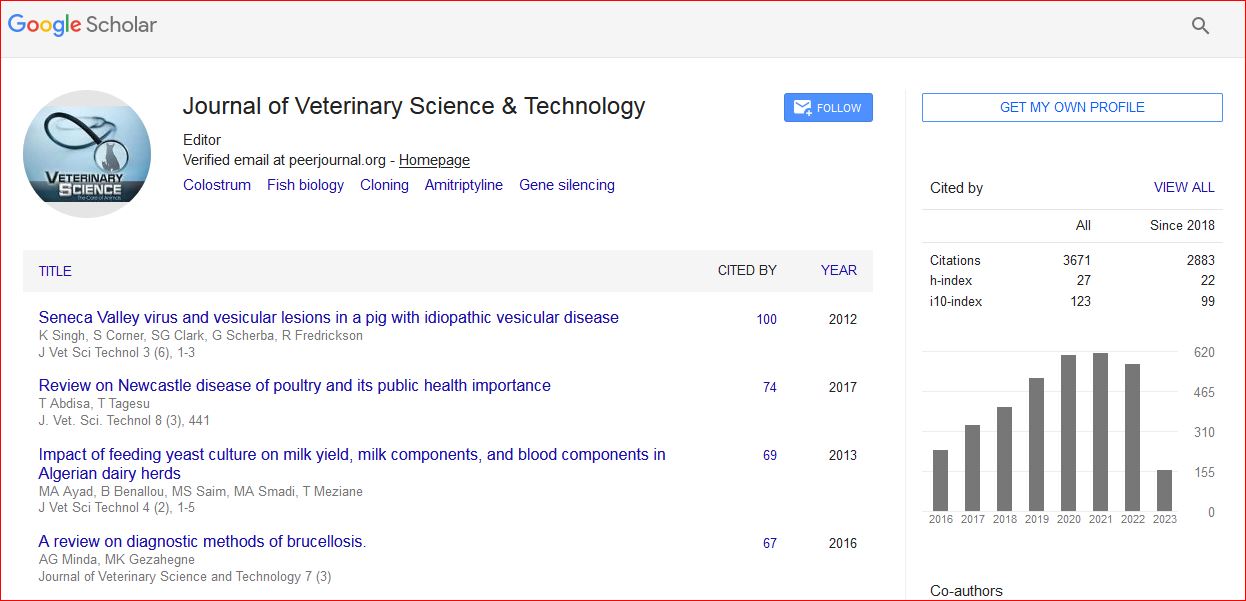
Veterinary Science & Technology received 4472 citations as per Google Scholar report