Commentary - (2025) Volume 16, Issue 2
Received: 01-Apr-2025, Manuscript No. jvst-26-187996;
Editor assigned: 03-Apr-2025, Pre QC No. P-187996;
Reviewed: 17-Apr-2025, QC No. Q-187996;
Revised: 22-Apr-2025, Manuscript No. R-187996;
Published:
29-Apr-2025
, DOI: 10.37421/2157-7579.2025.16.292
Citation: Rahman, Aisha. ”Zoonotic Disease: Predicting and
Preventing Global Pandemics.” J Vet Sci Techno 16 (2025):292.
Copyright: © 2025 Rahman A. This is an open-access article distributed under the terms of the Creative Commons Attribution License, which permits unrestricted use,
distribution and reproduction in any medium, provided the original author and source are credited.
Zoonotic diseases pose a substantial global health risk, with a significant proportion of emerging infectious diseases originating from animal sources. Understanding the complex interplay between animal and human health is critical for preventing and controlling these threats. This article delves into the multifaceted aspects of zoonotic disease transmission, highlighting the essential factors that contribute to spillover events and the pathways through which pathogens can cross species barriers. Ecological shifts, including habitat destruction and alteration, play a pivotal role in increasing the proximity between wildlife, livestock, and human populations, thereby creating new opportunities for disease emergence. Human activities such as agricultural expansion, deforestation, and urbanization directly impact wildlife habitats, leading to increased contact and potential transmission of pathogens [1].
The encroachment of human populations into previously undisturbed wildlife habitats is a major driver of zoonotic disease emergence. As human settlements expand and natural environments are altered, the interface between humans and wildlife is increasingly blurred, facilitating the transmission of infectious agents [1].
Global trade networks, encompassing the movement of animals, animal products, and even people, facilitate the rapid dissemination of zoonotic pathogens across vast geographical distances. The international commerce in live animals, including for food, pets, and exotic purposes, represents a particularly high-risk activity for disease spread [3].
The molecular mechanisms underpinning pathogen adaptation and host jumping are central to understanding zoonotic disease emergence. Research into the genetic changes that allow viruses and bacteria to infect new hosts provides crucial insights into predicting and preventing future pandemics. This involves analyzing viral genomes, protein structures, and evolutionary pathways to identify key mutations and adaptations [2].
Climate change is emerging as a significant factor influencing the distribution and prevalence of zoonotic diseases. Alterations in temperature, precipitation patterns, and extreme weather events can affect the geographic ranges of animal reservoirs and vectors, as well as the survival and transmission rates of pathogens [4].
Effective surveillance systems are paramount for the early detection and rapid response to zoonotic disease outbreaks. Integrating data from human, animal, and environmental health sectors through a 'One Health' approach is essential for a comprehensive understanding of disease dynamics and for timely interventions [5].
Livestock production, especially intensive farming practices, presents unique epidemiological challenges for zoonotic disease control. The close proximity of large numbers of animals and their handlers creates opportunities for bidirectional transmission of pathogens and contributes to the development of antimicrobial resistance [6].
Urbanization creates novel environments and alters human-animal interactions, potentially increasing the risk of zoonotic disease transmission. The presence of urban wildlife, domestic animals in city settings, and specific human behaviors in urban areas contribute to complex transmission pathways that require targeted public health interventions [7].
Understanding the genetic diversity and evolutionary dynamics of zoonotic viruses is crucial for developing effective countermeasures. Research into mechanisms like mutation, recombination, and host adaptation helps in predicting viral evolution and designing vaccines and therapies to combat emerging zoonotic threats [8].
Bats are recognized as significant reservoirs for a wide array of zoonotic viruses, including coronaviruses and filoviruses. Their unique physiological and ecological characteristics facilitate the carriage and transmission of these pathogens, making them a critical focus for research aimed at preventing spillover events [9].
Advanced diagnostic tools and rapid genomic sequencing technologies are indispensable for identifying and characterizing novel zoonotic pathogens. These technologies enable faster outbreak investigations, risk assessments, and the development of targeted control strategies, significantly enhancing our ability to manage emerging infectious disease threats [10].
Zoonotic diseases represent a significant global health concern, with a substantial percentage of emerging infectious diseases originating in animal populations. This article aims to explore the intricate dynamics of zoonotic disease transmission between animals and humans, shedding light on the key factors that contribute to spillover events and the mechanisms that facilitate their spread. We will examine the critical role of ecological changes, human encroachment into wildlife habitats, and the impact of global trade in elevating the risk of such transmissions. Furthermore, the necessity of interdisciplinary collaboration, integrating expertise from veterinary medicine, public health, and ecology, will be emphasized as crucial for effective surveillance and control strategies [1].
Ecological shifts, such as deforestation, land-use changes, and agricultural intensification, play a pivotal role in altering the balance of ecosystems and increasing the contact between wildlife, livestock, and human populations. These changes can lead to the emergence and spread of novel zoonotic pathogens by creating new interfaces for transmission. Human activities that fragment habitats and displace wildlife often bring animals into closer proximity with human settlements, thereby increasing the risk of disease spillover [1].
The expansion of human activities into natural habitats is a primary driver for the emergence of zoonotic diseases. As human populations grow and urbanize, natural environments are increasingly encroached upon, leading to greater interaction with wildlife. This increased contact can facilitate the transmission of pathogens from animals to humans, often with significant public health consequences [1].
Global trade networks have dramatically increased the interconnectedness of human populations and economies worldwide. This interconnectedness, while beneficial in many aspects, also serves as a significant conduit for the emergence and spread of zoonotic diseases. The international movement of animals, animal products, and associated vectors can rapidly disseminate pathogens across continents, making containment challenging [3].
Understanding the molecular underpinnings of how pathogens adapt to new hosts is paramount for predicting and mitigating zoonotic threats. Research focusing on the genetic adaptations, evolutionary pathways, and specific mutations that enable viruses and bacteria to cross the species barrier provides essential insights. By analyzing viral genomes and protein-protein interactions, scientists can identify key factors contributing to zoonotic potential, aiding in the development of preventative measures and therapeutic interventions [2].
Climate change is profoundly influencing the epidemiology of zoonotic diseases by altering environmental conditions that affect pathogen survival, vector distribution, and host behavior. Changes in temperature, precipitation, and the frequency of extreme weather events can expand the geographic range of zoonotic diseases and increase the risk of outbreaks. Integrating climate change adaptation strategies into public health initiatives is therefore essential [4].
Robust surveillance systems are fundamental for the early detection and effective response to zoonotic disease outbreaks. Current strategies for zoonotic disease surveillance are continuously being reviewed for their strengths and limitations. A 'One Health' approach, which integrates surveillance efforts across human, animal, and environmental health sectors, is advocated for providing a holistic view of disease dynamics and facilitating timely interventions [5].
Intensive livestock production systems present unique challenges for the control of zoonotic diseases. These systems involve the close confinement of large numbers of animals, creating an environment conducive to pathogen amplification and transmission between animals and humans. Implementing stringent animal health management practices, robust biosecurity measures, and responsible antibiotic stewardship are critical to preventing zoonotic spillover and curbing the rise of antimicrobial resistance [6].
Urbanization and the associated changes in human-animal interactions create novel scenarios for zoonotic disease transmission. The presence of urban wildlife, domestic animals within city environments, and specific human behaviors characteristic of urban settings can facilitate zoonotic spillover. Effective urban planning and public health interventions that acknowledge these complex ecological and social factors are increasingly necessary [7].
The genetic diversity of zoonotic viruses is a critical factor determining their potential to cause widespread outbreaks or pandemics. Investigating the evolutionary mechanisms, such as mutation, recombination, and host adaptation, that drive this diversity is essential. Such research provides vital information for the development of effective vaccines and antiviral therapies against emerging zoonotic threats [8].
Bats are widely recognized as important natural reservoirs for a diverse range of zoonotic viruses, including coronaviruses and filoviruses. Their unique biological and ecological traits enable them to carry and transmit these viruses without succumbing to disease. Focused research on bat ecology and virology is crucial for predicting and preventing future zoonotic spillover events [9].
The development and deployment of advanced diagnostic tools and rapid genomic sequencing technologies are indispensable for identifying and characterizing novel zoonotic pathogens. These molecular techniques play a critical role in enabling faster outbreak investigations, comprehensive risk assessments, and the development of precisely targeted control strategies for emerging infectious diseases [10].
Zoonotic diseases, originating from animals, pose a significant global health challenge. Factors such as ecological changes, human encroachment into wildlife habitats, and global trade increase the risk of pathogen spillover. Understanding the molecular mechanisms of viral adaptation is crucial for predicting future pandemics. Climate change also influences disease transmission patterns. Effective surveillance systems, particularly those adopting a 'One Health' approach, are vital for early detection and response. Intensive livestock farming and urbanization create unique transmission scenarios. The genetic diversity of viruses and the role of reservoirs like bats are key areas of research. Advanced diagnostic and genomic technologies are essential for identifying and controlling emerging zoonotic threats.
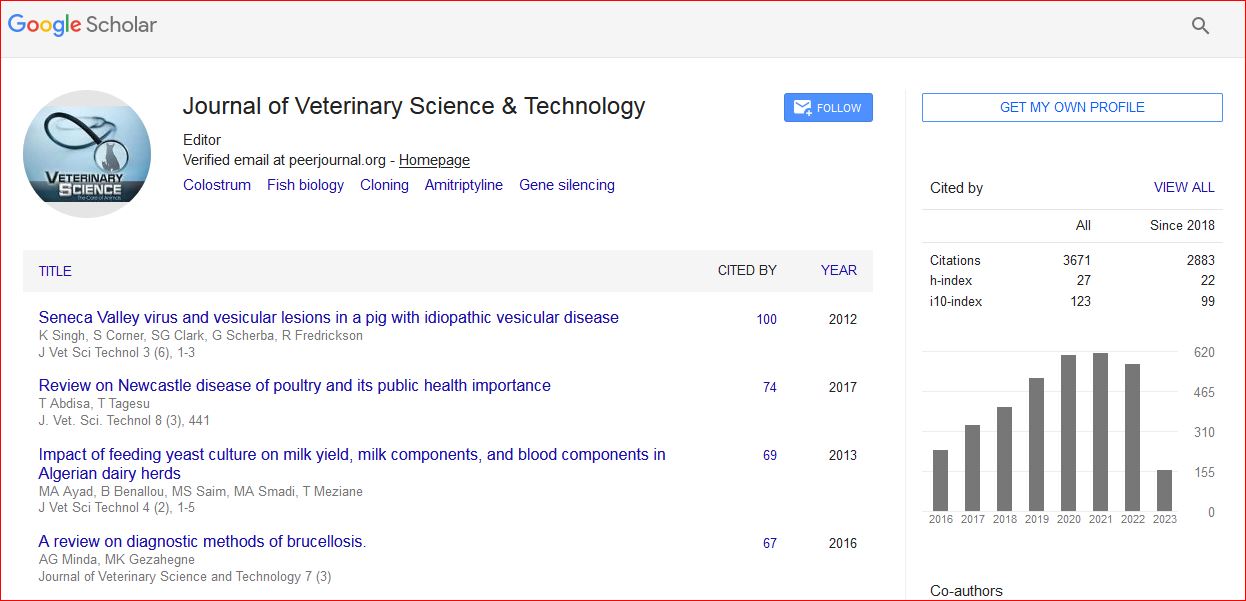
Veterinary Science & Technology received 4472 citations as per Google Scholar report