Perspective - (2025) Volume 16, Issue 6
Received: 01-Nov-2025, Manuscript No. assj-25-174911;
Editor assigned: 03-Nov-2025, Pre QC No. P-174911;
Reviewed: 17-Nov-2025, QC No. Q-174911;
Revised: 24-Nov-2025, Manuscript No. R-174911;
Published:
01-Dec-2025
, DOI: 10.37421/2151-6200.2025.16.699
Citation: Wei, Chen. "Youth Well-being: Digital and Cultural Practices." Arts Social Sci J 16 (2025):699
Copyright: © 2025 Wei C. This is an open-access article distributed under the terms of the Creative Commons Attribution License, which permits unrestricted use, distribution and reproduction in any medium, provided the original author and source are credited
This article explores the intricate connections between digital literacy, social media use, and adolescent well-being. It highlights how developing robust digital literacy skills can mediate the impact of social media, promoting positive outcomes while mitigating potential risks. The research suggests that educational interventions focusing on critical digital engagement are essential for supporting youth in navigating online spaces constructively [1].
This systematic review examines how digital technologies and online interactions shape identity development among youth. It highlights the complex interplay between virtual and real-world selves, emphasizing both opportunities for self-exploration and potential challenges related to social comparison and online pressures. The findings underscore the need for supportive environments that foster healthy identity formation in the digital age [2].
This study investigates the digital leisure and cultural practices of youth in Spain, examining how technology influences their engagement with arts, entertainment, and social activities. It reveals a significant shift towards online platforms for cultural consumption and creation, highlighting the need for policies that bridge digital and traditional cultural spaces to support diverse youth engagement [3].
This scoping review examines the cultural practices associated with psychoactive substance consumption among adolescents and young people. It identifies diverse social rituals, peer group norms, and subcultural affiliations that influence initiation and patterns of use. The findings underscore the importance of culturally sensitive prevention programs that address the social contexts shaping substance use behaviors [4].
This systematic review examines how social media use by adolescents influences their social capital, exploring both bonding and bridging forms of social connections. It discusses the evolving nature of peer interactions and community building in online spaces, highlighting how digital platforms facilitate certain cultural practices that contribute to or detract from youth's social well-being [5].
This longitudinal study investigates the role of media literacy education in shaping adolescents' critical thinking skills and cultural identity. It demonstrates that effective media literacy interventions empower youth to critically analyze media messages, resist manipulative content, and develop a more nuanced understanding of their cultural landscape and personal identity in an increasingly digital world [6].
This scoping review investigates the role of youth sport in fostering positive youth development. It examines how participation in organized sports, as a significant cultural practice, contributes to adolescents' physical, social, and psychological well-being. The findings highlight the importance of quality coaching and supportive environments in maximizing developmental benefits and promoting life skills beyond athletic performance [7].
This scoping review explores the significant influence of popular culture on adolescent health behaviors. It highlights how trends in music, film, social media, and celebrity culture shape youth attitudes and practices regarding diet, exercise, substance use, and sexual health. The review emphasizes the potential for leveraging popular culture in health promotion strategies to effectively reach and engage young people [8].
This systematic review investigates the multifaceted impact of video games on adolescent social development and overall well-being. It explores how gaming, as a prevalent cultural practice, influences peer relationships, social skills, and the formation of online communities. The findings reveal both positive aspects, such as fostering teamwork and problem-solving, and potential negative aspects, like social isolation if not balanced [9].
This meta-analysis investigates the strong link between appearance-focused activities on Facebook and Instagram and body dissatisfaction among young women. It highlights how cultural practices of self-presentation and comparison on social media platforms contribute to negative body image outcomes. The findings underscore the urgency for interventions promoting media literacy and healthy social media engagement to protect youth well-being [10].
This article explores the intricate connections between digital literacy, social media use, and adolescent well-being. It highlights how developing robust digital literacy skills can mediate the impact of social media, promoting positive outcomes while mitigating potential risks. The research suggests that educational interventions focusing on critical digital engagement are essential for supporting youth in navigating online spaces constructively [1].
This systematic review examines how digital technologies and online interactions shape identity development among youth. It highlights the complex interplay between virtual and real-world selves, emphasizing both opportunities for self-exploration and potential challenges related to social comparison and online pressures. The findings underscore the need for supportive environments that foster healthy identity formation in the digital age [2].
This study investigates the digital leisure and cultural practices of youth in Spain, examining how technology influences their engagement with arts, entertainment, and social activities. It reveals a significant shift towards online platforms for cultural consumption and creation, highlighting the need for policies that bridge digital and traditional cultural spaces to support diverse youth engagement [3].
This scoping review examines the cultural practices associated with psychoactive substance consumption among adolescents and young people. It identifies diverse social rituals, peer group norms, and subcultural affiliations that influence initiation and patterns of use. The findings underscore the importance of culturally sensitive prevention programs that address the social contexts shaping substance use behaviors [4].
This systematic review examines how social media use by adolescents influences their social capital, exploring both bonding and bridging forms of social connections. It discusses the evolving nature of peer interactions and community building in online spaces, highlighting how digital platforms facilitate certain cultural practices that contribute to or detract from youth's social well-being [5].
This longitudinal study investigates the role of media literacy education in shaping adolescents' critical thinking skills and cultural identity. It demonstrates that effective media literacy interventions empower youth to critically analyze media messages, resist manipulative content, and develop a more nuanced understanding of their cultural landscape and personal identity in an increasingly digital world [6].
This scoping review investigates the role of youth sport in fostering positive youth development. It examines how participation in organized sports, as a significant cultural practice, contributes to adolescents' physical, social, and psychological well-being. The findings highlight the importance of quality coaching and supportive environments in maximizing developmental benefits and promoting life skills beyond athletic performance [7].
This scoping review explores the significant influence of popular culture on adolescent health behaviors. It highlights how trends in music, film, social media, and celebrity culture shape youth attitudes and practices regarding diet, exercise, substance use, and sexual health. The review emphasizes the potential for leveraging popular culture in health promotion strategies to effectively reach and engage young people [8].
This systematic review investigates the multifaceted impact of video games on adolescent social development and overall well-being. It explores how gaming, as a prevalent cultural practice, influences peer relationships, social skills, and the formation of online communities. The findings reveal both positive aspects, such as fostering teamwork and problem-solving, and potential negative aspects, like social isolation if not balanced [9].
This meta-analysis investigates the strong link between appearance-focused activities on Facebook and Instagram and body dissatisfaction among young women. It highlights how cultural practices of self-presentation and comparison on social media platforms contribute to negative body image outcomes. The findings underscore the urgency for interventions promoting media literacy and healthy social media engagement to protect youth well-being [10].
This collection of articles examines various digital and cultural practices influencing adolescent well-being and development. Digital literacy is essential for mediating social media's impact, fostering positive outcomes, and mitigating risks. Educational interventions for critical digital engagement support youth in online spaces. Digital technologies and online interactions shape identity, offering self-exploration opportunities while posing challenges like social comparison and online pressures. Youth digital leisure activities in places like Spain show a shift towards online platforms for cultural consumption, highlighting the need for policies bridging digital and traditional spaces. Cultural practices also link to psychoactive substance consumption, emphasizing culturally sensitive prevention. Social media impacts social capital, influencing peer interactions and community building. Media literacy education is vital for critical thinking and cultural identity development, helping youth analyze media and resist manipulation. Youth sport, a significant cultural practice, contributes to physical, social, and psychological well-being. Popular culture heavily influences adolescent health behaviors, with trends in music, film, and social media shaping attitudes toward diet, exercise, and substance use. Video games impact social development, fostering teamwork but also posing risks of isolation. Appearance-focused activities on platforms like Facebook and Instagram are linked to body dissatisfaction, necessitating interventions for healthy social media use.
None
None
Indexed at, Google Scholar, Crossref
Indexed at, Google Scholar, Crossref
Indexed at, Google Scholar, Crossref
Indexed at, Google Scholar, Crossref
Indexed at, Google Scholar, Crossref
Indexed at, Google Scholar, Crossref
Indexed at, Google Scholar, Crossref
Indexed at, Google Scholar, Crossref
Indexed at, Google Scholar, Crossref
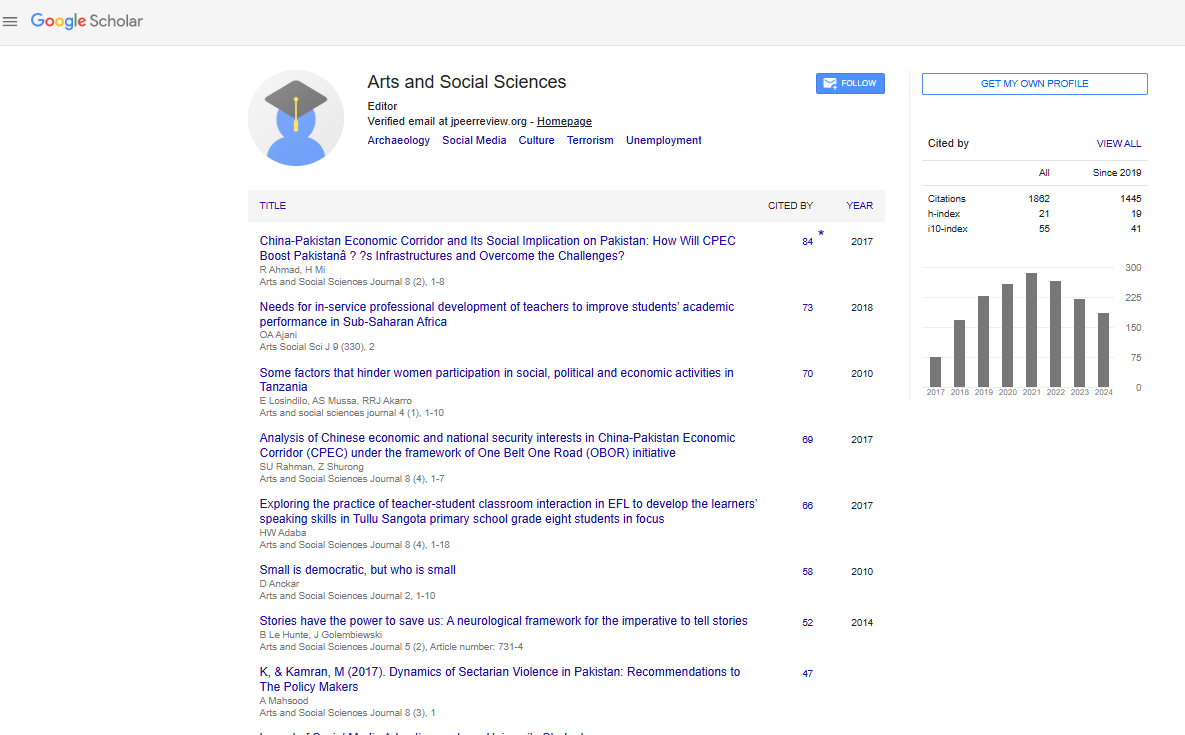
Arts and Social Sciences Journal received 1413 citations as per Google Scholar report