Opinion - (2025) Volume 14, Issue 3
Received: 01-Sep-2025, Manuscript No. jms-25-172641;
Editor assigned: 03-Sep-2025, Pre QC No. P-172641;
Reviewed: 17-Sep-2025, QC No. Q-172641;
Revised: 22-Sep-2025, Manuscript No. R-172641;
Published:
29-Sep-2025
, DOI: 10.37421/2167-0943.2024.14.415
Citation: Soler, Sophia. "Visceral Fat: Critical Health Challenge and Solutions." J Metabolic Synd 14 (2025):416
Copyright: © 2025 Soler S. This is an open-access article distributed under the terms of the Creative Commons Attribution License, which permits unrestricted use, distribution
and reproduction in any medium, provided the original author and source are credited
Visceral adiposity, the accumulation of fat surrounding vital internal organs, is increasingly recognized as a profound determinant of metabolic and cardiovascular health. This distinct form of body fat, rather than overall adiposity, is significantly associated with severe health conditions, including Nonalcoholic Fatty Liver Disease (NAFLD) and advanced liver fibrosis in individuals living with type 2 diabetes. The critical implication here is the necessity for assessing and actively managing visceral fat to prevent serious liver complications within this patient demographic, suggesting that interventions specifically targeting visceral fat could lead to substantial improvements in liver health [1].
The impact of visceral adiposity extends significantly to cardiovascular health. Research provides compelling evidence of a strong, independent connection between abdominal visceral fat area and arterial stiffness, alongside various adverse metabolic parameters. This link is observable even in individuals who are otherwise considered healthy [2].
This highlights visceral fat as a crucial independent risk factor for the development of cardiovascular disease, underscoring the urgent need for early assessment and intervention strategies to mitigate these pervasive risks. The utility of specific markers, such as the Visceral Adiposity Index (VAI), further reinforces this understanding. VAI has been identified as a useful indicator for pinpointing patients with metabolic syndrome who are at a higher risk for cardiovascular complications, thereby emphasizing the pivotal role of visceral fat in the progression of both metabolic and vascular diseases [10].
Beyond direct physiological impact, abdominal obesity, a direct consequence of excess visceral fat, functions akin to an active endocrine organ. It actively releases pro-inflammatory cytokines, which contribute directly to chronic low-grade systemic inflammation. This persistent inflammatory state is a recognized key driver behind the pathogenesis of numerous chronic diseases, notably type 2 diabetes and various forms of cardiovascular disease [4].
Understanding these intricate mechanisms is fundamental to developing effective preventive and therapeutic approaches. The propensity for accumulating visceral fat is not solely a matter of lifestyle; genetic predispositions play a significant role. Studies show that specific genetic factors can enhance an individual's likelihood of accumulating visceral fat, which in turn elevates their risk for developing metabolic syndrome, diabetes, and heart disease. This offers invaluable insights into the potential for personalized prevention strategies tailored to an individualâ??s genetic makeup [5].
Lifestyle modification remains a cornerstone in the management of visceral adiposity. A comprehensive review and meta-analysis of randomized controlled trials unequivocally confirm that exercise training is highly effective in reducing visceral adipose tissue in humans [3].
This robust evidence firmly establishes physical activity as a fundamental strategy for managing belly fat, underscoring its significant role in enhancing overall metabolic health and reducing the risks linked with abdominal obesity. Furthermore, the effectiveness extends across various exercise modalities. Different types of exercise, ranging from aerobic to resistance training, demonstrate varying yet beneficial impacts on visceral fat reduction. This detailed understanding helps in formulating precise recommendations for optimal physical activity regimens aimed at improving overall body composition [6].
Other crucial lifestyle and physiological factors significantly influence visceral fat accumulation. The menopausal transition in women, for instance, has a profound impact on visceral adiposity. Systematic reviews and meta-analyses confirm that the hormonal changes characteristic of menopause notably contribute to an increase in belly fat. This identifies menopause as a critical period requiring targeted interventions to mitigate the associated cardiometabolic risks in women [7].
Similarly, the importance of adequate sleep cannot be overstated. Insufficient sleep duration and poor sleep quality, often termed sleep restriction, are clearly associated with increased visceral fat. This highlights sufficient sleep as a modifiable lifestyle factor pivotal in preventing and managing abdominal obesity and its related health consequences [8].
Moreover, the intricate ecosystem within our gut, the gut microbiota, also plays a pivotal role. The composition and functional activity of gut bacteria can significantly influence the accumulation of belly fat, offering a novel perspective on potential therapeutic targets. These include interventions like probiotics or specific dietary modifications, which could be instrumental in managing abdominal obesity [9].
Collectively, the scientific evidence paints a clear picture: visceral adiposity is a central and dynamic player in human health and disease. Its accumulation is driven by a complex interplay of genetic predispositions, hormonal shifts, inflammatory processes, and various lifestyle factors. This broad understanding necessitates a holistic approach to its assessment, prevention, and management, emphasizing integrated strategies that address diet, physical activity, sleep, genetic predispositions, and even gut health to improve long-term metabolic and cardiovascular outcomes.
Visceral adiposity, the fat stored around internal organs, is a more critical health concern than general body fat. It is deeply implicated in the progression of serious metabolic conditions. For instance, studies explicitly state that visceral adiposity, not overall body fat, is significantly linked to Nonalcoholic Fatty Liver Disease (NAFLD) and advanced liver fibrosis in individuals with type 2 diabetes. This finding underscores the importance of assessing and managing visceral fat to prevent severe liver complications within this vulnerable patient group [1]. Furthermore, the reach of visceral fat extends to cardiovascular health. Research demonstrates a strong connection between abdominal visceral fat area and arterial stiffness, as well as various metabolic parameters, even in apparently healthy individuals. This suggests that visceral fat is a crucial independent risk factor for cardiovascular disease development, emphasizing the necessity for early assessment and intervention [2]. Reinforcing this, the Visceral Adiposity Index (VAI) proves to be a useful indicator for identifying patients with metabolic syndrome who are at higher risk for cardiovascular complications, highlighting the critical role of visceral fat in the progression of metabolic and vascular diseases [10]. These insights collectively establish visceral fat as a primary target for health interventions.
The detrimental effects of visceral adiposity are partly due to its active metabolic and endocrine functions. Abdominal obesity, which is closely tied to excess visceral fat, acts as an active endocrine organ. It releases pro-inflammatory cytokines that contribute to chronic low-grade systemic inflammation. This systemic inflammation is recognized as a key driver of various chronic diseases, including type 2 diabetes and cardiovascular disease [4]. Understanding this inflammatory pathway provides a molecular basis for visceral fat's impact. Beyond physiological mechanisms, genetic predispositions also significantly influence the accumulation of visceral adiposity and its subsequent association with cardiometabolic traits. Certain genetic factors can increase an individual's likelihood of accumulating visceral fat, which, in turn, elevates the risk for metabolic syndrome, diabetes, and heart disease. This offers valuable insights into personalized prevention strategies that could be tailored based on an individualâ??s genetic profile [5].
Given the pervasive health risks, effective strategies for reducing visceral fat are paramount. Exercise training stands out as a highly effective intervention. A comprehensive review and meta-analysis of randomized controlled trials confirms that exercise training effectively reduces visceral adipose tissue in humans [3]. This research firmly establishes physical activity as a cornerstone strategy for managing belly fat, highlighting its significant role in improving overall metabolic health and reducing risks associated with abdominal obesity. Moreover, the effectiveness is not limited to a single form of exercise. Different types of exercise, encompassing both aerobic and resistance training, have varying but positive impacts on visceral fat reduction. A meta-analysis provides valuable evidence on the effectiveness of diverse exercise modalities, which helps guide recommendations for optimal physical activity regimens aimed at improving body composition [6]. This indicates flexibility in designing exercise programs for visceral fat reduction.
Beyond general physical activity, other physiological states and lifestyle choices critically influence visceral fat levels. The menopausal transition in women is one such period, profoundly impacting visceral adiposity. A systematic review and meta-analysis confirms that hormonal changes during menopause significantly contribute to an increase in belly fat. This highlights a critical period for targeted interventions to mitigate the associated cardiometabolic risks in women [7]. Furthermore, sleep quality and duration are emerging as crucial factors. A comprehensive review on sleep restriction and its impact on visceral adipose tissue reveals a clear association: insufficient sleep contributes to increased belly fat. This underscores the importance of adequate sleep duration and quality as a modifiable lifestyle factor in preventing and managing abdominal obesity and its related health consequences [8]. Finally, the intricate relationship between gut microbiota and visceral adiposity is gaining attention. The composition and function of gut bacteria can significantly influence the accumulation of belly fat, offering a novel perspective on potential therapeutic targets. These could include probiotics or dietary modifications for managing abdominal obesity, opening new avenues for research and intervention [9].
The collected data clearly illustrates that visceral adiposity is a complex health issue driven by a combination of genetic, physiological, and lifestyle factors. Its links to Nonalcoholic Fatty Liver Disease, cardiovascular disease, systemic inflammation, and metabolic syndrome are well-established. Crucially, while genetic predispositions exist, several modifiable factorsâ??including regular exercise, adequate sleep, and potentially gut microbiota modulationâ??offer pathways for intervention. Hormonal shifts during menopause also present a key window for targeted health strategies. These findings collectively advocate for a holistic and personalized approach to assessing, preventing, and managing visceral fat, aiming to improve long-term metabolic health and reduce the burden of chronic diseases.
Visceral adiposity, or internal belly fat, presents a significant health challenge, being more critically linked to severe health outcomes than general body fat. Studies highlight its strong association with Nonalcoholic Fatty Liver Disease (NAFLD) and advanced liver fibrosis, particularly in individuals with type 2 diabetes, emphasizing the need for targeted management. Even in healthy populations, increased abdominal visceral fat correlates with arterial stiffness and adverse metabolic parameters, establishing it as an independent risk factor for cardiovascular disease. The Visceral Adiposity Index (VAI) serves as a valuable predictor for cardiovascular complications in metabolic syndrome patients. Beyond these direct associations, abdominal obesity acts as an active endocrine organ, fostering chronic systemic inflammation, a known driver of various chronic diseases. The development and accumulation of visceral fat are influenced by a complex interplay of factors. Genetic predispositions can elevate an individual's risk for visceral fat accumulation and associated cardiometabolic traits. Lifestyle interventions prove effective; exercise training, including various modalities, consistently reduces visceral adipose tissue, underscoring physical activityâ??s role in improving metabolic health. Physiological changes, such as menopausal transition, also contribute to increased belly fat, identifying a critical period for intervention. Furthermore, modern lifestyle aspects like sleep restriction are shown to increase visceral fat, making adequate sleep a modifiable factor. Intestinesâ?? health also plays a role, with gut microbiota composition influencing belly fat accumulation, suggesting novel therapeutic avenues like dietary modifications or probiotics. These insights collectively emphasize the multifaceted nature of visceral adiposity, its profound impact on health, and the diverse strategies required for its effective prevention and management.
None
None
Indexed at, Google Scholar, Crossref
Indexed at, Google Scholar, Crossref
Indexed at, Google Scholar, Crossref
Indexed at, Google Scholar, Crossref
Indexed at, Google Scholar, Crossref
Indexed at, Google Scholar, Crossref
Indexed at, Google Scholar, Crossref
Indexed at, Google Scholar, Crossref
Indexed at, Google Scholar, Crossref
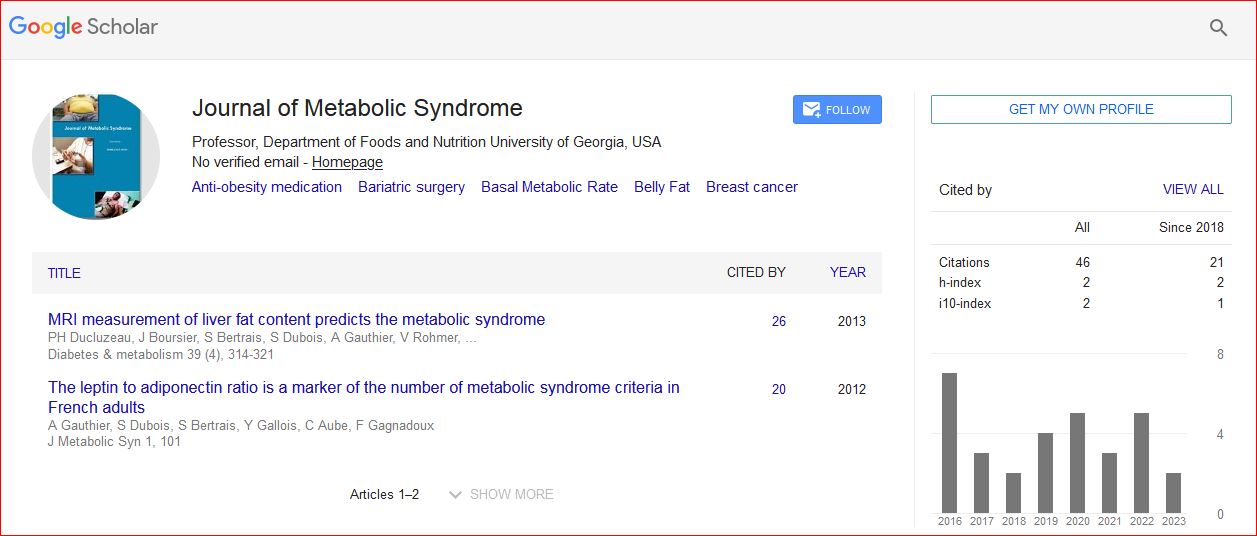
Journal of Metabolic Syndrome received 48 citations as per Google Scholar report