Brief Report - (2025) Volume 16, Issue 4
Received: 02-Nov-2025, Manuscript No. hgec-25-174746;
Editor assigned: 05-Nov-2025, Pre QC No. P-174746;
Reviewed: 19-Nov-2025, QC No. Q-174746;
Revised: 24-Nov-2025, Manuscript No. R-174746;
Published:
29-Nov-2025
, DOI: 10.37421/2161-0436.2025.16.301
Citation: Petrović, Sofia. ”Turner Syndrome: Comprehensive, Lifelong, Holistic Care.” Human Genet Embryol 16 (2025):301.
Copyright: © 2025 Petrović S. This is an open-access article distributed under the terms of the Creative Commons Attribution License, which permits unrestricted use, distribution and reproduction in any medium, provided the original author and source are credited.
Turner Syndrome (TS) is a genetic disorder in females, stemming from the partial or complete absence of an X chromosome. This condition leads to a broad range of clinical manifestations affecting various organ systems and developmental stages throughout an individualâ??s life. Recognizing the complexity of TS, contemporary research underscores the importance of comprehensive assessment and multidisciplinary care. The syndrome impacts more than just physical characteristics, influencing crucial areas like neurodevelopment, cardiovascular health, fertility, growth, and metabolic regulation. A thorough understanding of these diverse aspects is critical for optimizing diagnosis, treatment, and long-term management. The neurodevelopmental and behavioral profiles of individuals with Turner Syndrome are distinct. They often include specific strengths and weaknesses in cognitive domains, such as challenges in visuospatial skills, executive functions, and social cognition. Understanding these unique cognitive patterns is fundamental for developing tailored educational and behavioral interventions, aiming to improve quality of life and social integration for those with TS [1].
Cardiovascular complications are a major cause of morbidity and mortality in Turner Syndrome. Common issues include aortic dilation, bicuspid aortic valve, and coarctation of the aorta. Current recommendations strongly advocate for lifelong cardiovascular surveillance, involving regular screening and individualized management plans to reduce risks and enhance long-term outcomes [2].
Fertility preservation is another vital aspect, given that gonadal dysgenesis frequently causes infertility. Medical advancements offer various strategies like oocyte and ovarian tissue cryopreservation. Assessing the efficacy and ethical considerations of these approaches is crucial for early counseling and enabling informed reproductive choices for patients [3].
Growth failure is a hallmark of Turner Syndrome, making growth hormone therapy a key intervention. Research consistently shows that growth hormone treatment significantly improves final adult height. Optimal results depend on early initiation and individualized dosing regimens, while also considering potential metabolic and cardiovascular impacts over time [4].
To ensure consistent and high-quality care, updated consensus guidelines provide a comprehensive framework. These guidelines cover diagnosis, multidisciplinary care, and long-term surveillance across all life stages. They address critical areas such as growth, puberty, cardiovascular health, fertility, and neurocognitive development, serving as an essential resource for clinicians managing TS [5].
Psychosocial and neuropsychological challenges are also prevalent. Individuals often experience social anxiety, low self-esteem, and difficulties in peer relationships. Their specific cognitive profiles, characterized by strengths in verbal skills but challenges in visuospatial processing, highlight the need for targeted psychological support and educational interventions to improve overall well-being and social integration [6].
Physical anomalies extend to oral and dental health. Common findings include high-arched palates, micrognathia, delayed tooth eruption, and an increased risk of dental caries. Recognizing these specific oral health issues allows dentists and orthodontists to provide targeted preventative and therapeutic interventions, thereby improving overall health and quality of life [7].
Renal anomalies are frequently observed in Turner Syndrome, with a higher incidence of horseshoe kidney, renal ectopia, and collecting system abnormalities. Early renal screening is therefore essential for prompt diagnosis and appropriate management. Understanding these risks helps clinicians prevent complications and ensure better long-term kidney health for patients [8].
Bone health is a significant concern due to a high prevalence of osteopenia and osteoporosis. Contributing factors include estrogen deficiency, low body weight, and genetic predispositions. Early screening for bone mineral density, adequate calcium and vitamin D intake, and hormone replacement therapy are crucial for preventing fractures and maintaining long-term skeletal integrity [9].
Finally, individuals with Turner Syndrome face an elevated risk of various metabolic and endocrine complications, such as glucose intolerance, type 2 diabetes, dyslipidemia, and thyroid dysfunction. Regular screening and early intervention for these conditions are vital components of care, guiding management strategies to improve long-term health outcomes and mitigate associated risks [10].
This collective understanding underscores the intricate nature of Turner Syndrome and the imperative for integrated, patient-centered care.
Turner Syndrome (TS), a chromosomal condition affecting females, presents a complex array of medical and developmental challenges that necessitate a comprehensive understanding for effective management. Recent research has significantly advanced our knowledge across various facets of the syndrome, highlighting the need for multidisciplinary approaches from diagnosis through adulthood. These insights range from neurodevelopmental specifics to systemic health implications, providing a clearer picture of the optimal care pathways.
A key area of focus is the neurodevelopmental and behavioral profile of individuals with TS. Studies indicate distinct cognitive patterns, often characterized by specific strengths alongside weaknesses in domains such as visuospatial skills, executive functions, and social cognition. These findings emphasize that cognitive assessment should be comprehensive, leading to tailored interventions designed to improve overall quality of life [C001]. Concurrently, psychosocial and neuropsychological challenges like social anxiety, low self-esteem, and difficulties in peer relationships are frequently reported. Educational and psychological support programs are crucial to address these issues and foster better social integration and emotional well-being [C006]. The holistic understanding of cognitive and psychological aspects is paramount for supporting the individualâ??s development and social participation.
Cardiovascular health remains a primary concern due to the high incidence of anomalies such as aortic dilation, bicuspid aortic valve, and coarctation of the aorta. These conditions are major contributors to morbidity and mortality in TS. Current clinical recommendations underscore the critical importance of lifelong surveillance, which includes regular screening, advanced diagnostic imaging, and individualized management strategies to effectively mitigate cardiovascular risks and enhance long-term patient outcomes [C002]. Relatedly, updated consensus guidelines integrate these cardiovascular recommendations, providing an essential framework for clinicians to navigate comprehensive care across all life stages, ensuring that crucial aspects like growth, puberty, fertility, and neurocognitive development are also addressed within a multidisciplinary context [C005].
Beyond cardiovascular issues, metabolic and endocrine complications are prevalent in individuals with Turner Syndrome. There is an increased risk for conditions such as glucose intolerance, type 2 diabetes, dyslipidemia, and various thyroid dysfunctions. Regular screening for these metabolic disturbances and early intervention are crucial for effective management. Understanding the underlying mechanisms of these complications helps guide appropriate treatment strategies, thereby improving long-term health outcomes and preventing severe sequelae [C010]. Furthermore, bone health is significantly impacted, with a high prevalence of osteopenia and osteoporosis attributed to factors like estrogen deficiency, low body weight, and genetic predisposition. This necessitates early screening for bone mineral density, alongside adequate calcium and vitamin D supplementation, and hormone replacement therapy to prevent fractures and ensure long-term skeletal health [C009].
Growth failure is a well-known characteristic of Turner Syndrome, making growth hormone therapy a standard intervention. A systematic review and meta-analysis confirmed that this therapy significantly improves final adult height, though individual responses can vary. The effectiveness of treatment is maximized through early initiation and individualized dosing regimens, while also carefully considering potential long-term metabolic and cardiovascular impacts [C004]. Parallel to this, fertility preservation strategies offer vital options for individuals with gonadal dysgenesis. Options like oocyte cryopreservation and ovarian tissue cryopreservation are discussed, emphasizing the need for early counseling and personalized approaches to support reproductive choices, navigating both efficacy and ethical considerations [C003].
Finally, specific physical anomalies extend to other systems. Oral and dental health frequently presents challenges, including high-arched palates, micrognathia, delayed tooth eruption, and an elevated risk of dental caries. Recognizing these particular oral health issues is essential for dental and orthodontic professionals to provide targeted preventative and therapeutic interventions, thereby contributing positively to overall health and quality of life [C007]. Similarly, renal anomalies are common, with a notable prevalence of conditions like horseshoe kidney, renal ectopia, and collecting system abnormalities. Early renal screening is paramount for timely diagnosis and appropriate management to prevent potential complications and ensure long-term kidney health for patients with TS [C008]. Collectively, these comprehensive insights underscore the critical need for an integrated, patient-centered approach to care for individuals with Turner Syndrome, addressing their unique and evolving health needs throughout their lives.
Turner Syndrome presents complex, multi-system challenges requiring a holistic approach to care. Neurodevelopmental and behavioral aspects are crucial, with studies revealing distinct cognitive profiles, including specific strengths and weaknesses in areas like visuospatial skills and executive functions. Understanding these nuances helps in developing tailored interventions to enhance quality of life. Cardiovascular complications, such as aortic dilation and bicuspid aortic valve, pose significant risks, highlighting the need for continuous, lifelong surveillance and specialized management to mitigate morbidity and mortality. Fertility preservation strategies are vital for individuals facing gonadal dysgenesis, offering options like oocyte and ovarian tissue cryopreservation and supporting informed reproductive choices. Growth hormone therapy effectively improves final adult height, emphasizing the importance of early intervention and personalized dosing. Comprehensive guidelines consolidate recommendations for diagnosis, multidisciplinary care, and long-term surveillance across all life stages, covering growth, puberty, cardiovascular health, fertility, and neurocognitive development. Psychosocial and neuropsychological issues, including social anxiety and difficulties in peer relationships, are common, pointing to the need for robust psychological and educational support. Patients also frequently present with specific physical anomalies, such as oral and dental issues like high-arched palate and delayed tooth eruption, alongside renal anomalies like horseshoe kidney. Bone health is another concern, with a high prevalence of osteopenia and osteoporosis, necessitating early screening and preventative strategies. Furthermore, metabolic and endocrine complications, including glucose intolerance, type 2 diabetes, and thyroid dysfunction, are recognized risks, demanding regular screening and early intervention to improve long-term health outcomes.
None
None
Indexed at, Google Scholar, Crossref
Indexed at, Google Scholar, Crossref
Indexed at, Google Scholar, Crossref
Indexed at, Google Scholar, Crossref
Indexed at, Google Scholar, Crossref
Indexed at, Google Scholar, Crossref
Indexed at, Google Scholar, Crossref
Indexed at, Google Scholar, Crossref
Indexed at, Google Scholar, Crossref
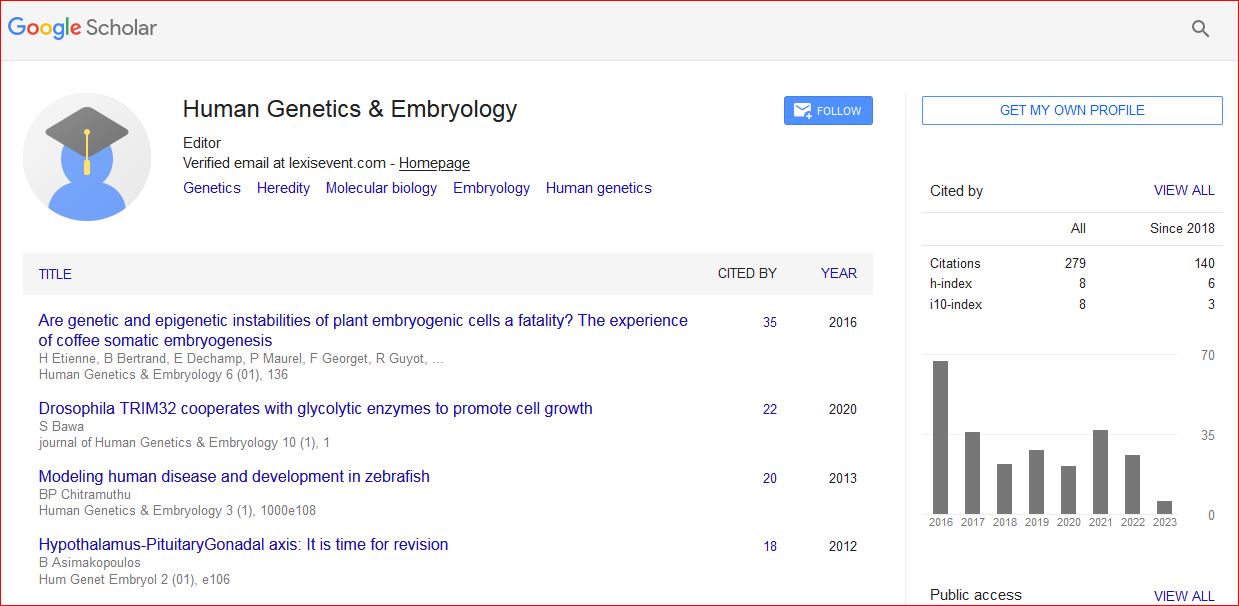
Human Genetics & Embryology received 309 citations as per Google Scholar report