Short Communication - (2025) Volume 10, Issue 3
Received: 01-May-2025, Manuscript No. apn-26-179120;
Editor assigned: 04-May-2025, Pre QC No. P-179120;
Reviewed: 14-May-2025, QC No. Q-179120;
Revised: 21-May-2025, Manuscript No. R-179120;
Published:
28-May-2025
, DOI: 10.37421/2573-0347.2025.10.435
Citation: Petrova, Elena. âTrauma-Informed Nursing: Healing, Recovery, and Resilience.â J Adv Practice Nurs 10 (2025):435.
Copyright: © 2025 Petrova E. This is an open-access article distributed under the terms of the Creative Commons Attribution License, which permits unrestricted use,
distribution and reproduction in any medium, provided the original author and source are credited.
Trauma-informed care (TIC) is paramount in contemporary nursing practice, acknowledging the pervasive influence of trauma and identifying pathways toward recovery. Nurses are instrumental in cultivating environments that foster psychological and physical healing by emphasizing safety, trustworthiness, choice, collaboration, and empowerment. This paradigm shift reorients the focus from identifying deficits to understanding lived experiences, guiding interventions and interactions to prevent re-traumatization and bolster resilience [1].
Nurses who actively implement trauma-informed care can profoundly enhance patient outcomes by integrating core principles of safety and trust. This involves establishing predictable environments, offering patients agency through choices in their care, and championing their autonomy. A deep understanding of the neurobiology of trauma enables nurses to more effectively manage behaviors that may arise from traumatic experiences, thereby fostering stronger therapeutic relationships and facilitating a more robust recovery journey [2].
The physical recovery from trauma is inextricably linked to an individual's psychological well-being. Nurses, positioned at the forefront of patient care, can address this complex interplay by recognizing the diverse ways trauma can manifest physically, such as chronic pain or somatic symptoms. The application of trauma-informed approaches during physical assessments and treatment planning can significantly improve patient engagement and adherence to rehabilitation protocols, ultimately supporting a more holistic healing process [3].
Furthermore, the nursing workforce itself is susceptible to vicarious trauma, stemming from the emotional toll of caring for individuals who have endured traumatic experiences. Implementing trauma-informed care necessitates robust support systems for nurses, including comprehensive education, structured debriefing sessions, and the cultivation of a supportive work environment. This emphasis on self-awareness and self-care is critical for maintaining the effectiveness of patient care and preventing occupational burnout [4].
Integrating trauma-informed principles into nursing education is a fundamental step in preparing future generations of nurses to provide compassionate and effective care. Educational curricula must comprehensively address the prevalence of trauma, its multifaceted impact on health, and the practical, hands-on application of TIC. This proactive educational strategy ensures that nurses enter practice equipped with the essential knowledge and skills to support patient recovery from the very beginning of their careers [5].
Nurses bear a crucial responsibility in establishing safe spaces within healthcare settings, a fundamental tenet of trauma-informed care. This entails fostering an atmosphere where patients feel genuinely respected, profoundly understood, and entirely free from judgmental attitudes. Through the consistent enactment of safety, trustworthiness, and empowerment, nurses actively work to mitigate the risk of re-traumatization and nurture a sense of security that is indispensable for healing [6].
The principles of choice and collaboration are central to the empowerment of patients within the framework of trauma-informed care, enabling them to actively participate in their own treatment plans. Nurses can facilitate this by offering meaningful options in care, involving patients in critical decision-making processes, and consistently respecting their autonomy. This collaborative ethos cultivates a vital sense of control, significantly enhancing patient engagement in both psychological and physical recovery endeavors [7].
A thorough comprehension of the biological and psychological sequelae of trauma is indispensable for nurses. This knowledge empowers them to interpret patient behaviors through a trauma-informed lens, moving beyond superficial symptom descriptions to discern the underlying causes. By understanding how trauma impacts the nervous system and overall physiological health, nurses can more effectively tailor their interventions to promote neurobiological regulation and foster resilience [8].
Trauma-informed care necessitates a fundamental evolution in the nurse-patient relationship, placing a premium on empathy, the absence of judgment, and dedicated advocacy. Nurses function as essential partners throughout the recovery journey, validating patients' experiences and actively cultivating hope. This therapeutic alliance is meticulously constructed upon a foundation of mutual respect and profound understanding, which is critically important for patients navigating the intricate complexities of trauma-related physical and psychological challenges [9].
The practical implementation of trauma-informed care across a spectrum of nursing specialties, from critical care units to community health settings, represents a rapidly evolving area of professional focus. Nurses face the ongoing challenge of adapting TIC principles to diverse patient populations and varied clinical scenarios, ensuring that care is consistently sensitive to the unique needs and histories of individuals affected by trauma. This capacity for adaptability is integral to achieving positive outcomes in both psychological and physical recovery [10].
Trauma-informed care (TIC) fundamentally reshapes nursing practice by acknowledging the widespread impact of trauma and guiding approaches toward recovery. Nurses are central figures in creating environments that promote both psychological and physical healing, prioritizing core tenets such as safety, trustworthiness, choice, collaboration, and empowerment. This approach marks a significant shift from asking 'what's wrong with you?' to 'what happened to you?', thereby informing interventions and interactions to prevent re-traumatization and support the development of resilience [1].
When nurses actively implement trauma-informed care, they can significantly influence positive patient outcomes by embedding principles of safety and trust into their practice. This includes meticulously creating predictable environments, offering patients genuine choices in their care, and actively promoting their autonomy. By possessing a nuanced understanding of the neurobiology of trauma, nurses are better equipped to manage behaviors that may be rooted in traumatic experiences, thereby facilitating a more effective therapeutic relationship and supporting a successful recovery journey [2].
The physical recovery process following trauma is deeply intertwined with an individual's psychological state. Nurses, serving as frontline caregivers, play a vital role in addressing this connection by recognizing how trauma can manifest physically, often through symptoms like chronic pain or somatic complaints. The adoption of trauma-informed approaches during physical assessments and treatment planning can lead to improved patient engagement and greater adherence to rehabilitation plans, ultimately contributing to more comprehensive healing [3].
Beyond direct patient care, the nursing workforce itself can experience vicarious trauma as a consequence of caring for individuals with traumatic experiences. The implementation of trauma-informed care must therefore extend to supporting nurses through dedicated education, structured debriefing processes, and the fostering of a supportive professional environment. This commitment to self-awareness and self-care among nurses is indispensable for maintaining the quality of patient care and mitigating the risk of burnout [4].
Embedding trauma-informed principles within nursing education is essential for equipping future nurses with the necessary competencies to deliver compassionate and effective care. Curricula should comprehensively address the prevalence of trauma, its broad impact on health, and the practical application of TIC. This forward-thinking educational strategy ensures that nurses are well-prepared with the knowledge and skills to support patient recovery from the outset of their professional careers [5].
Nurses are instrumental in establishing safe environments within healthcare settings, which serves as a foundational element of trauma-informed care. This involves cultivating an atmosphere where patients feel respected, understood, and free from any form of judgment. By consistently demonstrating safety, trustworthiness, and empowerment, nurses actively work to minimize the potential for re-traumatization and foster a crucial sense of security essential for the healing process [6].
The core principles of choice and collaboration within trauma-informed care are designed to empower patients, enabling them to become active participants in their treatment plans. Nurses facilitate this by offering meaningful choices in care decisions, involving patients in the decision-making process, and consistently respecting their autonomy. This collaborative approach nurtures a sense of control for the patient, which can significantly enhance their engagement in both psychological and physical recovery [7].
For nurses, understanding the neurobiological and psychological consequences of trauma is a critical component of effective care. This knowledge allows for a more insightful interpretation of patient behaviors through a trauma-informed lens, moving beyond mere symptom identification to grasp underlying causes. By recognizing how trauma affects the nervous system and overall health, nurses can more precisely tailor interventions to promote neurobiological regulation and facilitate resilience [8].
Trauma-informed care necessitates a transformation in the nurse-patient relationship, emphasizing empathy, the absence of judgment, and diligent advocacy. Nurses act as true partners in the patient's recovery, validating their experiences and fostering a sense of hope. This crucial therapeutic alliance is built upon mutual respect and understanding, which is paramount for individuals navigating the complex journey of trauma-related physical and psychological challenges [9].
The practical integration of trauma-informed care principles across diverse nursing settings, including critical care and community health, is a subject of increasing attention. Nurses face the inherent challenge of adapting TIC principles to various patient populations and clinical contexts, ensuring that care is sensitive to the unique histories and needs of individuals impacted by trauma. This adaptability is vital for achieving positive outcomes in both psychological and physical recovery [10].
Trauma-informed care (TIC) is essential in nursing, shifting focus from symptoms to the impact of trauma. Nurses implement TIC by prioritizing safety, trust, choice, collaboration, and empowerment, which aids in patient recovery and prevents re-traumatization. Understanding the neurobiology of trauma helps nurses manage behaviors and build therapeutic relationships. Physical recovery is linked to psychological well-being, and nurses can address somatic symptoms through trauma-informed assessments. The nursing workforce also requires support to prevent vicarious trauma. Integrating TIC into education prepares future nurses, while creating safe environments is crucial. Empowering patients through choice and collaboration enhances engagement. Building strong, empathetic nurse-patient relationships is key. Adapting TIC across various nursing specialties is vital for effective care and positive patient outcomes.
None
None
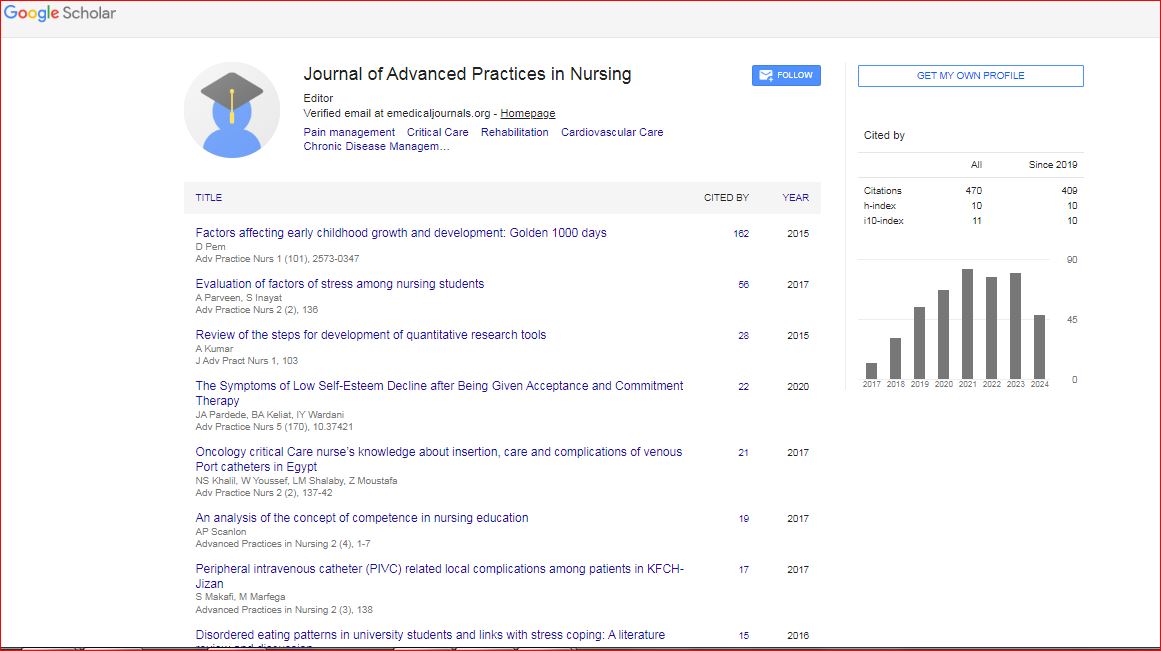
Journal of Advanced Practices in Nursing received 410 citations as per Google Scholar report