Short Communication - (2025) Volume 14, Issue 6
Received: 03-Nov-2025, Manuscript No. jtm-26-186044;
Editor assigned: 05-Nov-2025, Pre QC No. P-186044;
Reviewed: 19-Nov-2025, QC No. Q-186044;
Revised: 24-Nov-2025, Manuscript No. R-186044;
Published:
29-Nov-2025
, DOI: 10.37421/2167-1222.2025.14.716
Citation: Hernandez, Claudia. ”Trauma-Induced Acute Kidney Injury: Causes, Diagnosis, and Management.” J Trauma Treat 14 (2025):716.
Copyright: © 2025 Hernandez C. This is an open-access article distributed under the terms of the Creative Commons Attribution License, which permits unrestricted use, distribution and reproduction in any medium, provided the original author and source are credited.
Severe trauma represents a significant risk factor for the development of acute kidney injury (AKI), a condition characterized by a sudden and often precipitous decline in renal function. This impairment manifests as an inability to effectively maintain fluid and electrolyte homeostasis and to efficiently excrete metabolic waste products, posing a critical threat to patient survival and recovery. The underlying pathophysiology is a complex interplay of various detrimental mechanisms, including hypoperfusion of the renal vasculature, a robust inflammatory cascade, and direct cellular damage within the kidney parenchyma. These insults are frequently compounded by the systemic inflammatory response syndrome (SIRS) that is commonly observed in patients experiencing severe trauma, further exacerbating renal vulnerability. Early recognition of AKI in trauma patients is paramount, as timely and appropriate management strategies can significantly improve patient outcomes and reduce overall mortality rates, making it a crucial focus in trauma critical care [1].
The diagnosis of AKI within the dynamic and often chaotic environment of trauma care presents considerable challenges. The presence of multiple confounding factors, such as hemorrhage, sepsis, and the administration of various medications, can obscure the signs of renal dysfunction, and the patient's condition can change rapidly, making serial assessment vital. While serum creatinine has long been a standard biomarker for assessing kidney function, its rise is often a lagging indicator, meaning it may not reflect the actual insult to the kidney until significant damage has already occurred. Emerging biomarkers such as neutrophil gelatinase-associated lipocalin (NGAL) and kidney injury molecule-1 (KIM-1) are demonstrating promise for earlier and more sensitive detection of renal injury, although their widespread adoption into routine clinical practice is still under development and requires further validation in diverse trauma populations. Furthermore, the frequent co-occurrence of rhabdomyolysis in severe trauma, resulting from extensive muscle damage, can complicate the interpretation of creatinine levels, necessitating a multifactorial approach to diagnosis [2].
Management strategies for AKI in the context of severe trauma are primarily focused on addressing the root causes of renal dysfunction, optimizing hemodynamic stability, and providing comprehensive supportive care to the patient. Resuscitation with adequate volumes of intravenous fluids and prompt administration of blood products are cornerstones of treatment, essential for restoring adequate renal perfusion and mitigating ischemic injury. Judicious avoidance of nephrotoxic agents, careful monitoring and management of electrolyte imbalances, and provision of appropriate nutritional support are also critical components of comprehensive AKI management. In cases where patients develop severe fluid overload, refractory electrolyte disturbances, or life-threatening uremic complications, renal replacement therapy may become necessary to support vital organ function and prevent further deterioration [3].
The role of non-invasive imaging modalities, particularly renal ultrasound, in the assessment of AKI in trauma patients is gaining increasing recognition and utility. While ultrasound cannot directly confirm the diagnosis of AKI, it is invaluable in the rapid exclusion of obstructive causes of acute kidney dysfunction, such as hydronephrosis, which can sometimes coexist with or be exacerbated by traumatic injuries. Additionally, renal ultrasound can provide supplementary information regarding kidney size and echogenicity, which may offer subtle clues about the chronicity of pre-existing kidney disease, although its reliability in differentiating acute from chronic changes in the setting of trauma is limited. The application of point-of-care ultrasound (POCUS) by clinicians in the emergency department setting is particularly advantageous for swift and efficient initial assessment of renal status in critically ill trauma patients [4].
The profound inflammatory cascade initiated by severe trauma plays a critically important role in the pathogenesis of AKI. Systemic inflammation, characterized by the widespread release of pro-inflammatory cytokines and other mediators, can directly inflict damage on renal tubular cells and impair the autoregulatory mechanisms of renal blood flow. This inflammatory assault can compromise the integrity of the renal microvasculature, leading to reduced oxygen delivery to the kidneys and exacerbating ischemic injury. A deeper understanding of these intricate inflammatory pathways holds the potential for the development of targeted therapeutic interventions specifically aimed at modulating the immune response, dampening excessive inflammation, and ultimately protecting the kidneys from further progressive injury [5].
Hypotension and the resulting hypoperfusion of vital organs are recognized as primary drivers of AKI in the immediate and critical aftermath of severe trauma. When the kidneys do not receive an adequate blood supply, it leads to ischemic injury, with the renal tubules being particularly vulnerable to damage due to their high metabolic demands. Consequently, aggressive and prompt resuscitation aimed at restoring and consistently maintaining adequate mean arterial pressure is considered a fundamental and indispensable element in both the prevention and effective management of AKI in these critically ill trauma patients, ensuring sufficient oxygenation and nutrient delivery to the renal tissues [6].
The utilization of iodinated contrast media for diagnostic imaging in trauma patients, particularly those with pre-existing or developing renal compromise, necessitates a cautious and judicious approach. If imaging requiring contrast administration is deemed clinically essential for patient management, it is imperative to implement strategies specifically designed to minimize the risk of contrast-induced nephropathy. These strategies may include ensuring adequate pre-hydration of the patient and seriously considering the use of alternative, non-nephrotoxic imaging modalities whenever feasible. A thorough risk-benefit analysis is absolutely crucial in these vulnerable patient populations to balance the diagnostic imperative with the potential for iatrogenic kidney injury [7].
Rhabdomyolysis, a pathological condition characterized by the breakdown of skeletal muscle tissue and the subsequent release of intracellular contents into the bloodstream, is a common complication following severe traumatic injuries. This condition can precipitate AKI through the massive release of myoglobin, a protein pigment found in muscle. Elevated levels of myoglobin can precipitate within the renal tubules, leading to obstruction of urine flow and direct cellular toxicity to the tubular epithelium. Therefore, aggressive fluid resuscitation to promote diuresis and alkalinization of the urine are considered essential therapeutic interventions in the management of rhabdomyolysis-induced AKI to preserve and protect remaining kidney function [8].
The systemic inflammatory response syndrome (SIRS) is a frequent clinical finding in patients who have sustained severe trauma and is recognized as a significant contributor to both the incidence and the severity of AKI. The widespread release of inflammatory mediators associated with SIRS can profoundly compromise the microcirculation within the kidneys, leading to reduced blood flow and oxygenation at the tissue level. Moreover, these inflammatory mediators can directly injure kidney cells, thereby exacerbating the renal dysfunction that may have already been initiated by factors such as hypoperfusion and other direct traumatic insults, creating a vicious cycle of injury [9].
The long-term renal prognosis for trauma survivors who have experienced AKI remains an important and active area of ongoing clinical investigation and research. Emerging evidence suggests that surviving an episode of AKI following trauma may be associated with an increased risk of developing chronic kidney disease (CKD) or experiencing subsequent episodes of AKI in the future. This highlights the critical need for continued close monitoring of renal function and the implementation of proactive renal care strategies for this specific patient population to mitigate the risk of long-term renal morbidity and improve their overall health trajectory [10].
Severe trauma poses a substantial risk for the development of acute kidney injury (AKI), a condition marked by a sudden deterioration in kidney function. This decline impairs the kidneys ability to maintain fluid and electrolyte balance and excrete metabolic wastes. The complex pathophysiology involves hypoperfusion, inflammation, and direct cellular injury, often exacerbated by the systemic inflammatory response syndrome (SIRS) common in trauma patients. Early recognition and prompt management are crucial for improving outcomes and reducing mortality rates, making AKI a significant concern in trauma care [1].
Diagnosing AKI in trauma settings is complex due to confounding factors and the dynamic nature of patient conditions. While serum creatinine is a common marker, its elevation often lags behind the actual kidney insult. Promising biomarkers like neutrophil gelatinase-associated lipocalin (NGAL) and kidney injury molecule-1 (KIM-1) offer potential for earlier detection, though their clinical adoption is evolving. Rhabdomyolysis, frequent in severe trauma, can also complicate creatinine interpretation, necessitating careful clinical correlation [2].
Management of AKI following severe trauma centers on addressing underlying causes, optimizing hemodynamics, and providing supportive care. Adequate fluid and blood product resuscitation is essential to restore renal perfusion. Judicious use of nephrotoxic agents, careful electrolyte management, and nutritional support are key components. Renal replacement therapy may be required for severe fluid overload, refractory electrolyte imbalances, or uremic complications [3].
The utility of renal ultrasound in assessing AKI in trauma patients is increasingly recognized. While it cannot directly diagnose AKI, it can rule out obstructive causes like hydronephrosis, which may coexist with trauma. It can also provide insights into kidney size and echogenicity, potentially suggesting chronicity, though this is less reliable acutely. Point-of-care ultrasound (POCUS) in the emergency department is valuable for rapid assessment of renal status [4].
The inflammatory cascade triggered by severe trauma plays a significant role in AKI development. Systemic inflammation, characterized by pro-inflammatory cytokine release, can directly damage renal tubular cells and impair renal blood flow. Understanding these inflammatory pathways could lead to targeted therapies aimed at modulating the immune response and protecting kidney function from further injury, representing a crucial link in trauma-induced renal dysfunction [5].
Hypotension and hypoperfusion are primary contributors to AKI in the acute phase of severe trauma. Insufficient blood flow to the kidneys results in ischemic injury, particularly affecting the renal tubules due to their high metabolic rate. Therefore, aggressive and timely resuscitation to restore and maintain adequate mean arterial pressure is a cornerstone of AKI prevention and management in these critically ill patients, safeguarding renal perfusion [6].
The use of contrast media in trauma patients with potential renal compromise requires careful consideration. If contrast-enhanced imaging is essential, strategies to minimize nephrotoxicity, such as adequate hydration and exploration of alternative imaging modalities, should be implemented. A thorough risk-benefit analysis is paramount in managing these vulnerable individuals to prevent iatrogenic kidney injury [7].
Rhabdomyolysis, a frequent consequence of severe muscle trauma, can lead to AKI via myoglobin release. Elevated myoglobin levels can precipitate in renal tubules, causing obstruction and direct cellular toxicity. Aggressive fluid resuscitation and urine alkalinization are crucial management steps to protect kidney function in rhabdomyolysis-induced AKI [8].
Systemic inflammatory response syndrome (SIRS) is commonly observed in severe trauma patients and significantly contributes to AKI risk and severity. Widespread inflammatory mediators can compromise renal microcirculation and directly injure kidney cells, exacerbating dysfunction initiated by hypoperfusion and other direct insults, highlighting the intricate relationship between SIRS and AKI in trauma [9].
Long-term renal outcomes for trauma survivors who experience AKI are an area of active investigation. Some studies indicate an elevated risk of developing chronic kidney disease (CKD) or recurrent AKI episodes. This underscores the importance of continued monitoring and proactive renal care for this patient cohort to mitigate long-term renal morbidity and improve their future health [10].
Severe trauma is a major risk factor for acute kidney injury (AKI), characterized by a sudden decline in kidney function affecting fluid balance, waste excretion, and overall renal health. The complex causes include hypoperfusion, inflammation, and direct cellular injury, often worsened by systemic inflammation. Diagnosis can be challenging due to confounding factors, with emerging biomarkers showing promise for earlier detection. Management focuses on addressing underlying causes, optimizing hemodynamics through resuscitation, and supportive care, while avoiding nephrotoxic agents. Renal ultrasound can help rule out obstructive causes. Inflammation is a key driver of AKI in trauma, and aggressive resuscitation is vital to prevent ischemic injury. The use of contrast media requires caution, and rhabdomyolysis is a common complication leading to AKI that needs aggressive management. SIRS significantly contributes to AKI severity. Long-term outcomes for trauma survivors with AKI may include an increased risk of chronic kidney disease, necessitating ongoing monitoring.
None
None
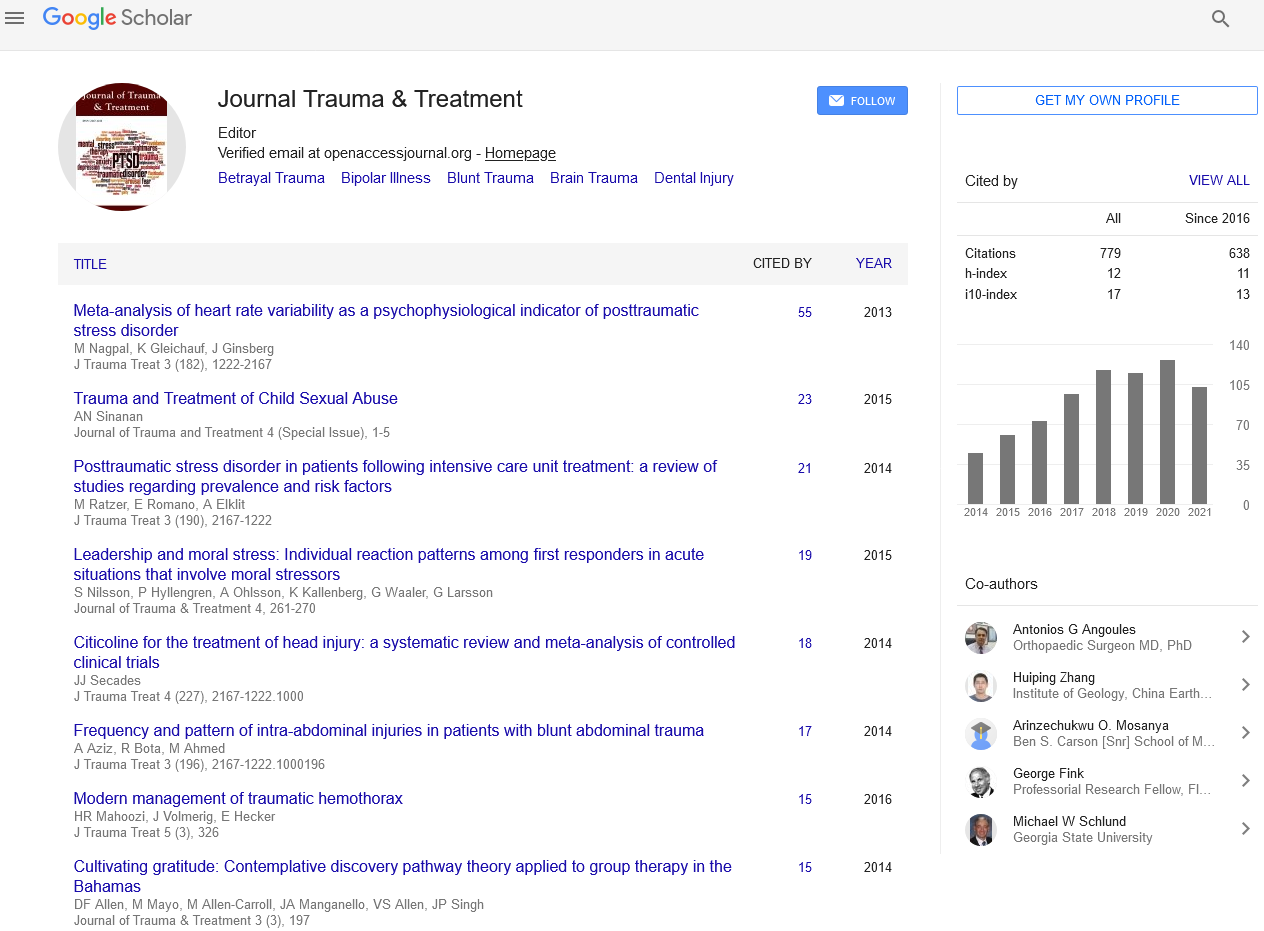
Journal of Trauma & Treatment received 1048 citations as per Google Scholar report