Perspective - (2025) Volume 9, Issue 6
Received: 13-Sep-2024, Manuscript No. JGGE-24-147944;
Editor assigned: 16-Sep-2024, Pre QC No. JGGE-24-147944 (PQ);
Reviewed: 01-Oct-2024, QC No. JGGE-24-147944;
Revised: 14-Dec-2025, Manuscript No. JGGE-24-147944 (R);
Published:
21-Dec-2025
, DOI: 10.37421/2684-4567.2025.9.206
Citation: Choi, Jung. "Translational Genomics: Bridging Basic Research and Clinical Applications." J Genet Genom 9 (2025): 206.
Copyright: © 2025 Choi J. This is an open-access article distributed under the terms of the creative commons attribution license which permits unrestricted
use, distribution and reproduction in any medium, provided the original author and source are credited.
In the rapidly evolving field of genomics, the bridge between basic research and clinical applications is more crucial than ever. Translational genomics represents this vital connection, translating groundbreaking discoveries from the laboratory into tangible medical advancements that directly benefit patients. By leveraging insights gained from genomic research, this field aims to transform our understanding of diseases and revolutionize approaches to diagnosis, treatment, and prevention. Basic genomic research provides the foundation for understanding the genetic underpinnings of health and disease, uncovering complex interactions between genes and environmental factors. However, the ultimate goal of this research is to apply these findings in a way that enhances clinical practice and patient care. Translational genomics facilitates this transition, ensuring that the wealth of knowledge generated in research settings is effectively integrated into clinical settings where it can have a meaningful impact.This introduction explores how translational genomics operates at the intersection of discovery and application. It highlights the processes through which genomic discoveries are validated and refined for clinical use, including the development of novel diagnostic tools, targeted therapies, and personalized medicine strategies. The discussion will also address the challenges involved in this translation process, such as data integration, regulatory considerations, and the need for multidisciplinary collaboration. By bridging the gap between basic research and clinical practice, translational genomics is driving forward a new era of medicine where genomic insights lead to more precise, effective, and personalized healthcare solutions. Join us as we delve into the transformative role of translational genomics in shaping the future of medical science and improving patient outcomes.
Translational genomics represents a crucial nexus between basic research and clinical applications, aiming to translate discoveries from the laboratory into practical medical solutions that improve patient care
This dynamic field focuses on bridging the gap between fundamental genomic research and its application in clinical settings, facilitating the development of innovative diagnostics, therapies, and personalized medicine strategies. At its core, translational genomics involves the application of genomic knowledge gained through studies of genetic variations, gene function, and molecular mechanisms to address real-world health challenges. By leveraging advances in high-throughput sequencing, bioinformatics, and functional genomics, researchers are able to identify genetic markers associated with diseases, understand their biological impact, and develop targeted interventions. Translational genomics is a pivotal field dedicated to bridging the gap between fundamental genomic research and its practical applications in clinical settings. This discipline focuses on translating the wealth of knowledge gained from genetic and genomic studies into tangible medical advancements that directly enhance patient care and treatment outcomes. At its core, translational genomics seeks to transform discoveries about the genetic basis of diseases into actionable clinical solutions. This involves applying insights from genome-wide studies, genetic variant analyses, and molecular research to develop new diagnostic tools, targeted therapies, and personalized medicine approaches. By doing so, translational genomics aims to make cutting-edge genetic discoveries accessible and relevant to everyday medical practice. This exploration delves into the processes and strategies involved in translational genomics, including the validation of genomic findings, the development of innovative treatments, and the integration of genomic data into clinical workflows. It also addresses the challenges faced in this field, such as ensuring data interoperability, navigating regulatory landscapes, and addressing ethical considerations. By highlighting key advancements and successful case studies, this discussion demonstrates how translational genomics is revolutionizing the approach to healthcare. From enhancing disease prevention and early detection to tailoring individualized treatment plans, translational genomics is at the forefront of creating a new era of precision medicine that promises to improve patient outcomes and transform the future of healthcare. This exploration delves into key areas where translational genomics is making a significant impact, including the development of precision medicine approaches tailored to individual genetic profiles, the creation of novel genetic tests for early disease detection, and the design of targeted therapies that address specific genetic abnormalities.
It also addresses the challenges and opportunities in translating genomic findings into clinical practice, such as integrating genomic data with electronic health records, ensuring equitable access to genomic technologies, and addressing ethical considerations. By highlighting successful case studies and ongoing initiatives, this discussion showcases how translational genomics is bridging the gap between research and clinical practice, ultimately enhancing our ability to diagnose, treat, and prevent a wide range of diseases. Discover how this evolving field is paving the way for a new era of personalized medicine and improved patient outcomes.
Translational genomics stands at the forefront of modern medicine, serving as the critical link that bridges the gap between foundational research and its practical applications in clinical settings. Through the integration of cutting-edge genomic discoveries with clinical practices, this field is paving the way for transformative advancements in patient care. The journey from bench to bedside is marked by the successful application of genomic insights into the development of precision medicine, targeted therapies, and innovative diagnostic tools. By harnessing the power of genomics, we are now able to tailor treatments to individual genetic profiles, improve disease detection, and design more effective, personalized interventions. Despite the remarkable progress, challenges remain in translating these advancements into routine clinical practice. Addressing issues such as data integration, ethical considerations, and ensuring equitable access to genomic technologies will be crucial for maximizing the benefits of translational genomics. Continued collaboration across research, clinical, and regulatory domains will be essential in overcoming these hurdles and ensuring that genomic innovations translate into real-world benefits.
As we move forward, the impact of translational genomics promises to reshape the landscape of healthcare, offering new opportunities for disease prevention, diagnosis, and treatment. By bridging basic research with clinical applications, translational genomics is not only advancing our understanding of human health but also driving the evolution of personalized medicine, ultimately leading to improved patient outcomes and a more effective healthcare system. In summary, translational genomics represents a powerful force in the quest to turn scientific discoveries into actionable medical solutions, heralding a new era of precision and personalized care that holds the promise of significant advancements in health and medicine.
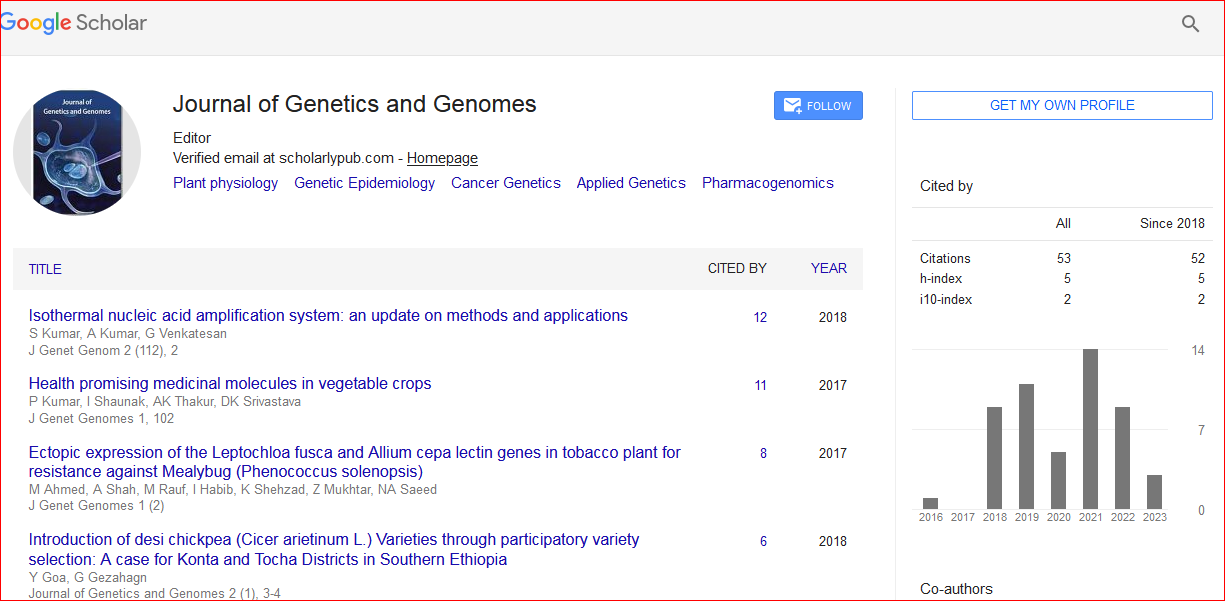
Journal of Genetics and Genomes received 65 citations as per Google Scholar report