Opinion - (2025) Volume 9, Issue 6
Received: 01-Dec-2025
Editor assigned: 03-Dec-2025
Reviewed: 17-Dec-2025
Revised: 22-Dec-2025
Published:
29-Dec-2025
, DOI: 10.37421/2684-4915.2025.9.407
Citation: Jie, Gao. ”Transforming Therapies: Advances Across Disease Areas.” Clin Med Case Rep 09 (2025):407.
Copyright: © 2025 Jie G. This is an open-access article distributed under the terms of the Creative Commons Attribution License, which permits unrestricted use, distribution and reproduction in any medium, provided the original author and source are credited.
The landscape of modern therapeutics sees rapid advancements, notably in RNA-based treatments. This article provides a comprehensive overview of the rapid advancements and growing market for RNA-based therapeutics [1].
This overview details messenger RNA vaccines, antisense oligonucleotides, and small interfering RNAs, showcasing their mechanisms, clinical uses, and profound influence on infectious diseases and genetic disorders. A significant area of focus is the evolving field of therapeutic antibodies in cancer treatment. This article explores the evolving field of therapeutic antibodies in cancer treatment [2].
This involves diverse strategies like antibody-drug conjugates and bispecific antibodies, whose actions, clinical successes, and developmental challenges for safer immunotherapies are actively explored for diverse cancer types. Pharmacological chaperones present a promising strategy for lysosomal storage disorders. This review delves into the potential of pharmacological chaperones as a therapeutic strategy for lysosomal storage disorders [3].
These small molecules aim to restore proper protein folding and trafficking for mutated enzymes, with successful clinical applications demonstrating their potential, though challenges remain in expanding their scope to treat a wider spectrum of these debilitating genetic conditions. Antibody-Drug Conjugates (ADCs) stand out as a potent therapeutic class in oncology. This article provides a comprehensive overview of antibody-drug conjugates (ADCs) as a potent therapeutic class in oncology [4].
Their design principles and varied clinical uses across different cancers highlight successes and ongoing efforts to enhance efficacy and manage toxicity for broader patient benefit. Protein engineering has a transformative impact on therapeutic innovation. This article highlights the transformative impact of protein engineering on therapeutic innovation, focusing on recent advances that enable the design of novel proteins with enhanced function and specificity [5].
It covers applications in developing improved antibodies, enzymes, and vaccine antigens, underscoring how these engineered proteins address previously intractable biological issues and drive next-generation therapies. The effective in vivo delivery of CRISPR/Cas9 components remains a critical hurdle for therapeutic applications. This review addresses the critical challenge of effectively delivering CRISPR/Cas9 components in vivo for therapeutic applications [6].
Various strategies, including viral vectors and non-viral nanoparticles, are under evaluation for their efficiency, specificity, and safety, underscoring the significant challenges ahead for gene editing therapies. Targeting aberrant glycosylation patterns in cancer cells offers another therapeutic avenue. This article explores the therapeutic potential of targeting aberrant glycosylation patterns found in cancer cells [7].
Altered glycans contribute to tumor progression and immune evasion, making them targets for small molecule inhibitors and antibodies, which could lead to new cancer treatments. Mesenchymal Stem Cells (MSCs) show promising therapeutic applications in autoimmune diseases. This review discusses the promising therapeutic applications of mesenchymal stem cells (MSCs) in managing autoimmune diseases [8].
Their immunomodulatory properties, including the ability to suppress inflammation and promote tissue repair, are being investigated in clinical trials to establish MSCs as a safe and effective treatment strategy. In Alzheimer's disease, targeting neuroinflammation holds therapeutic potential. This article examines the therapeutic potential of targeting neuroinflammation in Alzheimer's disease [9].
Anti-inflammatory strategies, like modulating microglia and astrocytes, are being explored, with ongoing efforts to develop drugs that effectively reduce neuroinflammation to slow or halt disease progression in AD patients. Finally, Advanced Therapy Medicinal Products (ATMPs), encompassing gene, cell, and tissue-engineered therapies, face a unique regulatory landscape. This article discusses the unique regulatory landscape and challenges associated with Advanced Therapy Medicinal Products (ATMPs), which include gene, cell, and tissue-engineered therapies [10].
The complexities of translating these innovative treatments from research to clinical use require tailored regulatory frameworks to ensure safety, quality, and efficacy for patient benefit.
The realm of modern therapeutic advancements is profoundly shaped by innovative genetic and RNA-based approaches, heralding a new era in disease management. A significant component involves RNA-based therapeutics, which encompasses messenger RNA vaccines, antisense oligonucleotides, and small interfering RNAs. These diverse modalities are proving instrumental in disease treatment, particularly for infectious diseases and genetic disorders, by detailing their mechanisms, clinical applications, and significant overall impact [1]. Another critical area involves the ongoing challenge of effectively delivering CRISPR/Cas9 components in vivo for therapeutic applications. Researchers are actively evaluating various delivery strategies, including advanced viral vectors and non-viral nanoparticles, meticulously assessing their advantages and limitations in terms of efficiency, specificity, and crucial safety profiles to overcome hurdles and fully realize the immense potential of gene editing therapies [6]. Pharmacological chaperones also represent a vital and promising therapeutic strategy for individuals suffering from lysosomal storage disorders. These small molecules play a crucial role by restoring proper protein folding and cellular trafficking for mutated enzymes, highlighting successful clinical applications and continuous efforts to develop new chaperones that can treat a wider spectrum of these debilitating genetic conditions [3].
In the dynamic field of oncology, therapeutic antibodies are evolving at an accelerated pace, continually offering novel and increasingly effective avenues for cancer treatment. This expansive field encompasses sophisticated strategies such as antibody-drug conjugates (ADCs) and highly specialized bispecific antibodies. These agents are rigorously evaluated for their intricate mechanisms of action, noteworthy clinical successes, and the persistent challenges encountered in developing even safer and more effective immunotherapies for diverse cancer types [2]. ADCs, in particular, have emerged as a remarkably potent therapeutic class within oncology. Detailed investigations into their design principles and their diverse clinical applications across a broad range of cancers reveal both remarkable successes and ongoing challenges. These efforts focus on optimizing their efficacy and meticulously managing their toxicity profiles to expand patient benefit significantly [4]. Extending beyond traditional antibody frameworks, protein engineering is making a transformative impact on therapeutic innovation, enabling the precise design of novel proteins characterized by enhanced function and specificity. This work leads to the development of improved antibodies, more efficient enzymes, and potent vaccine antigens, crucial for addressing previously intractable biological challenges and driving next-generation therapies [5].
The exploration of novel biological targets continues to yield exciting therapeutic opportunities across various disease states. For instance, targeting aberrant glycosylation patterns frequently found in cancer cells presents a promising and innovative pathway for intervention. Research indicates that altered glycans significantly contribute to tumor progression and immune evasion, making them viable targets for novel small molecule inhibitors and specialized antibodies designed to modulate these critical biological processes. This approach offers entirely new avenues for cancer treatment [7]. Furthermore, the therapeutic potential of mesenchymal stem cells (MSCs) in managing autoimmune diseases is garnering considerable attention. Extensive research explores their potent immunomodulatory properties, including their remarkable ability to suppress inflammation and actively promote tissue repair. These characteristics are central to numerous ongoing clinical trials, all aiming to firmly establish MSCs as a safe, highly effective, and widely applicable treatment strategy for autoimmune conditions [8].
Neuroinflammation is progressively being recognized as a critical therapeutic target in neurodegenerative conditions, most notably in Alzheimer's disease. Investigations are actively exploring various anti-inflammatory strategies, including the precise modulation of microglia and astrocytes. The focus here is on developing new pharmacological agents that can effectively reduce neuroinflammation, thereby aiming to slow or even halt the progression of Alzheimerâ??s disease in affected patients [9].
Finally, the entire landscape of advanced therapies, which includes ground-breaking gene, cell, and tissue-engineered productsâ??collectively termed Advanced Therapy Medicinal Products (ATMPs)â??is navigating a uniquely complex regulatory environment. The inherent complexities involved in successfully translating these innovative treatments from rigorous research phases to widespread clinical application necessitate the urgent development of tailored regulatory frameworks. Such frameworks are essential to meticulously ensure their safety, uphold their quality, and guarantee their efficacy, ultimately maximizing patient benefit [10].
Recent advancements are rapidly transforming therapeutic approaches across various disease areas. We see significant progress in RNA-based therapeutics, encompassing messenger RNA vaccines, antisense oligonucleotides, and small interfering RNAs, which are proving crucial for infectious diseases and genetic disorders. Concurrently, therapeutic antibodies in cancer treatment are evolving, with strategies like antibody-drug conjugates (ADCs) and bispecific antibodies demonstrating clinical success despite challenges in optimizing efficacy and managing toxicity. ADCs, specifically, are a potent class with diverse oncology applications. Protein engineering is making a transformative impact, enabling the design of novel proteins for improved antibodies, enzymes, and vaccine antigens that address complex biological challenges. Gene editing, particularly CRISPR/Cas9, faces critical delivery hurdles in vivo, with ongoing efforts to enhance efficiency, specificity, and safety through viral and non-viral methods. Targeting aberrant glycosylation patterns in cancer cells offers a new avenue, as altered glycans contribute to tumor progression. Mesenchymal Stem Cells (MSCs) show promise in autoimmune diseases due to their immunomodulatory properties, driving clinical trials for safe and effective treatments. Neuroinflammation, especially in Alzheimer's disease, is a key therapeutic target, with strategies to modulate microglia and astrocytes aimed at slowing disease progression. Finally, Advanced Therapy Medicinal Products (ATMPs), including gene, cell, and tissue-engineered therapies, navigate a complex regulatory landscape requiring tailored frameworks to ensure safety, quality, and efficacy for clinical translation.
None
None
Indexed at, Google Scholar, Crossref
Indexed at, Google Scholar, Crossref
Indexed at, Google Scholar, Crossref
Indexed at, Google Scholar, Crossref
Indexed at, Google Scholar, Crossref
Indexed at, Google Scholar, Crossref
Indexed at, Google Scholar, Crossref
Indexed at, Google Scholar, Crossref
Indexed at, Google Scholar, Crossref
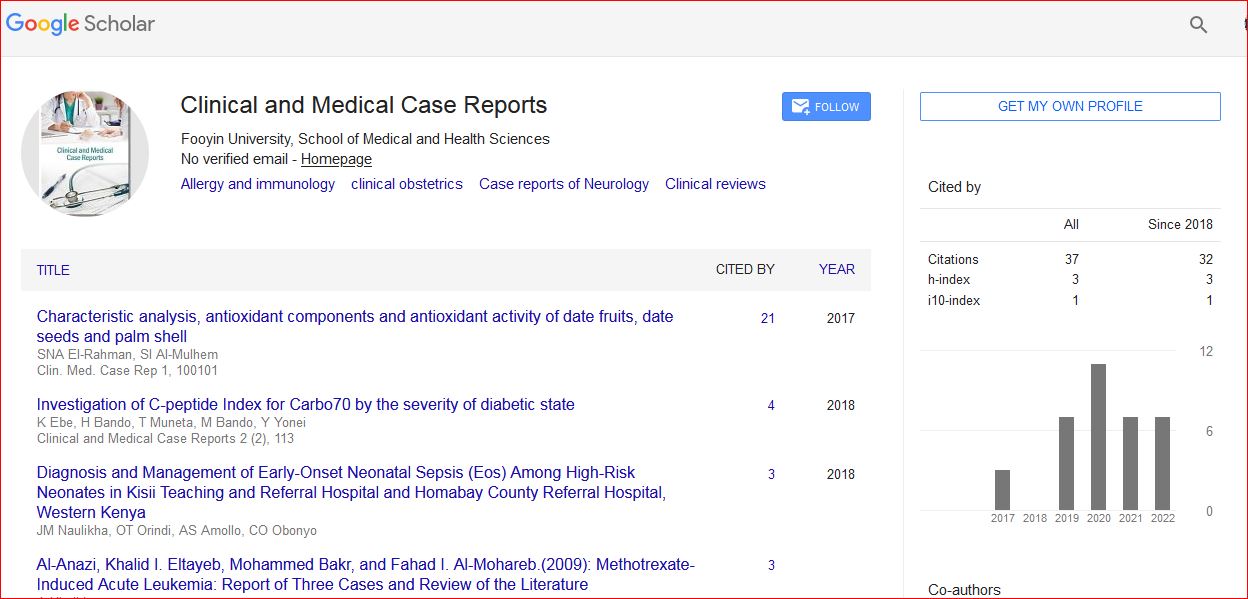
Clinical and Medical Case Reports received 53 citations as per Google Scholar report