Brief Report - (2025) Volume 10, Issue 3
Received: 01-May-2025, Manuscript No. apn-26-179074;
Editor assigned: 04-May-2025, Pre QC No. P-179074;
Reviewed: 14-May-2025, QC No. Q-179074;
Revised: 21-May-2025, Manuscript No. R-179074;
Published:
28-May-2025
, DOI: 10.37421/2573-0347.2025.10.427
Citation: Rowen, Amelia. âTranscultural Nursing: Competent Care, Better Outcomes.â J Adv Practice Nurs 10 (2025):427.
Copyright: © 2025 Rowen A. This is an open-access article distributed under the terms of the Creative Commons Attribution License, which permits unrestricted use,
distribution and reproduction in any medium, provided the original author and source are credited.
Transcultural nursing is a vital field dedicated to providing culturally competent care to diverse patient populations. This approach recognizes that cultural beliefs, values, and practices significantly influence health outcomes and patient experiences. Understanding these nuances is essential for nurses to deliver effective and respectful care across various cultural backgrounds. The foundational principles of transcultural nursing emphasize the importance of self-awareness, cultural humility, and effective communication in bridging cultural divides. By integrating these elements, healthcare professionals can foster trust and build stronger therapeutic relationships, ultimately leading to improved health equity. The literature extensively explores strategies for enhancing culturally competent care, highlighting the need for ongoing education and adaptation within the nursing profession to meet the demands of an increasingly diverse society. Nurses are challenged to move beyond superficial understanding to a deeper appreciation of the lived experiences of their patients, ensuring that care is not only medically sound but also culturally congruent.
This commitment extends to addressing systemic issues that contribute to health disparities and advocating for patient-centered approaches that honor individual and community cultural identities. The ongoing evolution of transcultural nursing reflects a growing recognition of its critical role in achieving global health goals and promoting well-being for all individuals, regardless of their cultural origin. Therefore, a comprehensive understanding of transcultural nursing principles is paramount for contemporary nursing practice. [1] The impact of cultural humility on nurse-patient interactions within multicultural healthcare settings is a significant area of focus. Cultural humility, defined as a lifelong commitment to self-evaluation and critique, offers a more effective paradigm than merely aiming for cultural competence. This approach empowers nurses to acknowledge and address power imbalances inherent in healthcare encounters, fostering genuine therapeutic alliances with patients from diverse backgrounds. The adoption of cultural humility leads to more equitable and effective care delivery by prioritizing the patient's perspective and lived experiences. It encourages a continuous learning process, where nurses remain open to understanding the complexities of different cultures without making assumptions. This relational approach to care cultivates a deeper level of trust and respect, which are fundamental for successful health interventions. By embracing cultural humility, nurses can create a more inclusive and supportive healthcare environment for all patients, regardless of their cultural heritage.
This perspective is crucial for dismantling barriers to care and promoting health equity across diverse communities. [2] Effective communication strategies are indispensable when nurses engage with patients from different cultural backgrounds. Verbal and non-verbal communication techniques play a critical role in promoting understanding, respect, and trust between nurses and patients. Key strategies include the judicious use of interpreters, the avoidance of complex medical jargon, the practice of active listening, and a keen awareness of non-verbal cues. Tailored communication approaches are essential for overcoming language barriers and mitigating cultural misunderstandings, thereby enhancing patient safety and satisfaction. Nurses must be adept at adapting their communication style to suit the linguistic and cultural needs of each patient, ensuring that information is conveyed clearly and empathetically. This proactive approach to communication not only improves patient adherence to treatment plans but also fosters a sense of dignity and empowerment. The ability to communicate effectively across cultural divides is a cornerstone of compassionate and high-quality nursing care. [3] Nurses often face unique challenges when providing care to specific populations, such as refugees. These challenges can include significant language barriers, the necessity for trauma-informed care approaches, and a need to understand diverse health beliefs and practices. The research underscores the critical requirement for specialized training in transcultural nursing to equip nurses with the skills necessary to address the complex needs of refugee populations. Such training promotes their integration into existing healthcare systems and contributes to their overall well-being. Addressing the specific vulnerabilities and cultural nuances of refugees is essential for providing compassionate and effective care. This involves recognizing the impact of their experiences and tailoring interventions to meet their unique needs, fostering a sense of safety and trust. Specialized training helps nurses navigate these complexities, ensuring that care is both sensitive and responsive. [4] The integration of transcultural concepts into nursing education is crucial for developing cultural competence.
A robust curriculum framework should incorporate these concepts throughout nursing programs, from undergraduate to postgraduate levels. Experiential learning, case studies, and simulation exercises are valuable tools for helping students develop critical thinking skills related to cultural diversity. The ultimate goal is to produce culturally competent nurses who are prepared to provide ethical and effective care in increasingly diverse healthcare environments. This educational imperative ensures that future generations of nurses are equipped with the knowledge and skills to navigate the complexities of cultural differences. By embedding transcultural education into the core curriculum, nursing programs can foster a generation of practitioners who are sensitive, responsive, and capable of delivering equitable care to all. This proactive approach to education is vital for advancing health equity. [5] Implicit bias can significantly impact healthcare disparities experienced by minority populations. Unconscious biases held by healthcare providers can subtly influence clinical decision-making and patient interactions, potentially leading to inequitable care. Strategies for identifying and mitigating implicit bias are essential, including mindfulness training and the implementation of structured communication protocols. These measures promote culturally sensitive and fair treatment for all patients, regardless of their background. Recognizing and actively working to overcome implicit biases is a crucial step towards achieving health equity. Such efforts help ensure that all patients receive the same high standard of care, free from the influence of unconscious prejudice. By fostering a culture of awareness and accountability, healthcare institutions can work towards eliminating these disparities. [6] The influence of family and community on health beliefs and practices within diverse patient populations is profound. Understanding the cultural context of a patient's support system is crucial for developing effective care plans. Engaging families and community members in healthcare discussions can significantly enhance patient adherence to treatment and improve overall health outcomes, particularly for individuals from collectivistic cultures. Recognizing the interconnectedness of individuals within their social structures is vital for holistic patient care. By involving these support networks, healthcare providers can gain valuable insights and foster a collaborative approach to health management.
This integration acknowledges the social determinants of health and promotes a more comprehensive understanding of patient needs. It ensures that care is not only individualized but also culturally embedded. [7] Ethical considerations are paramount in transcultural nursing practice. Respecting patient autonomy, cultural values, and religious beliefs is fundamental when making healthcare decisions. Navigating potential conflicts between Western medical practices and traditional healing methods requires careful consideration and open dialogue. Ethical frameworks must be developed and applied to promote culturally sensitive and patient-centered care. This ensures that the ethical principles of beneficence, non-maleficence, autonomy, and justice are upheld within diverse cultural contexts. Ethical practice in transcultural nursing demands a delicate balance between respecting cultural traditions and ensuring patient safety and well-being. It requires nurses to be culturally aware and ethically astute, capable of making informed decisions that honor patient values. [8] Leininger's Sunrise Model offers a valuable framework for enhancing culturally congruent care in contemporary transcultural nursing practice. This model emphasizes understanding cultural care phenomena through dimensions such as cultural values, beliefs, and social structures, thereby guiding nurses in providing beneficial care. Practical examples from diverse clinical settings demonstrate the model's continued relevance and effectiveness in contemporary healthcare. The Sunrise Model provides a comprehensive approach to analyzing and understanding the complex factors that influence cultural care. Its application helps nurses move beyond generic care to personalized interventions that resonate with patients' cultural backgrounds. By utilizing this model, nurses can achieve greater cultural congruence, leading to improved patient outcomes and satisfaction. This theoretical foundation supports practical application in diverse patient populations. [9] The evolving landscape of transcultural nursing, shaped by globalization and increasing migration, necessitates continuous learning and adaptation for nurses. An imperative exists for nurses to effectively serve an ever-more diverse patient population.
This calls for a renewed commitment to cultural competence, advocating for policy changes and educational reforms to support nurses in this critical area of practice. The challenges posed by globalization require a dynamic and responsive approach to transcultural nursing. Nurses must remain at the forefront of understanding and addressing the complexities of cultural diversity in healthcare. This ongoing evolution demands a dedication to lifelong learning and a proactive stance in advocating for systemic changes that support culturally competent care delivery. The future of transcultural nursing is inextricably linked to its ability to adapt and innovate in response to global trends. [10]
Transcultural nursing plays a pivotal role in delivering culturally competent care across diverse populations, acknowledging that cultural beliefs, values, and practices are integral to health outcomes. Key strategies employed in this field include fostering self-awareness of personal biases, cultivating cultural humility, mastering effective communication techniques, and integrating cultural assessments into daily practice. The fundamental tenet is that understanding and respecting patients' cultural backgrounds are paramount for improving health outcomes and reducing existing health disparities. Practical examples illustrate how nurses can skillfully navigate cultural differences to establish trust and provide patient-centered care, thereby ensuring that healthcare interventions are both effective and respectful. This approach recognizes the unique needs and perspectives of each individual and community. [1] Cultural humility is explored as a crucial element in enhancing nurse-patient interactions within multicultural healthcare environments. This perspective posits that a sustained commitment to self-evaluation and critique, characteristic of cultural humility, is more impactful than simply striving for cultural competence. Findings suggest that nurses who embody cultural humility are better equipped to manage power imbalances and cultivate authentic therapeutic relationships with patients from diverse backgrounds.
This leads to the delivery of more equitable and effective care, as it prioritizes the patient's voice and experiences. The practice of cultural humility fosters an environment of mutual respect and understanding. It encourages nurses to approach each patient with an open mind and a willingness to learn, recognizing that their own cultural lens is not the only valid one. This approach is essential for building trust and ensuring that all patients feel valued and understood. [2] Effective communication strategies are essential for nurses working with culturally diverse patients, promoting understanding, respect, and trust. This systematic review identifies specific verbal and non-verbal communication techniques that facilitate positive nurse-patient interactions. Key recommendations include the consistent use of professional interpreters when language barriers exist, the deliberate avoidance of medical jargon, the diligent practice of active listening, and a heightened awareness of non-verbal cues. The authors conclude that tailored communication approaches are indispensable for overcoming language barriers and cultural misunderstandings, ultimately contributing to improved patient safety and overall satisfaction. Clear and empathetic communication is a cornerstone of safe and effective healthcare. [3] Nurses caring for refugee populations encounter specific challenges, including significant language barriers and the critical need for trauma-informed care, alongside understanding diverse health beliefs. This qualitative study underscores the necessity for specialized transcultural nursing training to equip nurses with the skills to effectively address the complex needs of refugees. Such training is vital for promoting their integration into healthcare systems and enhancing their overall well-being. The unique experiences of refugees require a specialized approach that acknowledges their past traumas and cultural backgrounds. Equipping nurses with these skills ensures that they can provide care that is not only medically sound but also culturally sensitive and supportive.
This is crucial for building trust and fostering a sense of safety within the healthcare setting. [4] Nursing education must prioritize the integration of transcultural concepts to effectively cultivate cultural competence among future practitioners. A proposed curriculum framework suggests embedding transcultural principles throughout nursing programs, from undergraduate to postgraduate levels. The use of experiential learning, case studies, and simulation exercises is advocated to foster critical thinking skills related to cultural diversity. The ultimate objective is to produce nurses who are culturally competent and capable of delivering ethical and effective care in increasingly diverse healthcare settings. This educational imperative ensures that nurses are prepared to meet the needs of a globalized world. [5] Implicit bias within healthcare settings can exacerbate health disparities experienced by minority populations. Unconscious biases held by healthcare providers can significantly influence clinical decision-making and patient interactions, leading to inequitable care. The study proposes strategies for identifying and mitigating implicit bias, such as mindfulness training and structured communication protocols, to ensure culturally sensitive and fair treatment for all patients. Addressing implicit bias is crucial for dismantling systemic barriers to equitable healthcare. [6] The influence of family and community networks on the health beliefs and practices of diverse patient populations is a critical consideration. Understanding the cultural context of a patient's support system is essential for developing effective and culturally relevant care plans. The research suggests that actively engaging families and community members in healthcare discussions can enhance patient adherence to treatment and lead to improved overall health outcomes, especially within collectivistic cultural frameworks. Recognizing the social and cultural dimensions of health is vital for comprehensive patient care. [7] Ethical considerations are central to transcultural nursing practice, emphasizing the respect for patient autonomy, cultural values, and religious beliefs in healthcare decision-making. The article addresses the complexities of navigating potential conflicts between conventional Western medical practices and traditional healing methods. It highlights the importance of employing ethical frameworks that prioritize culturally sensitive and patient-centered care. Upholding ethical principles ensures that care aligns with both medical best practices and the patient's cultural identity. [8] The application of Leininger's Sunrise Model is explored as a means to enhance culturally congruent care in contemporary transcultural nursing.
This model's framework, which focuses on cultural values, beliefs, and social structures, provides a guide for nurses to deliver care that is both congruent and beneficial. Practical examples from diverse clinical settings are presented to illustrate the model's ongoing relevance and effectiveness in contemporary healthcare. The Sunrise Model offers a robust theoretical foundation for practical application in diverse cultural contexts. [9] In the context of globalization and increasing migration, transcultural nursing faces evolving challenges and opportunities. The author stresses the imperative for nurses to engage in continuous learning and adapt their practices to effectively serve an increasingly diverse patient population. This necessitates a strong commitment to cultural competence, supported by policy changes and educational reforms that empower nurses in this critical domain of practice. The future of transcultural nursing demands adaptability and a proactive approach to global health challenges. [10]
Transcultural nursing is crucial for providing culturally competent care by understanding patient beliefs, values, and practices to improve health outcomes and reduce disparities. Key strategies include self-awareness, cultural humility, effective communication, and cultural assessments. Cultural humility fosters better nurse-patient relationships by addressing power imbalances. Effective communication, including the use of interpreters and mindful non-verbal cues, is vital for overcoming barriers. Nurses face challenges caring for specific populations like refugees, requiring specialized training. Nursing education needs to integrate transcultural concepts to develop culturally competent practitioners. Implicit bias can negatively impact minority health, requiring mitigation strategies. Family and community play a significant role in health beliefs and practices. Ethical considerations in transcultural nursing involve respecting patient autonomy and cultural values. Leininger's Sunrise Model aids in delivering culturally congruent care. Globalization and migration present evolving challenges, demanding continuous learning and adaptation from nurses.
None
None
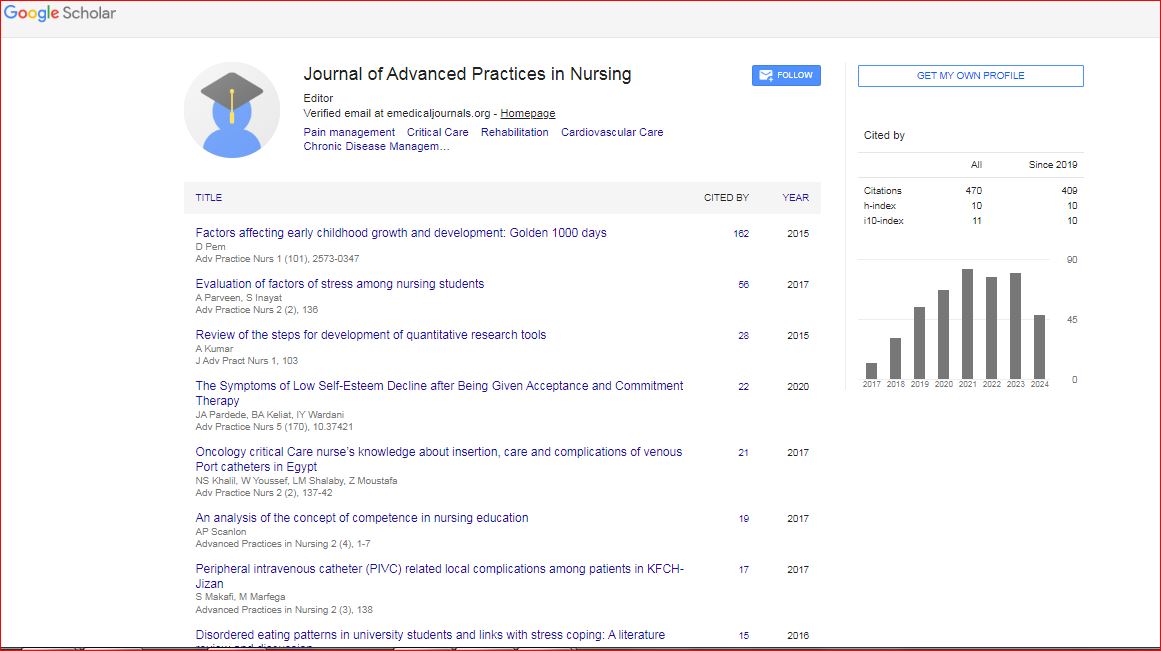
Journal of Advanced Practices in Nursing received 410 citations as per Google Scholar report