Commentary - (2025) Volume 14, Issue 6
Received: 03-Nov-2025, Manuscript No. aim-25-178056;
Editor assigned: 05-Nov-2025, Pre QC No. P-178056;
Reviewed: 19-Nov-2025, QC No. Q-178056;
Revised: 24-Nov-2025, Manuscript No. R-178056;
Published:
29-Nov-2025
, DOI: 10.37421/2427-5162.2025.14.598
Citation: Thompson, Michael. ”Traditional and Herbal Medicines for Respiratory Health.” Alt Integr Med 14 (2025):598.
Copyright: © 2025 Thompson M. This is an open-access article distributed under the terms of the Creative Commons Attribution License, which permits unrestricted use, distribution and reproduction in any medium, provided the original author and source are credited.
A systematic review and meta-analysis thoroughly investigated the efficacy of herbal medicines when contrasted with conventional treatments or placebos for the management of asthma. The compelling findings from this research indicate that specific traditional formulations can significantly enhance lung function and reduce the severity of symptoms, thereby presenting a viable alternative or an effective adjunct in the comprehensive management of this pervasive chronic respiratory condition. This approach capitalizes on the inherent properties of natural compounds to alleviate breathing difficulties and potentially decrease reliance on standard pharmaceutical interventions [1].
Further research concentrated on the application of Traditional Chinese Medicine (TCM) for addressing Chronic Obstructive Pulmonary Disease (COPD). A systematic review of clinical trials demonstrated that TCM interventions effectively mitigate symptoms, improve pulmonary function, and notably elevate the quality of life for individuals suffering from COPD. The pivotal insight gleaned suggests that a synergistic integration of TCM practices with Western medical approaches could yield a more holistic and ultimately more efficacious strategy for tackling this complex and debilitating respiratory ailment [2].
An extensive review compiled ethnobotanical data pertaining to plants traditionally employed for respiratory ailments across various regions of North Africa. This compilation highlights a profound and enduring tradition of utilizing specific indigenous herbs to treat common conditions such as coughs, colds, asthma, and other significant lung issues. Crucially, this work systematically maps the most commonly used plants and their established traditional applications, thereby laying an essential groundwork for prospective pharmacological investigations into their proven efficacy and safety profiles [3].
A dedicated systematic review explored the critical role of herbal medicines in modulating the immune response and actively reducing inflammation in COVID-19 patients who presented with severe respiratory symptoms. The valuable insights derived from this study underscore the capacity of certain distinct herbal compounds to effectively manage the pronounced inflammatory reactions commonly observed during severe respiratory viral infections. Such interventions potentially serve as crucial complements to conventional treatments, aiming to significantly improve patient clinical outcomes [4].
Another significant review delved into the profound anti-inflammatory and immunomodulatory effects intrinsic to Traditional Chinese Medicine (TCM) across a spectrum of respiratory diseases. This analysis meticulously elucidates how diverse TCM formulations are capable of targeting multiple intricate pathways involved in both inflammatory processes and immune system regulation. This offers a highly nuanced and sophisticated therapeutic strategy for conditions spanning from persistent asthma to chronic bronchitis, highlighting the deep pharmacological underpinnings of these revered traditional remedies [5].
The effectiveness of herbal medicines specifically in the treatment of acute bronchitis was rigorously examined through a comprehensive systematic review. The aggregated findings strongly suggest that certain herbal preparations are remarkably effective in alleviating distressing symptoms such as persistent cough and chest discomfort. This benefit potentially reduces the necessity for antibiotic prescriptions in uncomplicated cases, thereby emphasizing the inherent value of long-standing traditional knowledge in managing prevalent respiratory infections and advancing evidence-based phytotherapy [6].
A systematic review thoroughly evaluated the therapeutic efficacy of phytotherapy for allergic rhinitis, a widespread and frequently debilitating upper respiratory condition. The meticulous analysis of numerous randomized controlled trials consistently indicated that various herbal preparations could substantially diminish nasal symptoms and remarkably enhance the overall quality of life for affected individuals. Often, these herbal options are associated with fewer adverse effects compared to conventional antihistamines, thus presenting a robust justification for their consideration in modern allergic rhinitis management protocols [7].
An important ethnopharmacological study meticulously documented the traditional uses of a diverse array of medicinal plants employed for respiratory disorders within the Uttarakhand region of India. This research meticulously details how local communities historically and currently utilize various indigenous herbs to address conditions like cough, cold, asthma, and pneumonia. The paramount importance of this work lies in its contribution to preserving invaluable indigenous knowledge and its capacity to identify promising new leads for innovative drug discovery, directly stemming from time-honored traditional practices [8].
A comprehensive systematic review meticulously assessed herbal and traditional complementary medicines in their application for treating influenza and other acute viral respiratory infections. This extensive review consolidated compelling evidence on numerous plant-based interventions, strongly suggesting their significant potential to effectively reduce both the severity and duration of symptoms associated with these illnesses. The overarching insight gained highlights the expanding body of research that supports traditional remedies as valuable adjuncts in managing common viral respiratory conditions, thereby complementing established conventional care paradigms [9].
Finally, an article critically explored the scientific rationale underpinning the traditional application of various medicinal plants in the long-term management of asthma. It meticulously investigates the specific bioactive compounds present in these plants and elucidates their intricate pharmacological mechanisms, which include anti-inflammatory, bronchodilatory, and immunomodulatory effects. A profound understanding of these underlying mechanisms is absolutely vital for the scientific validation of traditional remedies and for the subsequent development of novel, evidence-based therapeutic agents for asthma [10].
One significant systematic review and meta-analysis provided critical insights into the comparative effectiveness of herbal medicines against conventional treatments or placebos for asthma. The analysis robustly demonstrated that specific traditional formulations are capable of significantly improving pulmonary function and reducing asthma-related symptoms. This positions herbal treatments as a legitimate alternative or a valuable complementary approach to existing management strategies for this chronic condition, emphasizing natural compounds in facilitating respiration and potentially decreasing reliance on conventional pharmaceuticals [1]. Regarding Chronic Obstructive Pulmonary Disease (COPD), a systematic review meticulously analyzed clinical trials focusing on Traditional Chinese Medicine (TCM) interventions. This study conclusively showed that TCM is effective in alleviating COPD symptoms, enhancing lung function, and elevating the quality of life for patients. A key conclusion drawn is the considerable potential for integrating TCM with Western medical practices to forge a more comprehensive, holistic, and ultimately more effective therapeutic pathway for individuals afflicted with this challenging respiratory condition [2]. An important ethnobotanical review documented the diverse range of plants traditionally utilized for respiratory ailments throughout North Africa. This scholarly work underscored the rich historical tradition of employing specific local herbs for treating conditions such as coughs, common colds, asthma, and various other pulmonary issues. The principal value of this review lies in its comprehensive compilation of commonly used plants and their traditional applications, providing a foundational resource for future rigorous pharmacological research aimed at validating their therapeutic efficacy and safety [3]. In the context of the COVID-19 pandemic, a systematic review specifically investigated the immunomodulatory and anti-inflammatory properties of herbal medicines in patients experiencing respiratory symptoms. The findings illuminated how particular herbal compounds can effectively mitigate the severe inflammatory responses characteristic of acute respiratory viral infections. These insights suggest that herbal interventions could play a supportive role, complementing conventional treatments, and thereby contributing to improved patient outcomes in cases of viral respiratory illnesses [4]. Another detailed review explored the sophisticated anti-inflammatory and immunomodulatory mechanisms inherent in Traditional Chinese Medicine (TCM) for a variety of respiratory diseases. This academic contribution clarified how different TCM formulations strategically target distinct pathways involved in inflammation and immune regulation, offering a nuanced and multi-faceted therapeutic approach. This applies to a wide array of conditions, from chronic asthma to acute bronchitis, thus highlighting the intricate pharmacological underpinnings of these revered traditional remedies [5]. The effectiveness of herbal medicines in addressing acute bronchitis was systematically examined in a comprehensive review. The findings indicated that certain herbal preparations are demonstrably effective in relieving uncomfortable symptoms such as persistent cough and chest discomfort. This efficacy suggests a potential role in reducing the need for antibiotics in uncomplicated cases, thereby accentuating the enduring value of traditional medical knowledge in managing common respiratory infections and advancing the field of evidence-based phytotherapy [6]. A rigorous systematic review assessed the effectiveness of phytotherapy in the management of allergic rhinitis, a prevalent upper respiratory condition. The critical analysis of randomized controlled trials revealed that several herbal preparations significantly reduce nasal symptoms and improve the overall quality of life for patients. These herbal options frequently present with fewer side effects compared to standard antihistamines, thus providing compelling evidence for their integration into comprehensive allergic rhinitis management strategies [7]. An ethnopharmacological investigation documented the rich tapestry of traditional medicinal plant use for respiratory disorders within India's Uttarakhand region. The study meticulously detailed how indigenous communities historically and presently leverage various local herbs for conditions spanning cough, cold, asthma, and pneumonia. The core significance of this research lies in its dual contribution: preserving invaluable indigenous knowledge and simultaneously identifying promising new avenues for drug discovery, rooted deeply in established traditional healing practices [8]. A broad systematic review critically evaluated the utility of herbal and traditional complementary medicines in the treatment of influenza and other acute viral respiratory infections. The review consolidated substantial evidence regarding numerous plant-based interventions, positing their capacity to effectively diminish the severity and duration of symptoms. This crucial insight underscores the growing body of empirical support for traditional remedies as valuable adjunctive tools in managing prevalent viral respiratory illnesses, complementing the existing framework of conventional medical care [9]. Finally, a scholarly article meticulously elucidated the scientific foundation supporting the traditional application of diverse medicinal plants in the management of asthma. It thoroughly explored the specific bioactive compounds responsible for therapeutic effects and their underlying pharmacological mechanisms, which include anti-inflammatory, bronchodilatory, and immunomodulatory actions. A comprehensive understanding of these complex biological pathways is indispensable for scientifically validating traditional remedies and for the progressive development of new, evidence-based treatments for asthma [10].
Research into traditional and herbal medicines demonstrates significant potential in managing a wide array of respiratory conditions. Systematic reviews and meta-analyses highlight their efficacy in improving lung function, reducing symptoms, and enhancing the quality of life for patients with asthma and Chronic Obstructive Pulmonary Disease. Furthermore, Traditional Chinese Medicine (TCM) formulations exhibit potent anti-inflammatory and immunomodulatory effects across various respiratory ailments, including chronic bronchitis and allergic rhinitis. Studies also indicate that certain herbal interventions can effectively alleviate symptoms of acute bronchitis, influenza, and other viral respiratory infections, potentially reducing the need for conventional medications like antibiotics and antihistamines, often with fewer side effects. Ethnobotanical surveys from regions like North Africa and Uttarakhand, India, document rich traditions of plant use for respiratory issues, providing a crucial foundation for future pharmacological research and drug discovery. The scientific exploration of bioactive compounds and their mechanisms, such as bronchodilation and immune regulation, is validating these traditional practices and paving the way for new, evidence-based treatments. The integration of traditional and Western medicine approaches emerges as a holistic and effective strategy for challenging respiratory conditions.
None
None
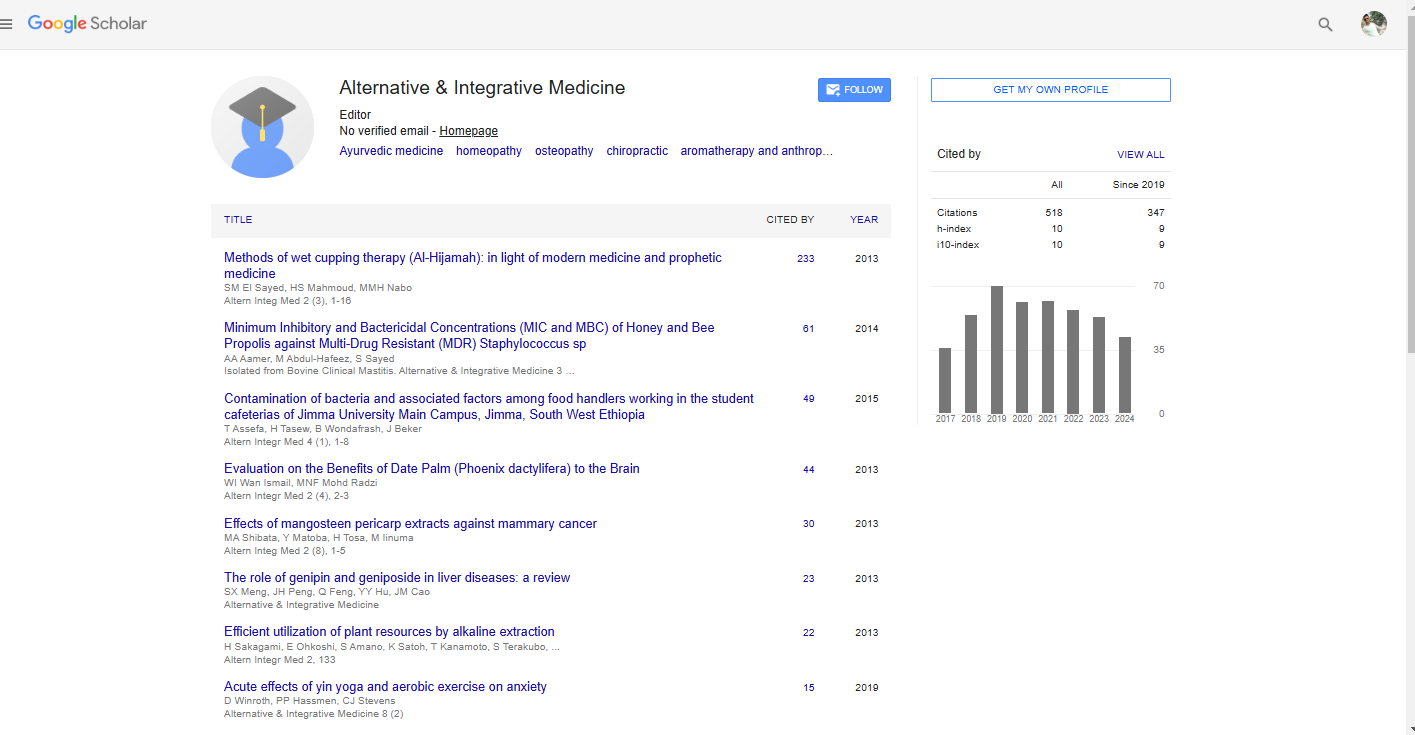
Alternative & Integrative Medicine received 476 citations as per Google Scholar report