Brief Report - (2025) Volume 11, Issue 2
Received: 01-Apr-2025, Manuscript No. jpnp-25-166017;
Editor assigned: 03-Apr-2025, Pre QC No. P-166017;
Reviewed: 15-Apr-2025, QC No. Q-166017;
Revised: 22-Apr-2025, Manuscript No. R-166017;
Published:
29-Apr-2025
, DOI: 10.37421/2472-0992.2025.11.355
Citation: Gomes, Oliveira. “The Aroma of Healing: Exploring the Therapeutic Properties of Essential Oils in Wellness and Medicine.” J Pharmacogn Nat Prod 11 (2025): 355.
Copyright: © 2025 Gomes O. This is an open-access article distributed under the terms of the Creative Commons Attribution License, which permits unrestricted use, distribution and reproduction in any medium, provided the original author and source are credited.
Essential oils, with their rich, aromatic compounds, have long been celebrated for their therapeutic properties, offering a natural and holistic approach to wellness and healing. Extracted from plants through methods such as distillation or cold pressing, these concentrated oils capture the essence of the plant's therapeutic potential, providing a wide range of benefits for both physical and emotional health. For centuries, cultures around the world have utilized essential oils for their medicinal and aromatic qualities, using them in practices such as aromatherapy, massage, and traditional healing. Today, modern science is uncovering the profound therapeutic effects of essential oils, revealing how these natural substances can be harnessed to support the bodyâ??s ability to heal and maintain balance. With their diverse applications and minimal side effects, essential oils are increasingly recognized as valuable tools in contemporary wellness practices and clinical medicine. From promoting relaxation and reducing stress to enhancing immune function and alleviating pain, essential oils offer a broad spectrum of therapeutic benefits. Their bioactive compounds have been shown to interact with the body's systems in a variety of ways, such as by influencing neurotransmitter levels in the brain, reducing inflammation, and acting as antioxidants [1].
The essential oils are often used in aromatherapy, where their inhalation triggers physiological responses that can help reduce anxiety, improve sleep quality, and support mental clarity. Moreover, topical applications and massage can aid in alleviating muscular pain, boosting circulation, and promoting skin health. As interest in natural health solutions continues to grow, essential oils are emerging as a cornerstone of integrative medicine, combining the wisdom of ancient healing practices with the rigor of modern scientific inquiry to create innovative approaches to healthcare and personal well-being Essential oils, which are highly concentrated extracts derived from plants, have become increasingly popular in both wellness and medicine due to their wide range of therapeutic properties. These oils are obtained through processes like steam distillation, cold pressing, or solvent extraction, preserving the natural compounds that give each plant its distinct aroma and healing properties. In the realm of wellness, essential oils are primarily used in aromatherapy, a practice where scents are inhaled or applied to the skin to promote physical and mental health. The aromatic molecules in essential oils are thought to interact with the limbic system in the brain, the area responsible for emotions, memories, and behaviors, leading to therapeutic effects that can improve mood, reduce stress, and even enhance cognitive function [2].
For example, oils like lavender and chamomile are known for their calming and relaxing effects, making them popular choices for alleviating anxiety and improving sleep quality. Beyond their emotional and psychological benefits, essential oils are also recognized for their physiological therapeutic properties. Many essential oils possess antimicrobial, anti-inflammatory, and analgesic properties, which have been harnessed to treat a variety of physical ailments. Oils such as tea tree, eucalyptus, and peppermint are well-known for their ability to fight infections, relieve respiratory issues, and soothe headaches. The anti-inflammatory properties of oils like frankincense and ginger make them effective in reducing pain and swelling, especially in conditions such as arthritis or muscle strain. Additionally, essential oils are used to support the immune system, improve circulation, and promote healthy digestion. When used topically or in massage, essential oils can also assist with muscle relaxation, improve skin health, and enhance blood flow to different areas of the body. The therapeutic potential of essential oils is rooted in the rich chemical diversity of their compounds. Many essential oils contain phenolic compounds, terpenes, aldehydes, and esters, which contribute to their medicinal properties. For instance, the terpene compounds found in peppermint oil are known to have a cooling effect and can relieve muscle pain, while the phenolic compounds in oregano oil are highly effective at fighting bacteria and fungi [3].
In addition to their direct physical benefits, essential oils are often used in combination with other natural treatments, providing a synergistic effect. For example, using essential oils with massage or as part of a bath can enhance their absorption and effectiveness, while incorporating them into daily wellness routines can help maintain balance in the bodyâ??s systems. In recent years, the rise in demand for natural and alternative healthcare solutions has led to increased scientific interest in the efficacy and safety of essential oils. Research has shown that essential oils not only offer a wide array of therapeutic effects but also pose fewer side effects compared to many pharmaceutical drugs, making them a viable option for people seeking natural remedies. However, as with any treatment, caution is needed, especially when using essential oils in concentrated forms or on sensitive skin. Dilution and proper usage are crucial to ensure safety, particularly for individuals with allergies, sensitivities, or certain medical conditions. While more research is needed to fully understand the long-term effects and best practices for using essential oils, the growing body of evidence supports their use in both wellness and clinical settings. In integrative medicine, essential oils are increasingly being incorporated into treatment plans alongside conventional therapies to enhance overall well-being [4].
Hospitals, wellness centers, and clinics now often offer essential oil treatments, acknowledging their ability to complement traditional medical approaches by reducing symptoms such as pain, nausea, and stress during treatments like chemotherapy or surgery. As interest in holistic health practices continues to grow, essential oils are finding their place not only in wellness routines but also in the realm of preventive healthcare. When used thoughtfully and safely, essential oils can be a powerful tool for enhancing health, boosting the bodyâ??s natural healing processes, and promoting mental and emotional balance. Overall, the healing potential of essential oils is vast, offering a wide range of benefits for both the body and mind. Whether used to support emotional well-being, relieve physical ailments, or simply enhance daily self-care routines, these natural compounds provide a powerful and holistic approach to health. Their ability to improve quality of life through a combination of therapeutic properties and pleasant fragrances makes them a valuable addition to any wellness regimen, and their growing presence in medical research signals an exciting future for their integration into mainstream healthcare practices. Essential oils, highly concentrated plant extracts, are widely used in aromatherapy and topical applications to support emotional well-being, relieve physical ailments, and promote overall health. With therapeutic properties such as antimicrobial, anti-inflammatory, and analgesic effects, they are gaining recognition in both wellness and clinical settings as effective, natural complements to conventional medicine. As scientific interest grows, essential oils are becoming integral to holistic and integrative healthcare approaches [5].
Google Scholar Cross Ref Indexed at
Google Scholar Cross Ref Indexed at
Google Scholar Cross Ref Indexed at
Google Scholar Cross Ref Indexed at
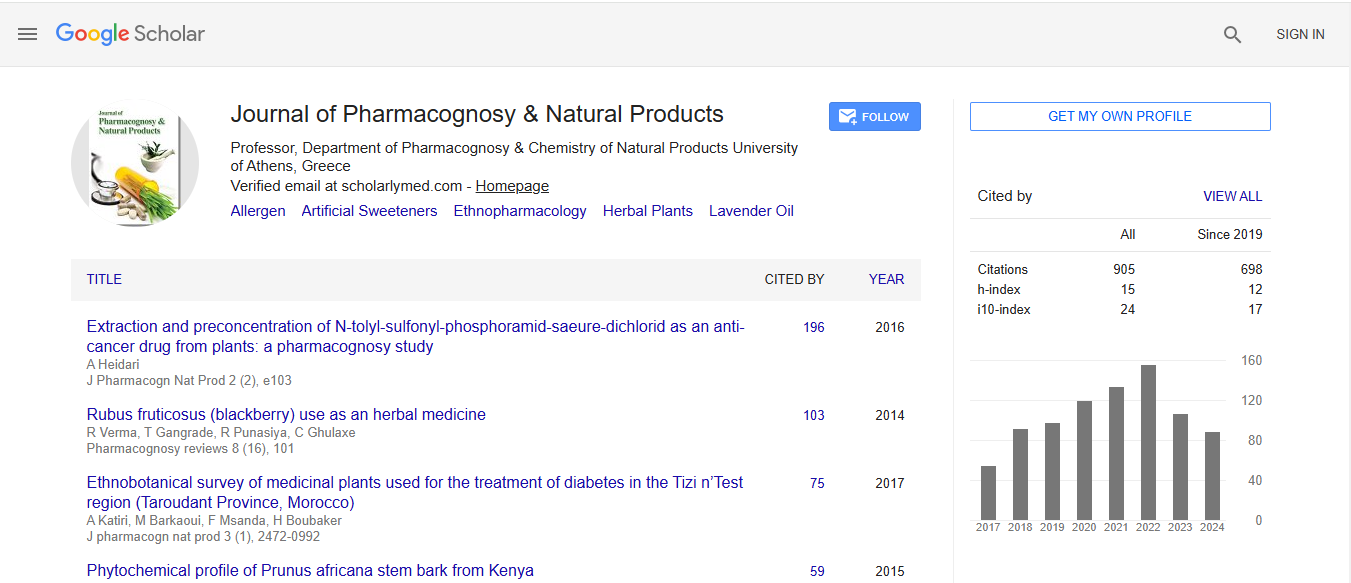
Journal of Pharmacognosy & Natural Products received 606 citations as per Google Scholar report