Opinion - (2025) Volume 14, Issue 6
Received: 03-Nov-2025, Manuscript No. jtm-26-186040;
Editor assigned: 05-Nov-2025, Pre QC No. P-186040;
Reviewed: 19-Nov-2025, QC No. Q-186040;
Revised: 24-Nov-2025, Manuscript No. R-186040;
Published:
29-Nov-2025
, DOI: 10.37421/2167-1222.2025.14.712
Citation: Williams, Brett. ”Telemedicine: Revolutionizing Trauma Care and Enhancing Outcomes.” J Trauma Treat 14 (2025):712.
Copyright: © 2025 Williams B. This is an open-access article distributed under the terms of the Creative Commons Attribution License, which permits unrestricted use, distribution and reproduction in any medium, provided the original author and source are credited.
Telemedicine is revolutionizing trauma care, offering transformative capabilities for patient management and outcomes. Its application spans from pre-hospital settings to inter-hospital transfers, significantly enhancing diagnosis and intervention speed. The integration of telemedicine into the emergency department, including trauma cases, promises to improve efficiency and the quality of patient care. This technology facilitates rapid triage and expert consultation, crucial for complex cases and guiding less experienced medical staff. Pre-hospital telemedicine, often termed 'telesurgery,' plays a pivotal role in optimizing trauma care delivery by providing immediate on-scene assessment and guidance to paramedics. This remote expert support is essential for initiating appropriate management and preparing for patient arrival at the hospital, directly influencing patient trajectories and reducing delays in critical interventions. The integration of artificial intelligence (AI) with telemedicine platforms is further augmenting trauma care capabilities. AI can automate imaging analysis, predict patient deterioration, and identify potential complications, creating a more powerful tool for remote monitoring and decision support, particularly in resource-limited environments. Tele-mentoring and tele-education represent vital aspects of telemedicine in trauma care, enabling experienced surgeons to train and guide less experienced teams remotely. This improves skill acquisition and standardizes care, especially for complex procedures or in remote/disaster-stricken areas where direct supervision is unfeasible. Telemedicine's role extends to mass casualty incidents and disaster response, allowing for rapid information dissemination, remote resource coordination, and expert advice to overwhelmed first responders and facilities. This capability is crucial for managing large-scale trauma events effectively and efficiently. Remote patient monitoring through telemedicine is indispensable for post-discharge care of trauma patients. It allows for continuous assessment of recovery, early detection of complications like infection or deep vein thrombosis, and timely intervention, thus reducing readmission rates and improving long-term functional outcomes. Despite its potential, the widespread adoption of telemedicine in trauma care faces considerable challenges. These include navigating regulatory hurdles, establishing appropriate reimbursement policies, and ensuring robust technological infrastructure and cybersecurity. Addressing these barriers is paramount to fully realizing telemedicine's potential in enhancing the quality and accessibility of trauma services. Telemedicine is also proving instrumental in bridging the care gap for remote and underserved populations. By enabling virtual consultations with trauma specialists, it ensures that patients in geographically isolated areas receive timely and expert advice, improving their survival and recovery prospects. The effectiveness of telemedicine in managing acute trauma hinges on its seamless integration with existing healthcare workflows and reliable communication channels. When implemented effectively, it can optimize the utilization of specialized trauma centers, streamline patient transfers, and enhance the overall efficiency of the trauma care system. Telemedicine's ability to facilitate remote expert consultation, real-time data sharing, and guided patient transfers fundamentally transforms trauma care. Its strategic integration into pre-hospital and inter-hospital settings demonstrably improves patient outcomes through accelerated diagnosis, prompt interventions, and optimized resource allocation. Specific applications range from remote injury assessment and guidance for local medical teams to continuous monitoring of critically ill trauma patients. This technology serves as a vital bridge, particularly in rural or underserved regions, overcoming geographical barriers to ensure access to specialized trauma expertise. The use of telemedicine within emergency departments, specifically for trauma patients, presents a significant opportunity to enhance both operational efficiency and patient care. It streamlines the triage process, provides access to specialist consultations for intricate cases, and offers valuable educational opportunities for staff with less experience. Incorporating telemedicine into the established trauma care pathway can expedite decision-making regarding surgical interventions and definitive treatments, ultimately contributing to improved survival rates and a reduction in long-term morbidity. Pre-hospital telemedicine, sometimes referred to as 'telesurgery,' represents a critical component in the strategic optimization of trauma care delivery. It empowers paramedics at the scene with immediate assessment capabilities and expert guidance, enabling them to initiate appropriate management protocols and prepare for the patient's subsequent arrival at a medical facility. This remote expert support has a profound impact on the patient's clinical trajectory and significantly minimizes delays in receiving essential critical interventions. The incorporation of artificial intelligence (AI) into telemedicine platforms is actively enhancing the capabilities of trauma care. AI algorithms can contribute to the automated analysis of medical imaging, aid in predicting patient deterioration, and assist in identifying potential complications. When these AI functionalities are coupled with telemedicine, they create an even more potent toolset for remote patient monitoring and clinical decision support, especially within environments that are characterized by limited resources. Tele-mentoring and tele-education are recognized as vital components within the broader scope of telemedicine in trauma care. These innovative tools allow experienced trauma surgeons to remotely guide and train less experienced medical teams, thereby fostering enhanced skill acquisition and promoting the standardization of care delivery. This modality is particularly relevant for managing complex surgical procedures and for supporting teams operating in remote or disaster-affected areas where direct, in-person supervision is not feasible. The implementation of telemedicine during mass casualty incidents and disaster response scenarios offers substantial advantages. It facilitates the rapid dissemination of critical information, enables remote coordination of essential resources, and provides expert advisory support to first responders and medical facilities that may be overwhelmed by a sudden influx of casualties. This established capability is indispensable for the effective and efficient management of large-scale trauma events. Remote patient monitoring, facilitated by telemedicine, plays an essential role in the comprehensive post-discharge care of trauma patients. This continuous assessment of patient recovery allows for the early detection of potential complications, such as infections or deep vein thrombosis, and prompts timely interventions. Consequently, this leads to a reduction in hospital readmission rates and contributes to improved long-term functional outcomes for patients. The widespread adoption of telemedicine in trauma care is encountering several obstacles, including regulatory complexities, evolving reimbursement policies, and the necessity for robust technological infrastructure coupled with stringent cybersecurity measures. Overcoming these impediments is crucial for fully harnessing the potential of telemedicine to elevate both the quality and the accessibility of trauma services. Telemedicine is proving to be an indispensable tool in bridging the existing disparities in trauma care access, particularly for remote and underserved populations. By facilitating virtual consultations with specialized trauma experts, it ensures that patients situated in geographically isolated regions receive prompt and informed medical advice, thereby significantly enhancing their prospects for survival and successful recovery. The efficacy of telemedicine in the management of acute trauma is contingent upon its seamless integration with established healthcare workflows and the presence of reliable communication channels. When implemented thoughtfully and effectively, telemedicine can optimize the deployment of specialized trauma centers, streamline patient transfer processes, and ultimately bolster the overall efficiency of the entire trauma care system. Telemedicine is fundamentally transforming trauma care by enabling remote expert consultation, real-time data sharing, and facilitated patient transfer. Its integration into pre-hospital and inter-hospital settings improves patient outcomes through faster diagnosis, timely interventions, and optimized resource allocation. Specific applications include remote assessment of injuries, guidance for local medical teams, and continuous monitoring of critically ill trauma patients. This technology is particularly valuable in rural or underserved areas, bridging geographical barriers and ensuring access to specialized trauma expertise [1].
The use of telemedicine in emergency departments, including trauma, demonstrates significant potential for improving efficiency and patient care. It facilitates rapid triage, expert consultation for complex cases, and educational opportunities for less experienced staff. When integrated into the trauma pathway, telemedicine can lead to quicker decision-making regarding surgical intervention and definitive care, ultimately impacting survival rates and reducing long-term morbidity [2].
Pre-hospital telemedicine, or 'telesurgery' as it's sometimes referred to, is a critical component in optimizing trauma care delivery. It allows for immediate assessment and guidance to paramedics at the scene, enabling them to initiate appropriate management and prepare for the patient's arrival at the hospital. This remote expert support can significantly influence the patient's trajectory and reduce delays in critical interventions [3].
The integration of artificial intelligence (AI) within telemedicine platforms is enhancing trauma care capabilities. AI can assist in the automated analysis of imaging, prediction of patient deterioration, and identification of potential complications. When combined with telemedicine, AI provides an even more powerful tool for remote monitoring and decision support, particularly in resource-limited settings [4].
Tele-mentoring and tele-education are vital aspects of telemedicine in trauma. These tools allow experienced trauma surgeons to guide and train less experienced teams remotely, improving skill acquisition and standardizing care. This is particularly relevant for complex procedures and for teams working in remote or disaster-stricken areas where direct supervision is impossible [5].
The implementation of telemedicine in mass casualty incidents and disaster response offers significant advantages. It allows for the rapid dissemination of information, remote coordination of resources, and expert advice to first responders and medical facilities overwhelmed by the influx of casualties. This capability is crucial for effective and efficient management of large-scale trauma events [6].
Remote patient monitoring via telemedicine plays a critical role in the post-discharge care of trauma patients. It enables continuous assessment of recovery, early detection of complications such as infection or deep vein thrombosis, and facilitates timely intervention, thereby reducing readmission rates and improving long-term functional outcomes [7].
The adoption of telemedicine in trauma care faces challenges including regulatory hurdles, reimbursement policies, and the need for robust technological infrastructure and cybersecurity. Addressing these barriers is essential to fully realize the potential of telemedicine in enhancing the quality and accessibility of trauma services [8].
Telemedicine is proving instrumental in bridging the gap in trauma care for remote and underserved populations. By enabling virtual consultations with trauma specialists, it ensures that patients in geographically isolated areas receive timely and expert advice, thereby improving their chances of survival and recovery [9].
The effectiveness of telemedicine in managing acute trauma relies on seamless integration with existing healthcare workflows and robust communication channels. When effectively implemented, it can optimize the utilization of specialized trauma centers, streamline patient transfers, and enhance the overall efficiency of the trauma care system [10].
Telemedicine is fundamentally reshaping the landscape of trauma care through its multifaceted applications, ranging from pre-hospital interventions to sophisticated inter-hospital patient transfers. Its strategic deployment leads to improved diagnostic accuracy, accelerated treatment initiation, and more efficient allocation of critical medical resources. The convergence of telemedicine with emergency department protocols, including those for trauma patients, is poised to significantly enhance operational efficiency and elevate the standard of patient care delivered. This technological integration streamlines patient triage, facilitates access to specialized expertise for complex cases, and provides invaluable training opportunities for medical personnel with varying levels of experience. Pre-hospital telemedicine, often conceptualized as 'telesurgery,' represents a vital strategy for optimizing the delivery of trauma care. It empowers frontline medical responders, such as paramedics, with immediate diagnostic capabilities and expert guidance directly at the incident scene. This remote support system enables the prompt implementation of appropriate management protocols and ensures that patients are optimally prepared for their subsequent transfer to a medical facility. The remote expert oversight provided by telemedicine is pivotal in positively influencing the patient's clinical trajectory and substantially mitigating critical delays in the administration of life-saving interventions. The integration of artificial intelligence (AI) technologies within telemedicine platforms is progressively amplifying the capabilities available for trauma care. AI-driven tools are instrumental in automating the analysis of medical imaging data, predicting potential patient deterioration with greater accuracy, and proactively identifying emerging complications. When these advanced AI functionalities are synergistically combined with telemedicine capabilities, they forge a formidable toolset for both remote patient surveillance and sophisticated clinical decision support, particularly in healthcare settings characterized by limited resources. Tele-mentoring and tele-education stand out as crucial pillars within the broader framework of telemedicine application in trauma care. These innovative educational modalities enable seasoned trauma surgeons to remotely mentor and train less experienced medical teams, thereby fostering a culture of continuous learning, enhancing skill acquisition, and promoting the standardization of clinical practices across different settings. This approach is especially pertinent for managing complex surgical procedures and for providing essential support to medical teams operating in remote geographical locations or in areas affected by disaster, where direct, in-person supervision is often impractical or impossible. The application of telemedicine during large-scale emergency events, such as mass casualty incidents and disaster response operations, offers a spectrum of considerable advantages. It facilitates the rapid and widespread dissemination of critical information, enables the coordinated management of vital resources from a distance, and provides essential expert advisory support to both first responders and medical facilities that may be contending with an overwhelming influx of casualties. This established capability is indispensable for ensuring the effective, efficient, and organized management of large-scale trauma events. Remote patient monitoring, a key function enabled by telemedicine, plays an indispensable role in the comprehensive continuum of care for trauma patients following their discharge from acute care settings. This continuous surveillance of patient recovery allows for the early identification of potential post-discharge complications, including infections or the development of deep vein thrombosis, and facilitates timely medical intervention. Consequently, this proactive approach leads to a measurable reduction in hospital readmission rates and contributes significantly to the improvement of long-term functional outcomes for patients. The widespread implementation and adoption of telemedicine within the domain of trauma care are currently encountering a variety of significant challenges. These include navigating complex regulatory frameworks, establishing clear and sustainable reimbursement policies, and ensuring the availability of robust, secure technological infrastructure coupled with stringent cybersecurity protocols. Addressing and overcoming these multifaceted impediments is absolutely crucial for fully realizing the transformative potential of telemedicine in substantively enhancing both the quality and the accessibility of trauma services. Telemedicine is emerging as an exceptionally valuable instrument for mitigating the existing disparities in access to specialized trauma care, particularly for populations residing in remote or underserved geographic areas. By facilitating virtual consultations with highly specialized trauma experts, telemedicine ensures that patients located in geographically isolated regions receive prompt, informed, and appropriate medical advice, thereby significantly enhancing their prospects for survival and achieving a successful recovery. The ultimate effectiveness of telemedicine in the critical management of acute trauma is intrinsically linked to its seamless integration with the existing operational workflows of healthcare facilities and the establishment of reliable, high-capacity communication channels. When telemedicine solutions are implemented thoughtfully and executed effectively, they possess the capacity to optimize the utilization of scarce specialized trauma center resources, streamline the complex processes of patient transfers, and substantially enhance the overall operational efficiency of the entire trauma care system. Telemedicine's capacity to enable remote expert consultation, facilitate real-time data exchange, and streamline patient transfers is fundamentally revolutionizing trauma care. Its strategic integration across pre-hospital and inter-hospital environments demonstrably improves patient outcomes by accelerating diagnosis, enabling timely interventions, and optimizing resource allocation. Key applications include remote injury assessments, guidance for local medical teams, and continuous monitoring of critically ill trauma patients, proving especially beneficial in rural or underserved regions to overcome geographical barriers and ensure access to specialized trauma expertise [1].
Telemedicine's deployment within emergency departments, particularly for trauma cases, shows substantial promise in enhancing both efficiency and patient care. It expedites triage processes, offers expert consultations for complex scenarios, and provides educational avenues for less experienced staff. Integrating telemedicine into the trauma care pathway can accelerate decision-making concerning surgical interventions and definitive care, thereby positively impacting survival rates and reducing long-term morbidity [2].
Pre-hospital telemedicine, sometimes referred to as 'telesurgery,' is a critical component for optimizing trauma care delivery. It empowers paramedics on the scene with immediate assessment and expert guidance, allowing for prompt initiation of appropriate management and preparation for hospital arrival. This remote expert support significantly influences patient outcomes and reduces delays in critical interventions [3].
The integration of artificial intelligence (AI) into telemedicine platforms is advancing trauma care capabilities. AI can analyze imaging, predict patient deterioration, and identify potential complications. Combined with telemedicine, AI offers a powerful tool for remote monitoring and decision support, especially in resource-limited settings [4].
Tele-mentoring and tele-education are vital aspects of telemedicine in trauma care. These tools allow experienced surgeons to remotely guide and train less experienced teams, enhancing skill acquisition and standardizing care, which is particularly relevant for complex procedures and in remote or disaster areas lacking direct supervision [5].
Telemedicine's application in mass casualty incidents and disaster response yields significant advantages, including rapid information dissemination, remote resource coordination, and expert advice for overwhelmed responders and facilities. This is crucial for the effective management of large-scale trauma events [6].
Remote patient monitoring via telemedicine is essential for post-discharge trauma patient care. It enables continuous recovery assessment, early detection of complications like infection or deep vein thrombosis, and timely intervention, thus reducing readmissions and improving long-term functional outcomes [7].
Challenges to telemedicine adoption in trauma care include regulatory hurdles, reimbursement issues, and the need for robust technology and cybersecurity. Addressing these barriers is crucial for realizing telemedicine's full potential in improving trauma service quality and accessibility [8].
Telemedicine effectively bridges the trauma care gap for remote and underserved populations. Virtual consultations with trauma specialists ensure timely and expert advice for geographically isolated patients, improving their survival and recovery chances [9].
The effectiveness of telemedicine in acute trauma management relies on seamless integration with healthcare workflows and strong communication channels. When well-implemented, it optimizes the use of specialized trauma centers, streamlines patient transfers, and enhances overall trauma care system efficiency [10].
Telemedicine is revolutionizing trauma care by enabling remote consultations, real-time data sharing, and facilitated patient transfers, leading to improved diagnosis, timely interventions, and optimized resource allocation. Its integration into pre-hospital and emergency settings, along with AI-powered tools, enhances efficiency, decision-making, and patient outcomes. Tele-mentoring and tele-education are vital for skill standardization, especially in remote areas. Telemedicine is also crucial for mass casualty incidents and post-discharge monitoring, reducing readmissions. Despite challenges like regulatory hurdles and technological infrastructure needs, telemedicine is vital for bridging care gaps in underserved populations and improving overall trauma system efficiency.
None
None
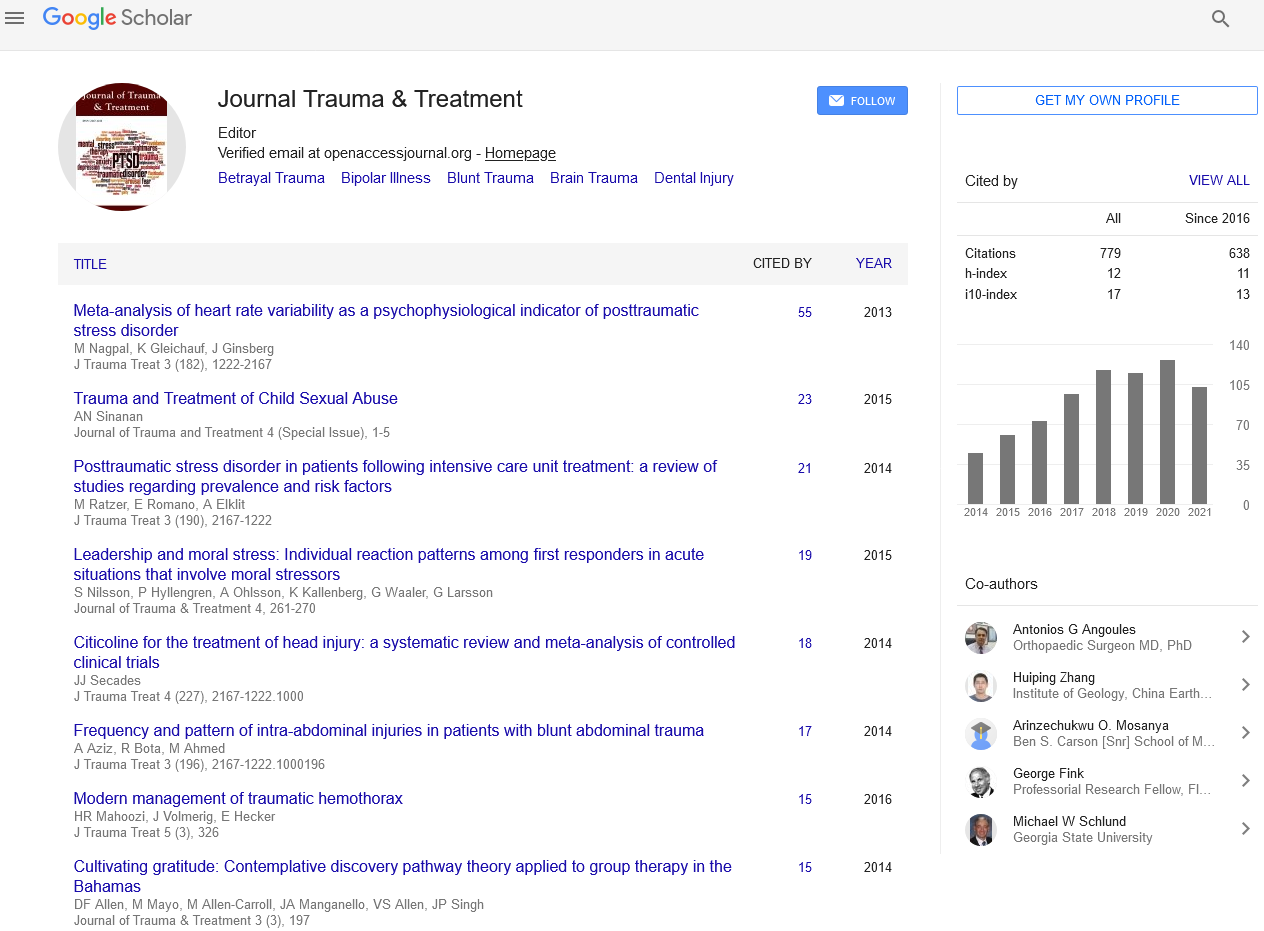
Journal of Trauma & Treatment received 1048 citations as per Google Scholar report